
- Home
- Treatments
- Restorative dentistry
Restorative dentistry in Sharjah
Repair decayed, broken, worn or missing teeth so you can chew comfortably and smile with confidence again, with natural-looking results.
Bringing teeth back to health
Restorative dentistry is about repairing teeth that have been damaged by decay, wear or injury, and replacing teeth that have been lost. The aim is simple: teeth that work properly, feel comfortable and look natural. We always try to save your own teeth first and use the most conservative option that will last.
This page explains the main treatments, how we decide between them, what to expect, how long restorations last and what affects the cost, at Al Jazeera Dental Clinic in Al Majaz, Sharjah.

What is restorative dentistry?
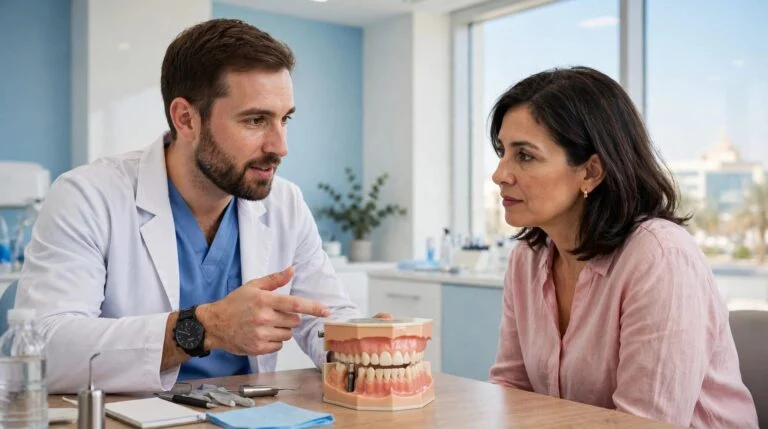
Restorative dentistry covers any treatment that restores the structure and function of your teeth. Small cavities are repaired with fillings. Infected teeth are saved with root canal treatment. Heavily damaged teeth are protected with crowns. Missing teeth are replaced with bridges or dentures.
Good restorative dentistry does more than fill a hole. They restore the shape of the tooth so it meets its neighbours correctly, protect it from further damage and make cleaning easier. Modern tooth-coloured materials mean most restorations are almost invisible.
When you might need it
- Decay or cavities
- Broken, chipped or cracked teeth
- Worn teeth from grinding or acid
- Old fillings that are leaking or failing
- Infected or root-treated teeth
- One or more missing teeth
Restorative dentistry treatments
Tooth filling
Tooth-coloured composite fillings repair decay and small breaks, usually in a single visit.
Root canal treatment
Removes infection and inflammation from inside the tooth, relieving pain and saving the tooth.
Crowns and bridges
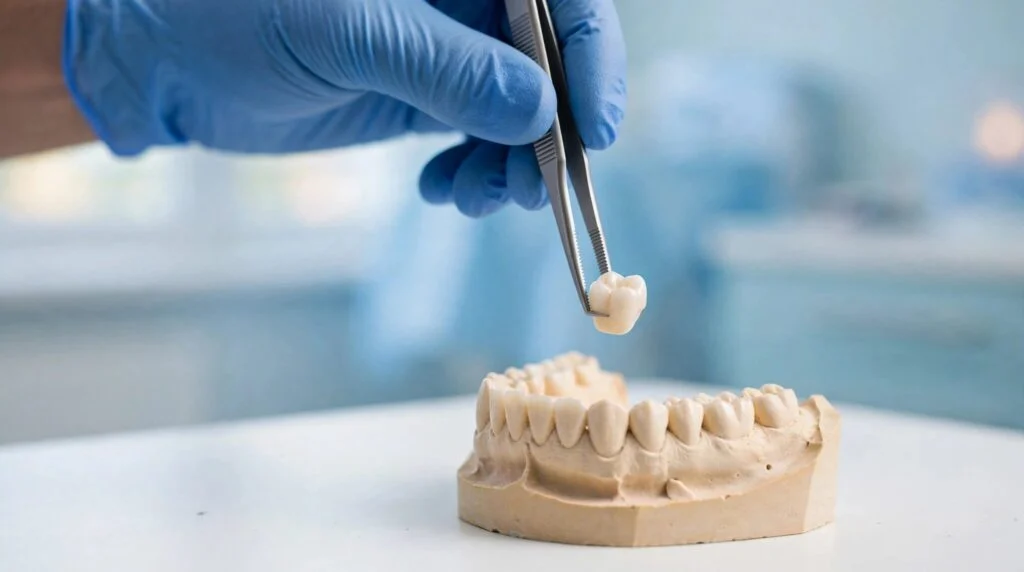
A crown covers and protects a weak tooth; a bridge replaces a missing tooth using its neighbours.
Dentures
Removable partial or full dentures replace several or all missing teeth.
Choosing the right repair
The right treatment depends on how much healthy tooth is left. A small cavity needs only a filling. A tooth that has lost a large part of its structure, or has had root canal treatment, is often better protected with a crown so it does not crack. If decay or infection has reached the nerve, root canal treatment comes first.
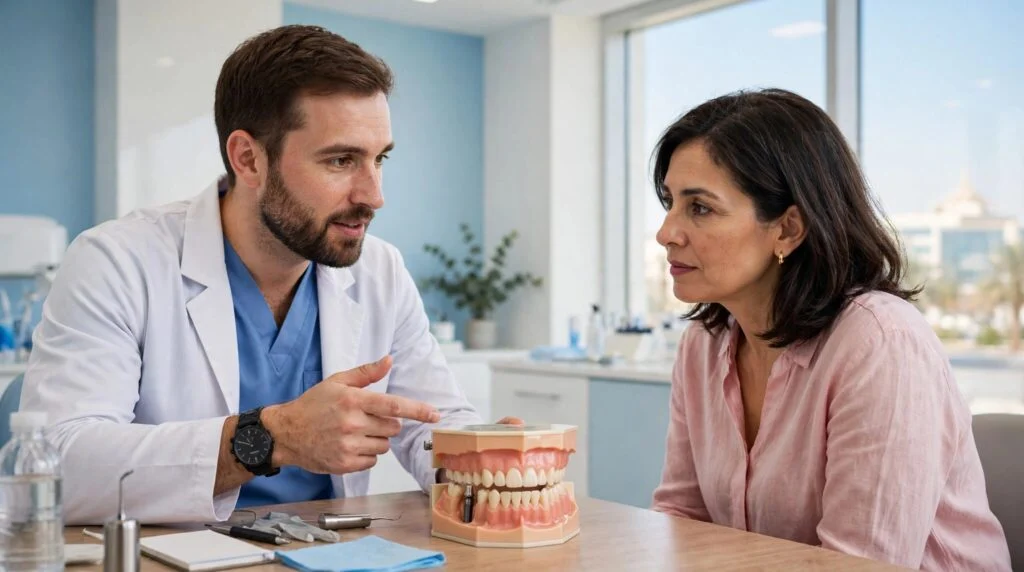
Where a tooth cannot be saved, we discuss ways to replace it: a bridge if the neighbouring teeth are strong, or a partial denture if several teeth are missing. We show you the X-rays, explain the pros and cons of each option and give you the cost in writing, so you can decide with confidence.
What we consider
- How much healthy tooth remains
- Whether the nerve is healthy
- Your bite and any grinding
- Gum and bone health
- Appearance and budget
Your treatment step by step
Consultation
We examine your teeth, take X-rays and listen to your concerns and goals.
Plan and cost
You see your options with a clear plan and the cost in writing.
Treatment
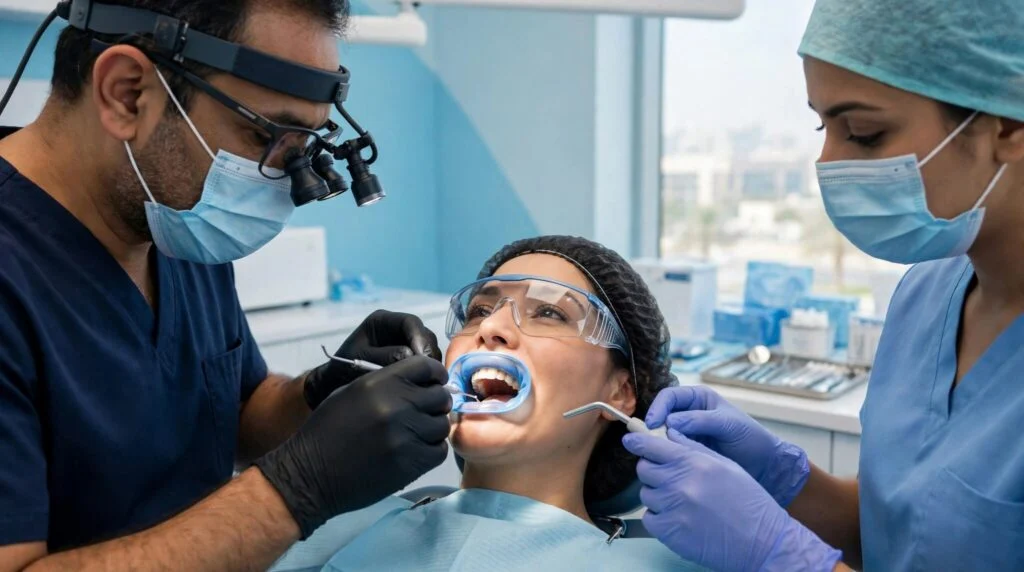
Your tooth is numbed and repaired, often in one or two visits.
Review and care
We check your bite and comfort and give you simple care advice.
How long do restorations last?
No restorative care lasts forever, but with good care most last many years. Composite fillings commonly last several years, and crowns and bridges often last much longer. How long yours last depends on their size, your bite, whether you grind your teeth, your diet and how well you clean.
Regular check-ups let us spot small problems with a filling or crown early, when a repair is simple, rather than waiting until the tooth underneath is damaged.
Help your restorations last
- Brush twice a day with fluoride
- Clean between teeth and under bridges
- Avoid biting ice and hard objects
- Wear a night guard if you grind
- Check-up every six months
Tooth-coloured and natural-looking
We use tooth-coloured materials wherever they are suitable. Composite fillings are matched to the shade of your tooth, and porcelain or zirconia crowns can be made to blend in with your natural teeth. For front teeth we take extra care with shape, shade and surface texture.
If several front teeth need work, we can combine restorative care with cosmetic options such as whitening or veneers so everything matches. See cosmetic dentistry.
Saving teeth versus extraction
When a tooth is badly damaged, extraction can seem like the quickest answer. But a natural tooth, even a restored one, usually works better than any replacement. Losing a tooth can let neighbouring teeth drift, affect your bite and make chewing harder, and replacing it often costs more in the long run.
That is why restorative care always starts by looking at whether a tooth can be saved with root canal treatment and a crown before recommending removal. If extraction really is the best option, we will explain why and plan the replacement with you. See missing teeth.
Signs a tooth may be saveable
- Enough sound tooth above the gum
- Healthy surrounding bone
- No deep vertical crack
- Healthy or treatable gums
Repairing teeth: myths and facts
Myth: root canal treatment is painful
Fact: with modern numbing it feels much like a filling, and it relieves the pain of infection.
Myth: silver fillings are stronger
Fact: modern composite fillings are strong, bond to the tooth and look natural.
Myth: crowns look fake
Fact: well-made crowns are shaped and shaded to match your own teeth.
Myth: extraction is cheaper
Fact: replacing a lost tooth often costs more over time than saving it.
Restorative dentistry for worn teeth
Teeth can wear down over many years from grinding, acidic food and drink, reflux or simply age. Worn teeth look shorter, can become sensitive and may chip easily. Restorative care can rebuild worn teeth with bonding or crowns, restoring their length and shape and protecting what is left.
Before rebuilding, we find and manage the cause of wear, for example with a night guard for grinding or advice on diet and reflux. Otherwise new restorations would wear in the same way. Rebuilding several worn teeth is planned carefully on models so your bite feels natural and comfortable.
Causes of tooth wear
- Grinding and clenching
- Fizzy drinks and citrus
- Acid reflux
- Brushing too hard
- Age
Restorative dentistry and your general health
Some health conditions and medicines affect how we plan restorative care. Diabetes can slow healing and increase the risk of gum disease. Blood thinners need to be considered before extractions. A dry mouth from medicines raises the risk of decay around fillings and crowns.
Tell us about your health and any medicines when you book. We plan every treatment safely around your needs and, where necessary, liaise with your doctor. Pregnant patients can usually have fillings safely, ideally in the second trimester.
Please tell us about
- Diabetes
- Heart conditions
- Blood thinning medicines
- Pregnancy
- Allergies
Restorative dentistry for older adults
As we get older, teeth have often been filled several times, gums may recede and dry mouth becomes more common. Restorative care for older adults focuses on keeping natural teeth for as long as possible, repairing failing fillings, protecting exposed roots and making comfortable dentures where teeth are missing.
Common needs
- Replacing old fillings
- Root decay treatment
- Comfortable dentures
- Dry mouth care
How much does restorative dentistry cost in Sharjah?
The cost depends on the treatment. A small filling costs much less than root canal treatment with a crown, or a bridge. That is why we don’t put one number on this page that could be wrong for you. Your consultation is free and you get the full cost upfront before anything starts.
Fillings, root canal treatment and extractions are usually covered by UAE insurance; crowns, bridges and dentures depend on your plan. We accept FMC, NGI, Inayah, Aafiya, SAICO / Damana, GlobeMed and MSH, plus the Fazaa and Esaad discount cards, and you can spread the cost with Tabby, Tamara or Toothpick. Insurance and payment options.
Restorative dentistry near you in Sharjah
- Open Sunday to Friday 9 AM to 10 PM, Saturday 12:30 PM to 10 PM
- Free consultation and X-ray
- Written cost before treatment
- Insurance: FMC, NGI, Inayah, Aafiya, SAICO / Damana, GlobeMed and MSH, plus the Fazaa and Esaad discount cards
- Pay later with Tabby, Tamara or Toothpick
We’re on Al Khan Street, Al Majaz 3, a short drive from Al Qasba, Al Nahda, Al Taawun, Rolla, Abu Shagara and Buhairah Corniche, with parking in front.
Get directionsRestorative dentistry questions
What is the difference between a filling and a crown?
Does restorative treatment hurt?
How many visits will I need?
Can old silver fillings be replaced?
Is restorative dentistry covered by insurance?
780+ Google reviews · Caring for Sharjah families since 1998 · 9 insurance networks · Read our reviews on Google
Need a tooth repaired?
Free consultation and written cost. Pay later with Tabby, Tamara or Toothpick.
Related articles
Ramadan Dental Care: Fresh Breath and Healthy Teeth While Fasting
Ramadan dental care tips: when to brush, avoiding bad breath while fasting, suhoor and iftar foods for healthy teeth, miswak, and planning dental t…
Night Guard Cost in Sharjah: Custom vs Shop-Bought
Night guard cost in Sharjah: custom vs shop-bought guards, who needs one, how long they last, care tips and how a night guard protects teeth, crown…
Tooth Extraction Cost in Sharjah: Simple vs Surgical
Tooth extraction cost in Sharjah: simple vs surgical extractions, wisdom teeth, insurance cover, aftercare and what to ask before you agree to have…