
- Home
- Treatments
- Dentures
Full and partial dentures in Sharjah
Comfortable, natural-looking dentures made from moulds of your own mouth and adjusted until they fit well. We also reline and repair existing plates.
Eat, speak and smile with confidence
Missing teeth make eating and speaking harder and can change the shape of your face. A well-made denture gives you back a full smile at a lower cost than many other options, and modern materials look much more natural than the plates many people remember.
This guide explains full and partial dentures, the materials, how they are made, getting used to new teeth, cleaning, relines and repairs, and what affects the cost at Al Jazeera Dental Clinic in Al Majaz, Sharjah.
Full or partial denture?
A full denture replaces all the teeth in the upper or lower jaw. It rests on the gums and, for the upper jaw, on the roof of the mouth, where suction helps hold it in place. A partial denture replaces one or more missing teeth when some natural teeth remain. It clips to the remaining teeth for support and stops them drifting into the gaps.
False teeth restore your ability to chew and speak clearly, support your lips and cheeks so your face doesn’t look sunken, and give you back a full smile. Modern materials look far more natural than older plates.
This may suit you if
- You have lost several or all teeth
- Remaining teeth aren’t strong enough for a bridge
- You want a quicker or more affordable option than implants
- Your current plate is loose, broken or worn
Types of false teeth
Acrylic
Made from tooth-coloured teeth set in a gum-coloured acrylic base. Easy to adjust, reline and add teeth to later. Suitable for full and partial cases.
Flexible partials
A thin, slightly flexible base that grips the natural teeth without metal clasps. See flexible dentures. Comfortable and discreet for many partial cases.
Metal-based (cobalt chrome)
A thin, strong metal framework for partials. Less bulky, very stable and long-lasting, with less coverage of the palate.
How your denture is made
Consultation
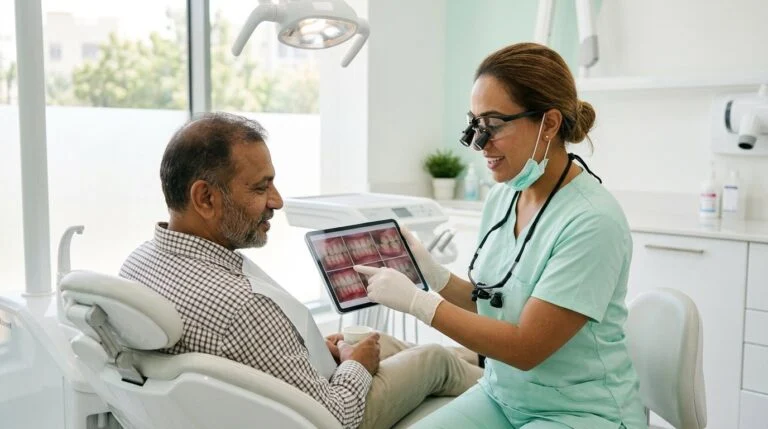
We examine your gums and any remaining teeth, take X-rays if needed, and discuss what you want from your new teeth.
Impressions
Accurate moulds of your mouth are taken, then refined to capture every detail for a stable fit.
Bite and try-in
We record how your jaws meet and show you the teeth set in wax, so you can check the look and bite before it’s finished.
Fitting and review
Everything is fitted and adjusted. We see you again after a few days to ease any sore spots.
Getting used to a new denture
New false teeth feel strange at first, and that is normal. Your cheeks and tongue need a few weeks to learn to hold them in place. You may notice more saliva and a few sore spots during the first days. Small adjustments at your review appointments make a big difference, so tell us about any rubbing.
Start with soft food cut into small pieces, and chew on both sides at the same time to keep everything stable. Avoid very sticky or hard food at first. Reading aloud helps your speech adapt quickly. Within a few weeks most people eat and speak comfortably.
Tips for the first weeks
- Start with soft food in small pieces
- Chew on both sides at once
- Read aloud to practise speech
- Come back for adjustments rather than putting up with sore spots
- A little fixative can add confidence
Caring for your denture
Take it out after meals and rinse it to remove food. Clean it every day with a soft brush and a non-abrasive denture cleaner or mild soap, over a basin of water so it doesn’t break if dropped. Ordinary toothpaste is too abrasive and scratches the surface.
Most people should take it out at night to rest the gums, keeping it in water or a soaking solution so it does not dry out and warp. Brush your gums, tongue and any natural teeth twice a day. If you wear a partial, cleaning your remaining teeth well is especially important, because plaque collects around the clasps.
Book a check if
- It feels loose or rocks
- You have sore spots or ulcers
- A tooth or clasp breaks
- Clicking or difficulty eating develops
- It has been more than a year since your last check
Relines, repairs and replacements
After teeth are lost, the gums and bone underneath slowly change shape. Over time even well-made false teeth can become loose. A reline adds new material to the fitting surface so it hugs your gums again, often without needing a new set.
We also repair cracked or broken plates and add teeth to partials if you lose another tooth. If yours is old, very worn or no longer fits well, a new one usually improves comfort, chewing and appearance.
Denture or implants?
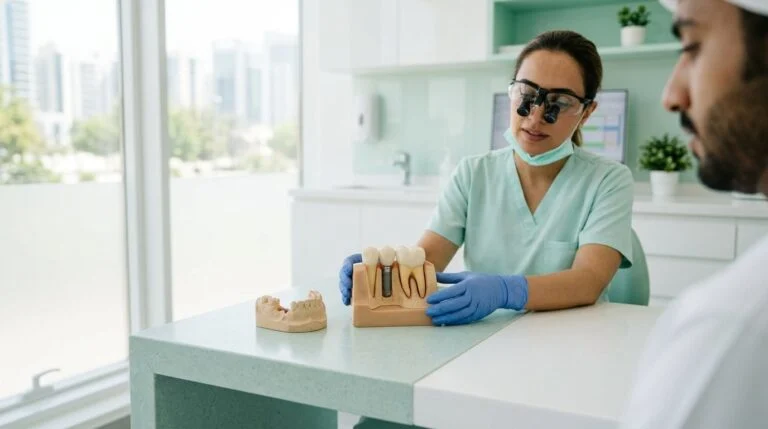
We don’t place implants ourselves. If implant-supported teeth would suit you better, for example to stabilise a loose lower plate, we’ll explain the option and refer you to a surgeon we trust.
Common worries, honest answers
Will people notice?
A well-made set with natural-looking teeth and gum colour is hard to spot. We help you choose the shade and shape.
Can I eat normally?
Most foods, yes, once you are used to it. Very hard or sticky foods are best cut small or avoided.
Will my speech change?
Some words may sound different for a few days. Practising out loud helps and it usually settles quickly.
Why replacing missing teeth matters
Chewing and diet
Missing back teeth make it harder to chew meat, vegetables and other healthy foods, so many people drift towards softer, less nutritious meals.
Drifting teeth
Teeth next to a gap tilt and the opposing tooth can over-erupt, changing your bite and creating new places for food to trap.
Facial support
Teeth support the lips and cheeks. When several are lost, the face can look sunken and older, especially around the mouth.
Confidence
Gaps at the front affect how freely people smile, talk and eat in company. Replacing them often makes a real difference to everyday life.
Looking after your gums and remaining teeth
The health of your mouth underneath matters as much as the false teeth themselves. Gums should be pink and firm, without sore red patches. Remove the plate for at least a few hours each day, brush your gums gently with a soft brush, and keep your remaining natural teeth spotless, especially where clasps touch them.
Regular check-ups are still important even if you have no natural teeth left. We check the soft tissues of the mouth, the fit and bite, and look for any changes that need attention. Dry mouth, common with some medicines, can make wearing false teeth less comfortable; we can suggest products that help.
See us promptly if
- A sore spot does not heal within two weeks
- You notice a lump or white or red patch
- Your gums are swollen or bleeding
- Your bite suddenly feels different
How much does a denture cost in Sharjah?
The price of a denture depends on whether you need a full or partial denture, how many teeth it replaces, the material, and whether any teeth need treating or removing first. That is why we don’t put one number on this page that could be wrong for you.
Your consultation is free and you get the full cost in writing before anything starts. Some UAE insurance plans cover dentures in part, so send us your card and we’ll check. You can also spread the cost in instalments with Tabby, Tamara or Toothpick. Insurance and payment options.
Dentures near you in Sharjah
- Open Sunday to Friday 9 AM to 10 PM, Saturday 12:30 PM to 10 PM
- Free consultation and X-ray
- Written cost before treatment
- Insurance: FMC, NGI, Inayah, Aafiya, SAICO / Damana, GlobeMed, MSH, Fazaa, Esaad
- Pay later with Tabby, Tamara or Toothpick
We’re on Al Khan Street, Al Majaz 3, a short drive from Al Qasba, Al Nahda, Al Taawun, Rolla, Abu Shagara and Buhairah Corniche, with parking in front.
Get directionsYour questions answered
How long does it take to make dentures?
How long do dentures last?
Should I sleep with my false teeth in?
Can I have false teeth straight after extractions?
Are dentures covered by insurance?
Loose denture or missing teeth?
Free consultation. We’ll check the fit and explain your options and costs.
Related articles
Dentures Cost in Sharjah: Full, Partial and Flexible Dentures
Dentures cost in Sharjah explained: full vs partial, acrylic vs flexible vs metal, relines and insurance. Free consultation in Al Majaz, pay in ins…
Types of Braces: Metal, Ceramic, Self-Ligating, Lingual and Aligners Compared
Compare the types of braces: metal, ceramic, coloured, self-ligating, lingual and clear aligners. Pros, cons, comfort and who each suits. Free brac…
تسوس الأسنان: الأسباب والمراحل والعلاج والوقاية
تسوس الأسنان: الأسباب والأعراض والمراحل، ومتى يكفي الحشو ومتى تحتاج علاج العصب، مع نصائح الوقاية للكبار والأطفال. عيادة الجزيرة لطب الأسنان، المجاز…