

- Home
- Treatments
- Night guards
Custom night guards for teeth grinding in Sharjah
A custom night guard protects your teeth from grinding and clenching while you sleep, eases morning jaw ache and helps your fillings, crowns and veneers last longer.
Protect your teeth while you sleep
Night-time grinding can wear away years of enamel, crack teeth and leave you with a sore jaw and headaches. A custom night guard is a simple, comfortable way to stop that damage, and it’s made specifically for your teeth so it stays in place all night.
This guide explains the signs of grinding, how a night guard works, how we make it, caring for it, jaw pain and what affects the cost at Al Jazeera Dental Clinic in Al Majaz, Sharjah.
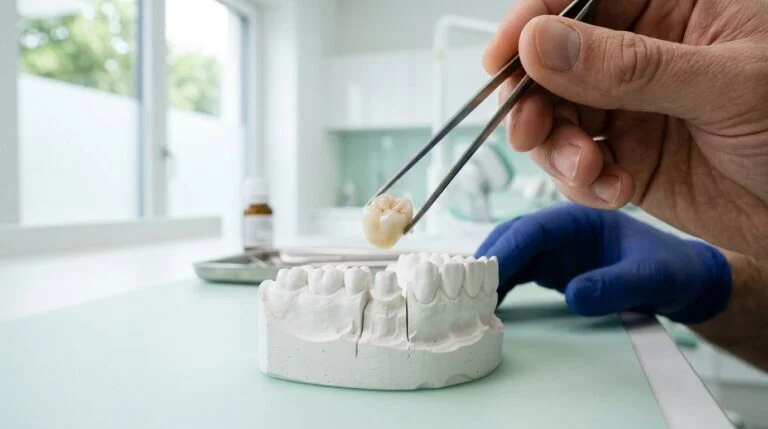
What does a night guard do?
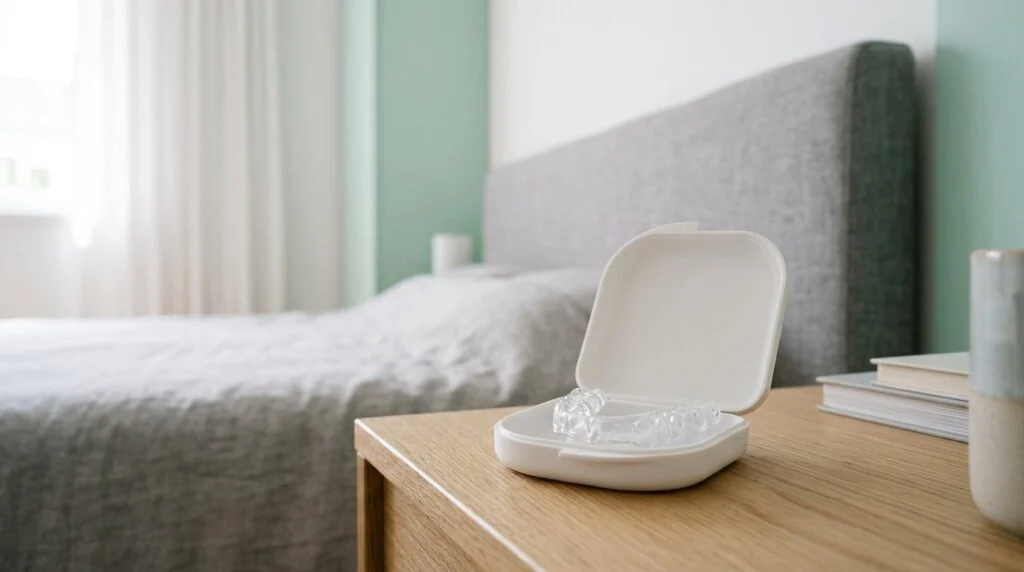
A night guard is a thin, smooth plastic cover that fits over your upper or lower teeth while you sleep. If you grind or clench at night, your teeth press against the guard instead of against each other. That protects the enamel from wear and chipping, takes strain off crowns and fillings, and can ease the jaw muscles.
Grinding, called bruxism, often happens during sleep, so many people do not know they do it. The first signs are usually noticed by a partner hearing the grinding, or by the dentist seeing flattened, chipped or cracked teeth at a check-up.
A bite guard does not stop the habit itself, but it stops the damage. For most people that is what matters: protection costs far less than repairing worn or broken teeth.
Signs you may grind your teeth
- Waking with a sore jaw, face or temples
- Morning headaches
- Teeth that look flat, short or chipped
- Sensitive teeth without decay
- Clicking or tired jaw joints
- A partner hears grinding at night
Custom night guard or shop-bought?
Custom-made guard
Made from precise moulds or scans of your teeth. Thin, comfortable and stable, so it stays in place all night and doesn’t change your bite. Lasts much longer.
Boil-and-bite guard
Softened in hot water and bitten into. Cheaper, but bulky, less accurate and can loosen during sleep. Soft guards can even encourage some people to chew more.
Our advice
For regular grinders, a custom bite guard is the safer long-term choice. We will check your teeth and jaw first and tell you honestly whether you need one.
How we make your night guard
Assessment
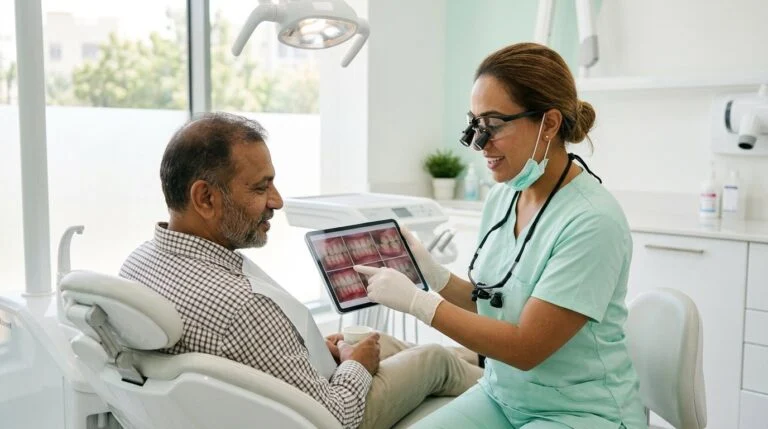
We check your teeth for wear, examine your jaw joints and muscles, and ask about headaches, stress and sleep.
Moulds
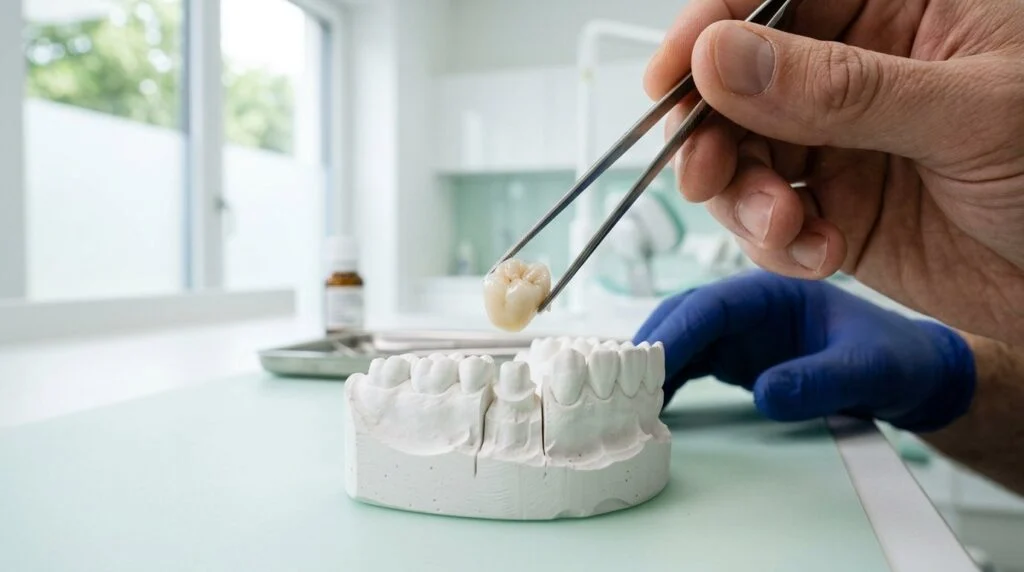
Accurate impressions of your teeth are taken. It takes a few minutes and isn’t uncomfortable.
Lab-made guard
Your guard is made to fit your teeth precisely, usually ready in about a week.
Fitting
We check the fit and adjust your bite on the guard so it feels even and comfortable, then show you how to care for it.
What grinding does to your teeth
Worn enamel
Grinding flattens the biting edges and exposes the softer dentine underneath, which wears faster and can feel sensitive to cold.
Chips and cracks
The forces of grinding are far higher than normal chewing. Over time they can chip edges, crack teeth and break fillings or porcelain.
Shorter teeth
Years of wear can make teeth look shorter and older, and can change the way your bite and smile look.
Gum and root problems
Heavy clenching can contribute to notches at the gum line and loosen teeth that already have gum disease.
Why do people grind their teeth?
There is rarely a single cause. Stress and anxiety are the most common triggers, and grinding often gets worse at busy or worrying times. Caffeine, alcohol and smoking can increase it. Some medicines, including certain antidepressants, are linked with clenching. Sleep problems such as snoring and sleep apnoea are also associated with night-time grinding.
Many people also clench during the day without noticing, for example when concentrating on a screen or driving. Becoming aware of it, keeping the lips together and teeth slightly apart, and relaxing the jaw can help.
If loud snoring, gasping or daytime sleepiness are part of the picture, it’s worth speaking to your doctor about a sleep assessment, because treating the sleep problem may reduce the grinding too.
Helpful habits
- Cut down caffeine, especially after midday
- Avoid chewing gum and pen chewing
- Gentle jaw stretches and warm compresses
- Relaxation before bed
- Notice daytime clenching and relax the jaw
Wearing and caring for your night guard
Most people take a few nights to get used to the feeling of a new guard. It may feel a little tight at first and you may notice more saliva. This settles quickly. Wear it every night for the best protection.
In the morning, rinse the guard in cool water and brush it gently with a soft toothbrush and plain soap or a little mild toothpaste. Don’t use hot water, which can warp it. Let it dry and keep it in its ventilated case, away from heat and pets. Bring it to your check-ups so we can check the fit and look for wear.
Replace or check your guard if
- It cracks or develops holes
- It feels loose or tight
- You have had new crowns or fillings
- Your bite feels different in the morning
Jaw pain and TMJ problems
The jaw joints (temporomandibular joints, or TMJ) sit just in front of the ears. Grinding and clenching overload the muscles and joints, causing aching, clicking, a tired jaw or difficulty opening wide. A well-fitted hard guard can reduce the strain on the muscles, and many people find their morning jaw pain improves.
If your jaw locks, is very painful or you can’t open your mouth normally, we’ll examine it carefully and may suggest physiotherapy or a specialist opinion as well.
Retainers too
We also make clear retainers to keep teeth straight after orthodontic treatment. If you already wear a retainer at night, ask us whether a combined design is suitable.
Repairing teeth already worn by grinding
If grinding has already worn or chipped your teeth, protecting them comes first, then repair. Small chips and worn edges can often be rebuilt with tooth-coloured bonding in a single visit. Teeth that have lost a lot of height or have cracked may need crowns to restore their strength and shape.
We plan repairs carefully so your bite stays balanced, and we always recommend wearing protection afterwards, because new restorations face the same forces as natural teeth. We’ll show you the wear on photos and explain the options, timing and cost before anything is done.
Ask us about
- Bonding for chipped edges
- Crowns for cracked or heavily worn teeth
- Sensitivity treatment for exposed dentine
- A bite check after any new crown or filling
How much does a night guard cost in Sharjah?
The price of a bite guard depends on the type of guard, its thickness, and whether you need one for the top or bottom teeth. That is why we do not put one number on this page that could be wrong for you.
Your consultation is free and you get the full cost in writing before anything starts. Cover for a bite guard varies between insurance plans, so send us your card and we’ll check. You can also spread the cost in instalments with Tabby, Tamara or Toothpick. Insurance and payment options.
Night guard near you in Sharjah
- Open Sunday to Friday 9 AM to 10 PM, Saturday 12:30 PM to 10 PM
- Free consultation and X-ray
- Written cost before treatment
- Insurance: FMC, NGI, Inayah, Aafiya, SAICO / Damana, GlobeMed, MSH, Fazaa, Esaad
- Pay later with Tabby, Tamara or Toothpick
We are on Al Khan Street, Al Majaz 3, a short drive from Al Qasba, Al Nahda, Al Taawun, Rolla, Abu Shagara and Buhairah Corniche, with parking in front.
Get directionsNight guard questions
How long does a night guard last?
Will a night guard stop me grinding?
Upper or lower guard?
Can I sleep normally with it in?
How soon will my jaw feel better?
Can children have a night guard?
Do I need a night guard if I have crowns or veneers?
Waking with a sore jaw?
Free consultation. We’ll check for grinding damage and tell you honestly if a bite guard would help.
Related articles
Night Guard Cost in Sharjah: Custom vs Shop-Bought
Night guard cost in Sharjah: custom vs shop-bought guards, who needs one, how long they last, care tips and how a night guard protects teeth, crown…
Clear Aligners Cost in Sharjah: What You Are Paying For
Clear aligners cost in Sharjah explained: what affects the price, number of trays, refinements, retainers, insurance and instalments, and how to co…
Electric Toothbrush vs Manual: Which Cleans Better?
Electric toothbrush or manual? What the research shows, which type suits braces, gums and children, how to brush properly and when a manual brush i…