

Braces for adults: is it too late to straighten your teeth?
It’s never too late, as long as your teeth and gums are healthy. More adults than ever are straightening their teeth, often with options that are barely visible.
Looking for treatment? See our main page on braces in Sharjah: what is involved, who it suits, and how to book a free consultation and X-ray.
Straight teeth at any age
Many adults assume orthodontic treatment is something for teenagers, and that if they missed it at school the chance has gone. That isn’t the case. Teeth move in response to gentle, steady pressure at any age, and braces for adults are now a routine part of orthodontic care.
Some adults never had treatment as children. Others had braces years ago but didn’t wear their retainer, and their teeth have drifted back. Some want to fix crowding that makes cleaning difficult, or to prepare for crowns, implants or veneers. This guide covers what to expect, the options available, how long it takes and how to keep the result.
Is there an age limit?
No. Braces for adults work as long as the teeth have healthy roots and the gums and supporting bone are in good condition, teeth can be moved. We regularly see patients in their thirties, forties, fifties and beyond. The main difference from treating teenagers is that adult jaws have stopped growing, so some bite problems that could be guided by growth in a child need a different approach in an adult.
Adult bone is also a little denser, so treatment can sometimes take slightly longer. But adults tend to be excellent patients: they keep appointments, follow instructions and clean carefully, which often makes up the difference.

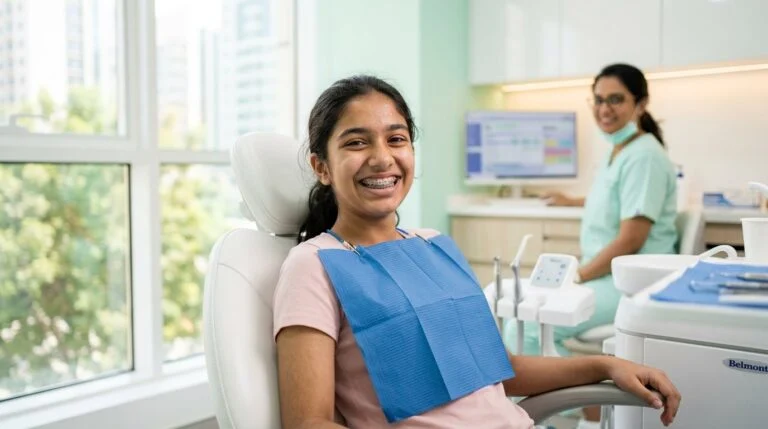
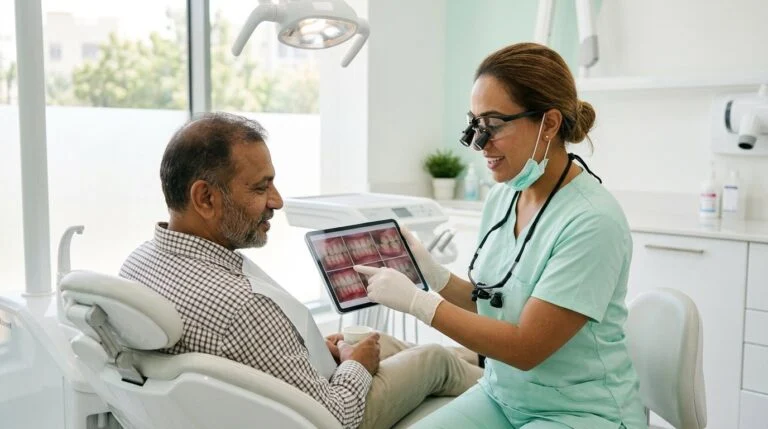
Common reasons for braces for adults
Crowding
Overlapping teeth trap plaque and are harder to clean, raising the risk of decay and gum problems.
Gaps
Spaces between teeth, sometimes appearing later in life as teeth drift.
Relapse
Teeth that moved back after childhood braces because a retainer was not worn.
Bite problems
Overbite, underbite, crossbite or open bite can cause uneven wear and jaw strain.
Before other treatment
Aligning teeth first can make crowns, bridges, implants or veneers simpler and more conservative.
Confidence
Many adults simply want a smile they are happy to show.
Your options: metal, ceramic or clear aligners
Metal braces are the most established of the braces for adults options. They are strong, efficient and suitable for almost every case, including complex bite corrections. Modern brackets are smaller than many people remember.
Ceramic braces work the same way but use tooth-coloured brackets, so they are much less noticeable. They are popular with adults who want fixed braces without the metal look. They need a little more care to avoid staining from coffee, tea or turmeric.
Clear aligners are a series of removable transparent trays, each moving the teeth a small amount. They are nearly invisible and can be taken out to eat and brush, which suits many working adults. They need to be worn for about 22 hours a day to work. Our comparison of clear aligners vs braces goes into the differences in detail, and you can read more on our braces and clear aligners pages.
How braces for adults work, step by step
Consultation
We examine your teeth and gums, discuss what you want to change and check whether treatment is suitable. The consultation and X-ray are free.
Records and plan
X-rays, photos and impressions or scans are used to plan the movement. You receive a written plan with the options and costs.
Fixing gums and teeth first
Any decay or gum inflammation is treated before braces go on, because healthy foundations are essential.
Active treatment
Fixed braces are adjusted every four to eight weeks, or you change aligners as planned with regular check-ins.
Retention
When the teeth are in place, retainers hold them there while the bone settles.
Not sure what you need?
Get a free check-up and X-ray. A dentist explains your options and gives you the cost in writing. Open until 10 PM on Al Khan Street, Al Majaz.
How long does treatment take?
Most adult braces take between 12 and 24 months, depending on how much the teeth need to move and the type of brace. Mild crowding or small gaps can sometimes be corrected in under a year. Complex bite corrections take longer. We give you a realistic estimate at the planning stage, not a best-case figure.
Wearing elastics or aligners exactly as instructed, keeping appointments and avoiding breakages all help keep treatment on schedule.
Does it hurt?
With adult orthodontics, most people feel pressure and tenderness for two or three days after braces are fitted and after each adjustment or new set of aligners. Soft foods and an over-the-counter pain reliever, if suitable for you, usually manage this well. Brackets can rub the inside of the cheeks at first; orthodontic wax covers them until the skin toughens, which usually takes a week or two.
Ongoing pain, a loose bracket or a poking wire should be checked. Call us and we’ll see you promptly.
First week tips
- Eat soft foods for a few days
- Use orthodontic wax on rubbing brackets
- Rinse with warm salt water for sore spots
- Avoid very hard or sticky foods
- Keep spare wax at work
Cleaning and caring for your teeth
Good hygiene is essential with adult braces. Plaque collects around brackets and wires, and if it’s left there it can cause white marks on the enamel, decay and swollen gums. Brush carefully around every bracket, use interdental brushes or a floss threader daily, and consider a fluoride mouthwash. Many adults find an electric toothbrush makes this easier. With aligners, brush before putting the trays back in so food isn’t trapped against your teeth.
Keep up your regular teeth cleaning appointments throughout treatment.
Cost and insurance
The cost depends on the type of brace and the complexity of the case. Our guide to braces cost in Sharjah explains the typical price factors. Many insurance plans in the UAE do not cover adult orthodontics, but some do, so we will check your policy. You can also spread the cost with Tabby, Tamara or Toothpick; see our guide on paying for treatment in instalments.
Keeping your new smile
Teeth naturally tend to drift, and they keep doing so throughout life. That is why retainers aren’t optional. Most adults wear a fixed wire bonded behind the front teeth, a removable clear retainer at night, or both. Wear your retainer exactly as instructed and bring it to check-ups. A retainer is the cheapest insurance you can buy for the time and money you have invested in adult orthodontics. For more background, see the NHS guide to orthodontics.
Braces for adults with gum problems
Gum health matters more in adults than in teenagers, because many adults have some degree of gum inflammation or bone loss. Adult braces are still possible in these cases, but the gums must be stable before treatment starts and checked regularly during it. Moving teeth through inflamed gums can make bone loss worse, which is why we treat gum problems first. In fact, aligning crowded teeth often makes them easier to clean, which helps the gums in the long term. If you have been told you have gum disease, mention it at your consultation.
Choosing the right braces for adults
The best choice depends on your teeth, your lifestyle and your budget. If you speak to clients all day, clear aligners or ceramic adult orthodontics may suit you best. If you need significant bite correction or tend to lose things, fixed braces remove the need to remember to wear trays. Some adults combine both, starting with fixed braces and finishing with aligners. We’ll lay out the realistic options for your case, with the pros, cons and costs of each, so you can decide without pressure.
Braces for adults: your questions
Am I too old for braces?
Will braces affect my work or speech?
Can I have braces with crowns or missing teeth?
Are clear aligners as good as braces?
Do I need to see a specialist?
Thinking about straightening your teeth?
Book a free consultation and X-ray in Al Majaz. We’ll show you your options and give you a written plan with costs.
Written by our dentists
Written by the dental team at Al Jazeera Dental Clinic, a family clinic on Al Khan Street, Al Majaz 3, Sharjah, open since 1998, and medically reviewed by Dr Ranjeet Kumar, Medical Director (BDS, Diploma in Endodontics), October 2026.
Related articles
Types of Braces: Metal, Ceramic, Self-Ligating, Lingual and Aligners Compared
Compare the types of braces: metal, ceramic, coloured, self-ligating, lingual and clear aligners. Pros, cons, comfort and who each suits. Free brac…
Braces Cost in Sharjah: Metal, Ceramic and Aligners Compared
Compare braces costs in Sharjah: metal, ceramic and clear aligners, treatment time, retainers and insurance. Free orthodontic assessment, pay month…
Aligners vs Braces: Which Is Right for You?
Aligners vs braces compared by a Sharjah dental team: looks, comfort, results, speed, cost, cleaning and who each suits. Free orthodontic assessmen…