
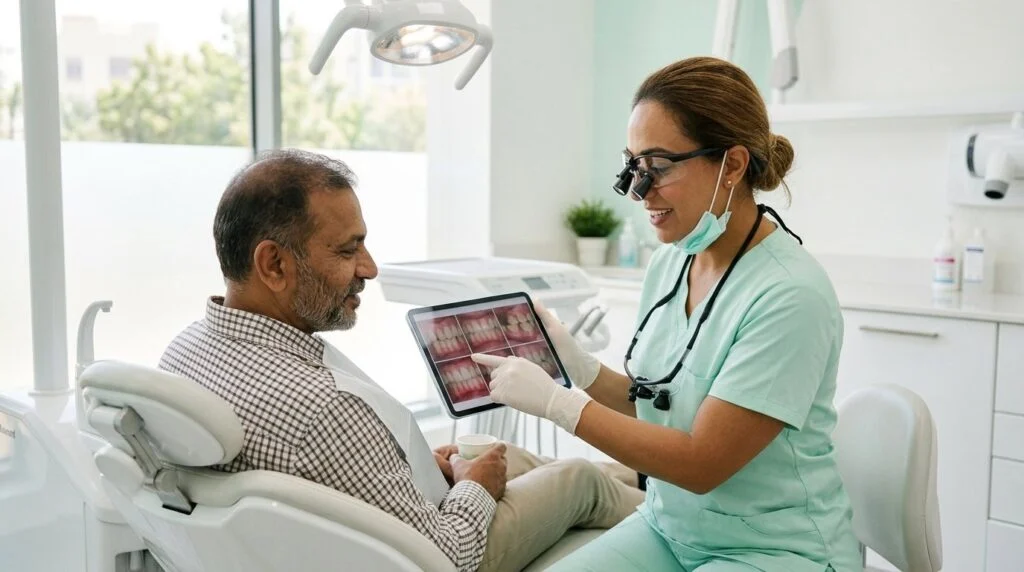
Dental care during pregnancy: what is safe and when
Pregnancy changes your gums, your eating habits and sometimes your teeth. A check-up is safe, and good dental care during pregnancy protects both you and your baby.
Your mouth changes too
Many expectant mothers put off dental care during pregnancy because they are unsure whether treatment is safe, or simply because there is so much else to think about. Yet pregnancy is exactly the time when the mouth needs extra attention. Hormone changes make gums more sensitive to plaque, morning sickness exposes teeth to acid, and cravings or frequent snacking can increase the risk of decay.
The good news is that routine dental care during pregnancy is safe and recommended. This guide explains what changes to expect, which treatments are fine at each stage, what to postpone, and simple habits that keep your teeth and gums healthy until your baby arrives and beyond.
Is dental care during pregnancy safe?
Yes. Pregnancy dental care, including check-ups, cleaning, fillings and treatment for pain or infection are all considered safe during pregnancy. Leaving an infection untreated is generally a greater risk than treating it. Local anaesthetic used for dental work is safe in the normal doses we use. Always tell us you’re pregnant, how many weeks you’re, and any medicines you take, so we can plan accordingly.
Purely cosmetic treatments, such as teeth whitening or elective veneers, are usually postponed until after the baby is born. That isn’t because they are known to be harmful, but because there is no need to do them now and it’s sensible to avoid anything unnecessary.
Dental care during pregnancy, trimester by trimester
First trimester (weeks 1 to 12)
Check-ups and cleaning are fine. Urgent treatment for pain or infection can be done. Non-urgent treatment is often planned for the second trimester, when nausea has usually eased.
Second trimester (weeks 13 to 27)
Usually the most comfortable time for treatment. Fillings and other necessary work are commonly done now.
Third trimester (weeks 28 to birth)
Treatment is still possible, but lying back for long periods can be uncomfortable. Short appointments, a pillow and turning slightly to the left help.
Pregnancy gingivitis
Rising hormone levels make the gums react more strongly to plaque. Many women notice that their gums bleed, look redder or feel swollen, often from the second or third month. This is called pregnancy gingivitis, and it is very common. It isn’t a reason to brush less; in fact, careful brushing and cleaning between the teeth, along with a professional clean, are what settle it.
Some research has linked gum disease in pregnancy with a higher risk of premature birth and low birth weight, although the evidence is mixed. Either way, healthy gums are worth looking after. Our article on the signs of gum disease explains what to look for.
Look out for
- Gums that bleed when brushing
- Red, puffy or tender gums
- A small red lump on the gum (pregnancy epulis)
- Bad taste or bad breath
- Loose-feeling teeth
Morning sickness and your teeth
Vomiting brings stomach acid into the mouth, which softens enamel. Don’t brush straight after being sick, because brushing softened enamel can wear it away. Instead, rinse with water or a fluoride mouthwash and wait about an hour before brushing. If the taste of toothpaste makes you feel sick, try a mild-flavoured one or a children’s toothpaste with the right fluoride level, and brush slowly with a small-headed brush.
Frequent sipping of sweet drinks or snacking to manage nausea also raises the risk of decay. Where you can, choose water, plain crackers, cheese or yoghurt without added sugar.
Not sure what you need?
Get a free check-up and X-ray. A dentist explains your options and gives you the cost in writing. Open until 10 PM on Al Khan Street, Al Majaz.
X-rays, anaesthetic and medicines
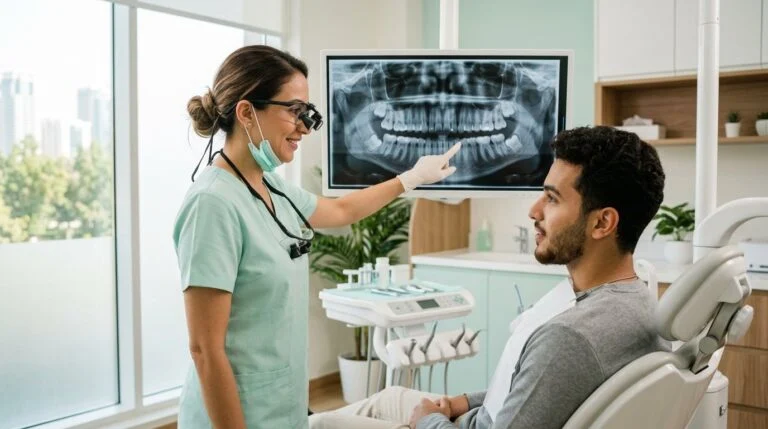
Dental X-rays use a very low dose aimed at the mouth, far from the baby. Even so, routine X-rays are usually postponed during pregnancy. If one is needed to diagnose pain or infection, it can be taken with appropriate precautions. Local anaesthetic is safe and allows treatment to be done comfortably, which itself reduces stress.
If you need a painkiller or antibiotic, we’ll choose one that’s considered safe in pregnancy and coordinate with your doctor if necessary. Never take medicines without checking first.
Simple daily habits for healthy teeth in pregnancy
Brush twice a day
Use fluoride toothpaste and a soft brush, angled towards the gum line.
Clean between teeth
Floss or interdental brushes once a day help calm bleeding gums.
Rinse after vomiting
Use water or a fluoride mouthwash and wait an hour before brushing.
Watch the snacks
Keep sugary snacks and drinks to mealtimes where possible.
Stay hydrated
Water helps saliva protect your teeth, especially in hot weather.
Book a check-up
Ideally early in pregnancy, with any treatment planned for the second trimester.
Dental emergencies during pregnancy
Urgent pregnancy dental care should never be delayed. Toothache, swelling or a broken tooth should not wait until after the birth. Infection and severe pain are stressful and can affect sleep and eating. Contact our emergency dentist service and tell us how far along you’re. We will see you promptly and treat the problem safely. Read our guides on toothache and tooth abscess for more information.
After the baby arrives
The first months with a newborn are busy, but try not to let your own care slip. Gum inflammation from pregnancy usually settles after the birth, but if bleeding continues, book a check-up. Breastfeeding does not affect your teeth, though you may feel thirsty, so keep water close by. When the time comes, our guide to baby tooth decay explains how to protect your child’s first teeth, and the NHS gum disease page offers general advice on gum health.
Planning dental care during pregnancy
If you’re planning a pregnancy, the best time for a check-up is before you conceive. Any fillings, gum treatment or wisdom tooth problems can be dealt with in advance, so you start pregnancy with a healthy mouth. If you’re already pregnant, book a visit as soon as you feel ready. A first-trimester check-up lets us look for problems early and plan any treatment for the more comfortable second trimester.
Bring a list of your medicines and the name of your obstetrician or doctor. If you have conditions such as gestational diabetes or high blood pressure, let us know, because they can affect your gums and how we plan dental care while pregnant.
Diet, cravings and your teeth
Cravings for sweet or sour foods are common, and frequent snacking is often needed to manage nausea. The problem for teeth is frequency: every sugary snack or acidic drink starts a new acid attack that lasts around half an hour. Grouping snacks together, finishing with water or a piece of cheese, and choosing less sticky options all reduce the risk. Calcium and vitamin D are important for your baby’s developing teeth and bones, so follow the diet advice from your doctor or midwife. Good nutrition is a quiet but important part of pregnancy dental care.
Common myths about teeth and pregnancy
You may have heard that every pregnancy costs a tooth, or that the baby takes calcium from the mother’s teeth. Neither is true. Teeth don’t lose calcium to the baby; problems in pregnancy come from gum inflammation, acid from sickness and changes in diet, all of which can be managed. Another myth is that all dental treatment must wait until after the birth. In reality, necessary dental care while pregnant is safer than leaving pain or infection untreated. Good pregnancy dental care is simply about timing treatment sensibly and keeping up good habits at home.
Dental care during pregnancy: questions
Is it safe to have a filling while pregnant?
Can I have teeth whitening while pregnant?
Is local anaesthetic safe for my baby?
Why do my gums bleed more now?
Does insurance cover dental care during pregnancy?
Expecting? Book a gentle check-up.
Book a free consultation in Al Majaz. Tell us how many weeks you are and we’ll plan safe, comfortable care around you.
From our team
Written by the dental team at Al Jazeera Dental Clinic, a family clinic on Al Khan Street, Al Majaz 3, Sharjah, looking after Sharjah families since 1998, and medically reviewed by Dr Ranjeet Kumar, Medical Director (BDS, Diploma in Endodontics), October 2026. General advice only. For your own teeth, book a check-up: the consultation and X-ray are free.
Related articles
Home Whitening: Kits, Strips and Dentist Trays Compared
Home whitening compared: strips, LED kits, charcoal, whitening toothpaste and dentist-made trays. What works, what is risky, and how to whiten safe…
Wisdom Tooth Removal Recovery: Day-by-Day Guide
Wisdom tooth removal recovery explained day by day: swelling, pain relief, what to eat, cleaning, warning signs and when to call us. Gentle extract…
Wisdom Tooth Removal Cost in Sharjah: What to Expect
Wisdom tooth removal cost in Sharjah depends on position, impaction and number of teeth. How the price is set, insurance, recovery and when removal…