
- Home
- Dental problems
- Tooth decay
Tooth decay: causes, signs and treatment
Tooth decay is one of the most common health problems in the world, and it’s largely preventable. Caught early, it’s quick and simple to treat.
What tooth decay is
Tooth decay, also called dental caries or cavities, happens when bacteria in plaque turn sugars into acid. The acid dissolves minerals from the enamel. At first the damage can be reversed, but if acid attacks continue, a hole forms. Once decay reaches the softer dentine underneath, it spreads faster and the tooth can become sensitive or painful.
Left untreated, it can reach the nerve and cause an infection or abscess. The good news is that early decay often causes no pain and can be found at a check-up, when treatment is smallest.
9 signs of tooth decay
Sensitivity
A twinge with sweet, hot or cold food and drinks.
White or brown spots
Chalky white patches or brown marks on the enamel.
A visible hole
A pit or hole you can see or feel with your tongue.
Food trapping
Food catching in the same place between teeth.
Pain when biting
Discomfort when chewing on one side.
Bad taste or breath
A persistent bad taste near one tooth.
Toothache
Lingering or throbbing pain, often a sign decay is deep.
Broken filling edges
Decay often starts around old fillings.
No symptoms at all
Early decay is often painless and found on X-ray.

What causes tooth decay
Decay needs four things: teeth, plaque bacteria, sugar and time. Every time you eat or drink something sugary or starchy, plaque produces acid for around 20 minutes or more. Frequent snacking and sipping sweet drinks, including juice, sweetened tea and coffee, and energy drinks, keeps teeth under attack for much of the day.
Other factors raise the risk: a dry mouth from medicines or not drinking enough water, gaps in brushing and cleaning between teeth, deep grooves in back teeth, receding gums that expose softer root surfaces, and old fillings with worn edges.
How a dentist finds tooth decay
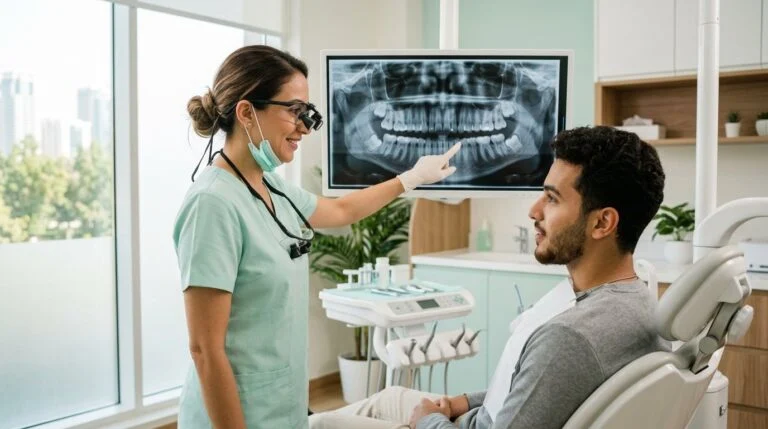
At a check-up, your dentist looks at each tooth under good light and dries the surfaces, which makes early changes easier to see. Many cavities start between teeth where they can’t be seen directly, so a small X-ray is often needed. At our clinic the first consultation and X-ray are free, and you see the images on screen while we explain what we find.
For patients with low risk, check-ups every six to twelve months are usually enough. Patients who have had a lot of decay may be advised to come more often.
Treatment for tooth decay
Treatment depends on how far the decay has spread. The earlier it is found, the simpler and less costly the treatment.
From smallest to largest
- Fluoride and better habits for early white spots
- A small tooth-coloured filling
- A larger filling or onlay
- A crown for a badly weakened tooth
- Root canal treatment if decay reaches the nerve
- Extraction only when the tooth can’t be saved
Can early tooth decay be reversed?
Yes, at the very earliest stage. When enamel has lost some minerals but no hole has formed, it can harden again. Brushing twice a day with fluoride toothpaste, spitting rather than rinsing after brushing, cutting down how often you have sugar, and professional fluoride can stop the spot and help it remineralise. Once a cavity has formed, it can’t heal by itself and needs a filling.
Fillings for tooth decay
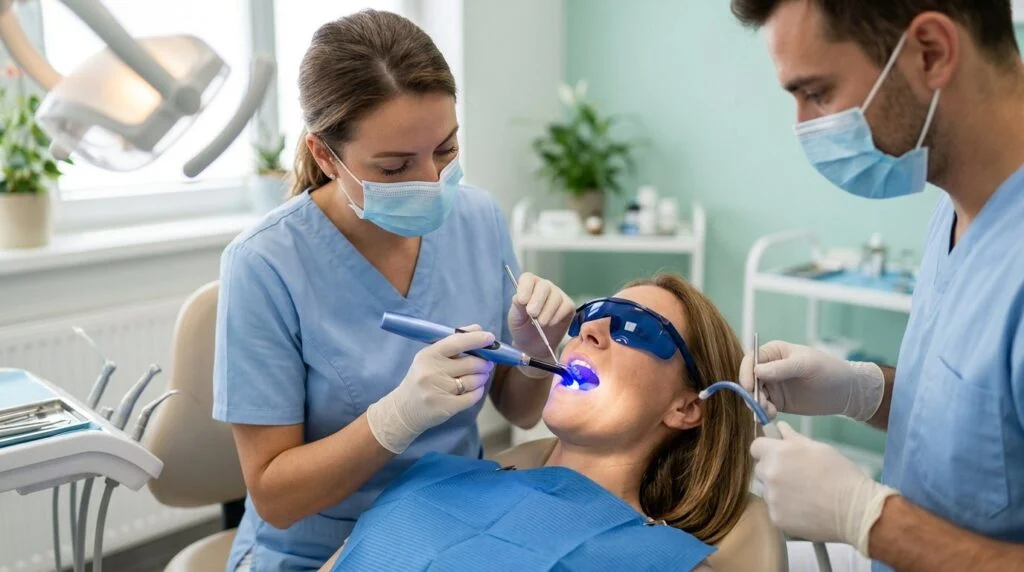
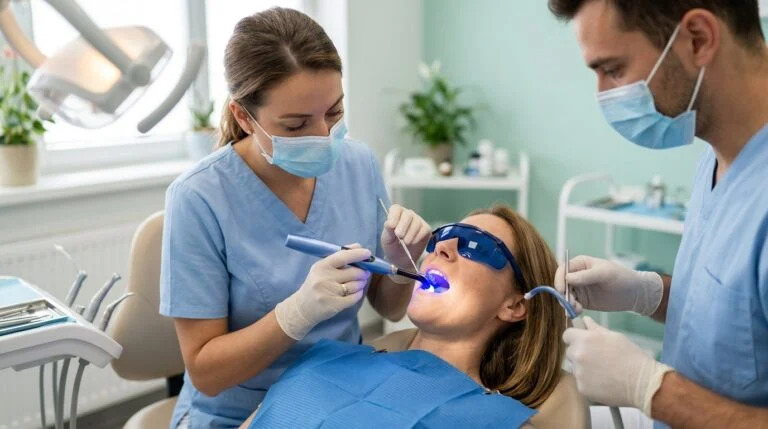
Most cavities are treated with a filling. The dentist numbs the tooth, removes the decayed part and seals the space with a tooth-coloured composite that’s set with a blue light. A small filling usually takes less than an hour. See our tooth filling page.
When decay reaches the nerve
If decay reaches the pulp, the tooth may ache on its own, keep you awake at night or become sensitive to heat. Root canal treatment removes the infected pulp, cleans and seals the canals and saves the tooth. Afterwards a crown is often recommended to protect it. See our root canal treatment page. If you have swelling, see our emergency dentist page.
Tooth decay in children
Baby teeth have thinner enamel, so decay can spread quickly. Bottles of milk or juice at night, frequent snacks and difficulty brushing all add to the risk. Fluoride varnish and fissure sealants give extra protection. See our children’s dentistry page.
How to prevent tooth decay
Brush twice a day
Use fluoride toothpaste for two minutes, last thing at night and one other time.
Clean between teeth
Floss or interdental brushes once a day.
Limit sugar to mealtimes
How often matters more than how much.
Drink water
Choose water between meals instead of juice or sweet drinks.
Regular check-ups
Find decay early, while treatment is small.
Tooth decay questions
Does tooth decay always hurt?
Can tooth decay spread to other teeth?
How long does a filling take?
Is the check-up free?
Does insurance cover fillings?
Worried about tooth decay?
Free check-up and X-ray at Al Khan Street, Al Majaz 3, open until 10 PM.
Written by our dentists
Written by the dental team at Al Jazeera Dental Clinic, a family clinic on Al Khan Street, Al Majaz 3, Sharjah, open since 1998, and medically reviewed by Dr Ranjeet Kumar, Medical Director (BDS, Diploma in Endodontics), October 2026.
Related articles
Baby Tooth Decay: Causes, Early Signs and Treatment
Baby tooth decay explained for parents: why milk teeth matter, early white spots, bottle and night feeding, treatment options for children and how …
Pay in Instalments for Dental Treatment with Tabby, Tamara or Toothpick
How to pay in instalments for dental treatment in Sharjah with Tabby, Tamara or Toothpick: how it works, what you can use it for, tips and question…
تسوس الأسنان: الأسباب والمراحل والعلاج والوقاية
تسوس الأسنان: الأسباب والأعراض والمراحل، ومتى يكفي الحشو ومتى تحتاج علاج العصب، مع نصائح الوقاية للكبار والأطفال. عيادة الجزيرة لطب الأسنان، المجاز…