
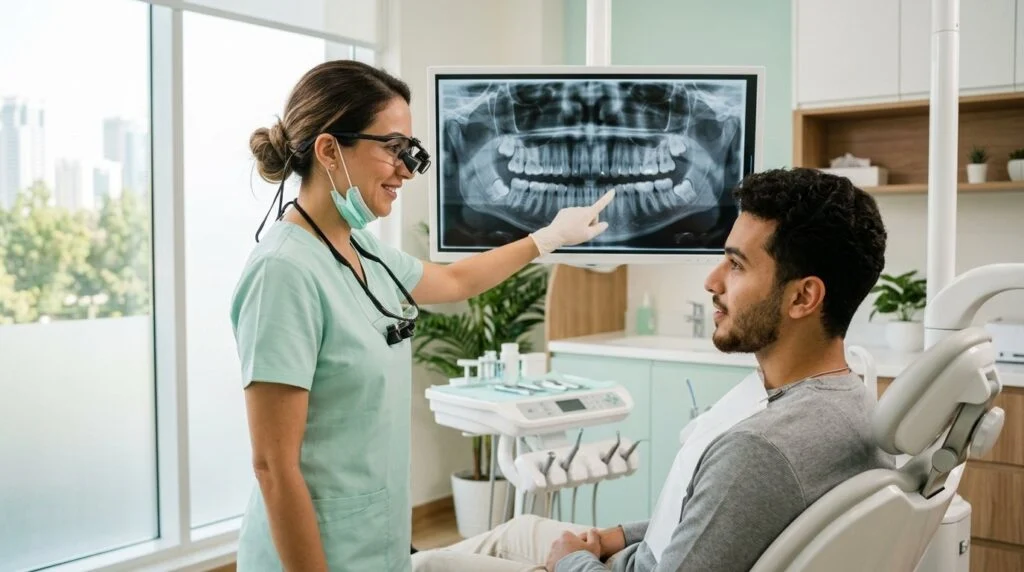
Pericoronitis: swollen gum over a wisdom tooth
A sore, swollen gum behind your last molar, a bad taste and pain when you bite? That is often pericoronitis. Here is what causes it and what to do.
What is pericoronitis?
Pericoronitis is inflammation and infection of the gum around a tooth that has only partly come through, most often a lower wisdom tooth. A flap of gum, called an operculum, covers part of the tooth. Food and bacteria get trapped underneath, and the gum becomes swollen and sore.
It’s one of the most common reasons young adults visit a dentist with wisdom tooth pain. Mild cases settle with cleaning and good home care. Repeated or severe episodes usually mean the tooth needs attention.
Signs of pericoronitis
Swollen gum
Red, puffy gum behind or over the last back tooth, often tender to touch.
Pain when biting
The upper tooth bites onto the swollen flap, which makes it worse.
Bad taste or smell
Pus or trapped food can leave a bad taste and bad breath.
Hard to open
Jaw stiffness and difficulty opening the mouth wide (trismus).
Swollen face or glands
Swelling of the cheek or tender lymph glands under the jaw.
Fever
A temperature or feeling unwell means the infection is spreading.
Why it happens
Wisdom teeth usually come through between the late teens and mid twenties. When there isn’t enough room, the tooth may stay partly covered by gum. That pocket is almost impossible to clean with a toothbrush. Plaque and food collect, bacteria multiply and the gum becomes inflamed.
Episodes are often triggered by a cold, stress, exams, poor sleep or a period of less careful brushing. Pericoronitis can also affect a child’s molars as they erupt, but this is less common. See wisdom tooth pain for other reasons back teeth hurt.
What you can do at home
Rinse with warm salt water
Half a teaspoon of salt in a glass of warm water, swished around the area several times a day, especially after meals.
Clean gently
Use a soft toothbrush, and a small brush or water flosser around the back tooth, even if it’s sore.
Pain relief
Over-the-counter pain relief can help. Follow the packet dose and ask a pharmacist if you have medical conditions or take other medicines.
Book a check
Even if it settles, see a dentist so the pocket can be cleaned properly and the tooth assessed.
When it’s urgent
Most pericoronitis is uncomfortable but not dangerous. Occasionally the infection spreads into the face and neck. That needs prompt treatment.
If you have difficulty breathing or swallowing, go to a hospital emergency department straight away.
See a dentist the same day if
- Your face or jaw is swelling
- You cannot open your mouth properly
- You have a fever or feel unwell
- Pain is getting worse despite home care
- Swallowing is painful
How a dentist treats pericoronitis
First, the dentist examines the area and usually takes an X-ray to see the position of the wisdom tooth. The pocket under the gum flap is gently washed out to remove trapped food and bacteria. If the upper wisdom tooth is biting onto the swollen gum, smoothing or removing that upper tooth may be advised.
Antibiotics aren’t needed for every case. They are usually reserved for spreading infection, swelling or fever. The dentist will explain what is right for you.
Not sure what you need?
Get a free check-up and X-ray. A dentist explains your options and gives you the cost in writing. Open until 10 PM on Al Khan Street, Al Majaz.
Does the wisdom tooth need to come out?
If pericoronitis keeps coming back, or the wisdom tooth has no room to come through properly, removing it’s often the long-term solution. Removal is usually planned once the infection has calmed down. Simple wisdom tooth extractions are done in the clinic under local anaesthetic; deeply impacted teeth may be referred to an oral surgeon.
Learn more on our tooth extraction page, read wisdom tooth removal cost in Sharjah, and see wisdom tooth removal recovery for what to expect afterwards, including how to avoid dry socket.
Preventing another flare-up
Keep the area as clean as you can. Angle the toothbrush right to the back of the mouth, use a single-tuft or small interdental brush around the last molar and rinse after meals. Regular check-ups and professional cleaning help catch trouble early. If you notice the first signs of swelling, start salt-water rinses straight away and book a check.
Pericoronitis questions
Will pericoronitis go away on its own?
Do I need antibiotics?
Can a wisdom tooth be removed while it is infected?
Is pericoronitis an emergency?
Can I see a dentist today in Sharjah?
Swollen gum behind your back tooth?
Book a same-day check in Al Majaz. We’ll clean the area, take an X-ray and explain your options.
Who wrote this
Written by the dental team at Al Jazeera Dental Clinic, a family clinic on Al Khan Street, Al Majaz 3, Sharjah, caring for patients since 1998, and medically reviewed by Dr Ranjeet Kumar, Medical Director (BDS, Diploma in Endodontics), October 2026. Use it as a guide only. Every mouth is different, so a check-up is the only way to know what you need.
Related articles
التهاب اللثة: الأعراض والأسباب وطرق العلاج
لثتك حمراء أو تنزف عند التفريش؟ تعرف على أعراض التهاب اللثة وأسبابه وعلاجه في البيت وعند الطبيب. عيادة الجزيرة لطب الأسنان، المجاز، الشارقة. الكشف …
Wisdom Tooth Pain: Causes, Relief and When to See a Dentist
Wisdom tooth pain explained: why it happens, quick relief at home, warning signs of infection, and when removal is the best option. Free X-ray at o…
Wisdom Tooth Removal Cost in Sharjah: What to Expect
Wisdom tooth removal cost in Sharjah depends on position, impaction and number of teeth. How the price is set, insurance, recovery and when removal…