

Tooth abscess: signs, treatment and when it’s an emergency
An abscess is a pocket of infection that won’t clear up on its own. Here is how to recognise one, what treatment involves, and when swelling means you should go straight to hospital.
An infection that needs a dentist
A tooth abscess is a collection of pus caused by a bacterial infection, either inside the tooth and around the root tip, or in the gum beside the tooth. It often causes severe, throbbing pain, but sometimes it’s surprisingly painless, which can lead people to ignore it. Either way, a tooth abscess doesn’t heal by itself: the source of the infection has to be treated.
This guide explains the signs of a tooth abscess, the main types, how dentists treat it, why antibiotics alone aren’t the answer, what you can do until you’re seen, and the warning signs that need urgent hospital care.

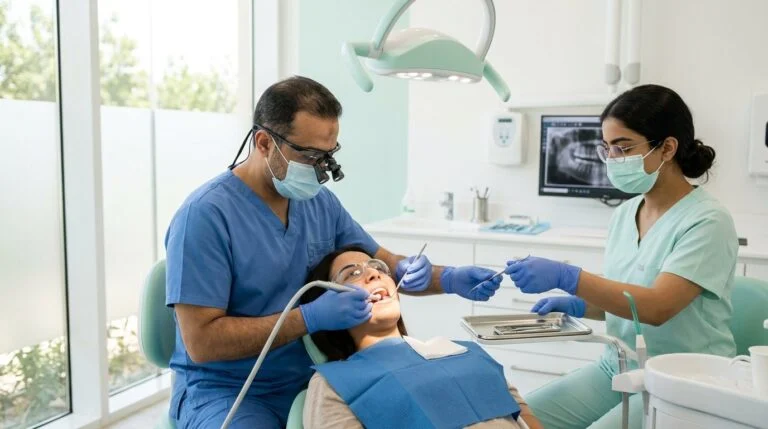

7 warning signs of a tooth abscess
1. Throbbing pain
Severe, constant pain that may spread to the ear, jaw or neck.
2. Pain when biting
The tooth feels tender or raised when you bite or tap it.
3. Swelling
Swelling of the gum, cheek or jaw on one side.
4. A pimple on the gum
A small bump that may leak pus and leave a bad taste.
5. Bad taste or smell
A salty or foul taste, especially if the abscess drains.
6. Fever or feeling unwell
A temperature, tiredness or swollen glands under the jaw.
7. Sudden relief
Pain easing suddenly can mean the abscess has burst, not that it has healed.
Types of tooth abscess
A periapical abscess forms at the tip of a tooth root, usually because decay, a crack or an old injury has let bacteria reach the nerve and the nerve has died. A periodontal abscess forms in the gum beside the tooth, usually because of gum disease that has created a deep pocket. Less commonly, a gingival abscess affects only the gum surface, for example where a piece of food has become stuck. The type decides which treatment is needed.
How a tooth abscess is treated
The first priority is to drain the infection and relieve the pressure, which usually brings rapid relief from pain. For an abscess at the root tip, the dentist opens the tooth and cleans the canals, which is the first stage of root canal treatment, or removes the tooth if it can’t be saved. For a gum abscess, the pocket is cleaned and drained. Antibiotics are added only when the infection is spreading or you’re unwell.
Once the infection is controlled, the tooth is restored with a filling or crown, or the gap is planned for if the tooth was removed. Read about root canal treatment and tooth extraction.
Treatment options
- Drain the infection
- Root canal treatment to save the tooth
- Extraction if it can’t be saved
- Gum cleaning for a gum abscess
- Antibiotics only if needed
Why antibiotics alone aren’t enough
Antibiotics can reduce swelling and stop an infection spreading, but they can’t reach the bacteria sealed inside a dead tooth or a deep gum pocket. If the source is not removed, a dental abscess usually returns, sometimes weeks or months later. Taking leftover antibiotics at home can also mask the problem and contribute to resistance. The lasting fix is to treat the tooth or gum where the infection started.
Not sure what you need?
Get a free check-up and X-ray. A dentist explains your options and gives you the cost in writing. Open until 10 PM on Al Khan Street, Al Majaz.
When a tooth abscess is an emergency
Go to the nearest hospital emergency department, or call 998, if swelling spreads towards your eye or down your neck, if you have difficulty breathing or swallowing, if you can’t open your mouth, or if you have a high fever and feel very unwell. These are signs that the infection may be spreading and needs urgent medical treatment. For severe pain or facial swelling without these signs, call us for a same-day appointment. See our emergency dentist page.
What to do until you’re seen
Rinse with warm salt water several times a day, take an ordinary painkiller exactly as directed on the pack, and hold a cold compress against your cheek. Sleep with your head raised. Do not apply heat to a swollen face, don’t try to burst a gum swelling yourself, and don’t put aspirin on the gum. These steps can help you stay comfortable for a short time, but a dental abscess still needs treatment.
Please don’t
- Apply heat to the face
- Burst the swelling yourself
- Put tablets on the gum
- Use leftover antibiotics
How a tooth abscess is diagnosed
The dentist asks about your symptoms, examines the gum and tooth, checks whether the tooth responds to cold and tapping, and takes an X-ray. The X-ray often shows a dark area at the root tip where bone has been affected. At Al Jazeera Dental Clinic the consultation and X-ray are free, and we keep same-day slots every day until 10 PM.
Preventing an abscess
Most abscesses start with untreated decay, a crack or gum disease. Brushing twice a day with fluoride toothpaste, cleaning between teeth daily, limiting sugary snacks, wearing a mouthguard for contact sports and keeping six-monthly check-ups all reduce the risk. Treating a cavity while it’s small is far simpler than treating an established infection. For more independent information, see the NHS guide to dental abscess.
Who is more at risk?
Anyone can develop a dental abscess, but some people are more prone, and knowing your risk helps you act early. Frequent sugary snacks and drinks lead to more decay. Gum disease creates deep pockets where bacteria thrive. Large old fillings and cracked teeth let bacteria reach the nerve. Diabetes, smoking, a weakened immune system and a dry mouth from medicines all make infections more likely and slower to heal.
If any of these apply to you, regular check-ups and cleans are especially important, because problems can be found and treated before they turn into painful infections.
Risk factors
- Frequent sugary snacks
- Gum disease
- Large fillings or cracks
- Diabetes or smoking
- Dry mouth
Children and dental infections
Children can develop infections in baby teeth, often from untreated decay. Signs include a swollen gum or a small pimple above a tooth, a tooth that turns grey, facial swelling, refusing to eat on one side or a fever. Because an infected baby tooth can affect the adult tooth developing underneath, it should always be checked promptly. Give a children’s painkiller suitable for their age and weight and call us. If the face is very swollen or your child is unwell, go to hospital.
Pregnancy and medical conditions
Dental infections should be treated during pregnancy rather than left, because infection and severe pain are not good for mother or baby. Local anaesthetic and dental X-rays with protection are considered safe when needed, and the second trimester is often the most comfortable time for treatment. If you have a heart condition, diabetes or take blood thinners, tell us so we can plan treatment safely and liaise with your doctor if needed.
What happens after treatment
Once a dental abscess is drained and the source treated, pain usually improves within a day or two and swelling goes down over a few days. Keep the area clean with gentle salt water rinses, take painkillers as directed and finish any antibiotics if they were prescribed. We will book you back to complete the root canal and restore the tooth, or to plan replacing it if it was removed. Follow-up X-rays confirm the bone has healed.
Tooth abscess questions
Can a tooth abscess go away on its own?
Is a tooth abscess dangerous?
Will I need a root canal?
Do I need antibiotics?
Can I be seen today?
Think you have an abscess?
Same-day slots and a free X-ray. Open until 10 PM, seven days a week.
Who wrote this
Written by the dental team at Al Jazeera Dental Clinic, a family clinic on Al Khan Street, Al Majaz 3, Sharjah, open since 1998, and medically reviewed by Dr Ranjeet Kumar, Medical Director (BDS, Diploma in Endodontics), October 2026. Use it as a guide only. Every mouth is different, so a check-up is the only way to know what you need.
Related articles
After Root Canal Treatment: What Is Normal and What Is Not
What to expect after root canal treatment: normal tenderness, eating, temporary fillings, crowns, warning signs and how long healing takes. Advice …
Dry Socket: Symptoms, Treatment and Prevention
Dry socket explained: what it is, how to tell it apart from normal healing, how dentists treat it, and simple steps to prevent it after a tooth ext…
Baby Tooth Decay: Causes, Early Signs and Treatment
Baby tooth decay explained for parents: why milk teeth matter, early white spots, bottle and night feeding, treatment options for children and how …