
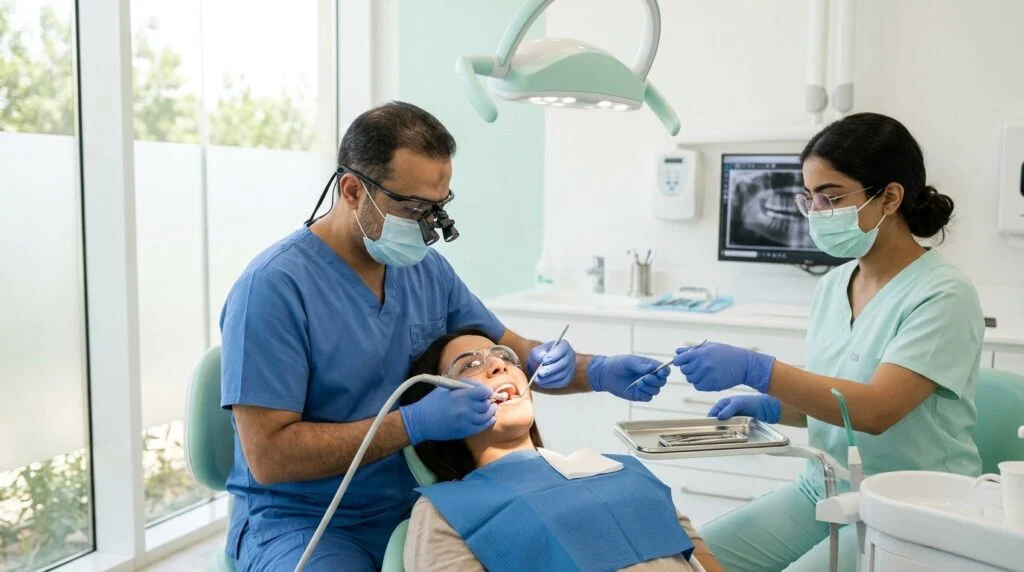
After root canal treatment: what is normal and what is not
Most people feel relief within a day or two. Here is what to expect afterwards, how to protect the tooth until it’s fully restored, and when to call us.
Relief, then protection
Root canal treatment removes the inflamed or infected nerve from inside a tooth, which usually takes away the severe pain that brought you in. In the days after root canal treatment, the tissues around the root are still settling, so some tenderness is normal. Just as important, the tooth needs protecting until it has its final filling or crown, because a root-treated tooth is more brittle than before.
This guide explains what is normal after root canal treatment, nine aftercare tips, how long recovery takes, why a crown is often recommended, and the warning signs to watch for.
What is normal in the first few days
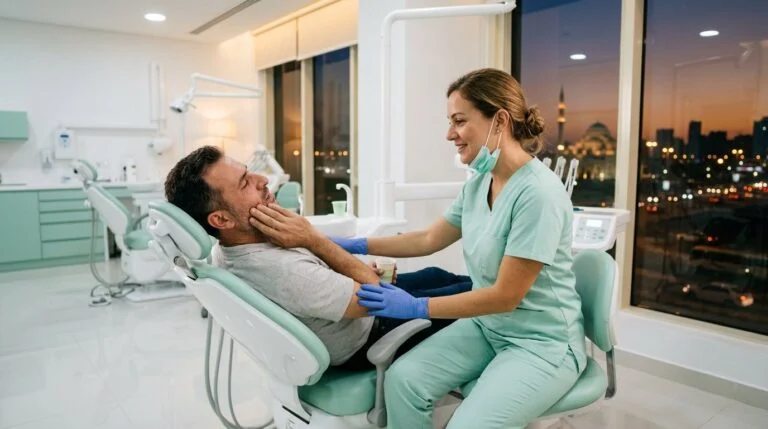
It’s common for the tooth and gum to feel tender for two to five days after root canal treatment, especially when you bite. The jaw can feel stiff from keeping your mouth open, and the area where the injection was given may be a little sore. This discomfort is usually mild to moderate and steadily improves. Ordinary painkillers taken as directed are normally enough.
The tooth should no longer react to hot and cold, because the nerve has been removed. If you feel sensitivity to temperature, it may be coming from a neighbouring tooth.
9 tips after root canal treatment
1. Wait for numbness to wear off
Avoid eating until you can feel your lip and cheek, so you don’t bite them.
2. Chew on the other side
Until the final filling or crown is fitted, protect the tooth.
3. Painkillers as directed
Take them regularly for the first day or two if you need them.
4. Avoid hard and sticky food
Nuts, ice and toffee can crack the tooth or pull out the temporary filling.
5. Keep brushing
Brush and clean between teeth normally, gently around the tooth.
6. Protect the temporary
If a temporary filling feels loose or falls out, call us.
7. Come back for the crown
Book the final restoration as advised; do not leave it for months.
8. Watch your bite
If the tooth feels high when you bite, it may need a small adjustment.
9. Keep check-ups
X-rays at later visits confirm the area has healed.
Why a crown is often recommended
Teeth that need root canal treatment usually already have large fillings or decay, and removing the nerve makes the tooth drier and more brittle. Back teeth take strong chewing forces, so without a crown they can crack, sometimes below the gum where they can’t be saved. That is why a crown is often recommended for molars and premolars after root canal treatment. Front teeth may only need a filling if enough healthy tooth remains.
A crack in an unprotected tooth is one of the most common reasons a root canal fails. Read our guide to the dental crown cost in Sharjah.
Crown recommended for
- Back teeth after root canal
- Teeth with large fillings
- Cracked teeth
- Teeth worn by grinding
How long does recovery take?
Most people feel noticeably better within a day or two after root canal treatment, and tenderness usually settles within a week. If there was a large infection at the root tip, the bone around it can take several months to heal fully, which we check on X-rays at later visits. You can usually return to work the same day or the next day.
Not sure what you need?
Get a free check-up and X-ray. A dentist explains your options and gives you the cost in writing. Open until 10 PM on Al Khan Street, Al Majaz.
Warning signs: when to call us
Call us if pain is severe or gets worse after the first few days, if you develop swelling of the gum or face, if the temporary filling falls out, if the tooth feels high when you bite, or if you notice a pimple on the gum or a bad taste. These are usually easy to deal with, but they should be checked. If swelling spreads towards your eye or neck, or you have difficulty breathing or swallowing, go to hospital or call 998.
Can a root canal fail?
Most root canal treatments are successful and the tooth lasts for many years. Problems can occur if a canal was very narrow or curved and could not be fully cleaned, if bacteria leak back in because the final restoration was delayed or broke, or if the tooth cracks. If a root-filled tooth starts to hurt months or years later, re-treatment is often possible. Acting quickly and protecting the tooth with a crown reduces the risk.
Eating after root canal treatment
Wait until the numbness has worn off before eating. Start with soft food on the other side, and avoid very hard, crunchy or sticky food on the treated tooth until it has its final filling or crown. Hot drinks are fine once you can feel normally, as the treated tooth won’t be sensitive to heat. Our root canal cost guide explains what happens at each stage.
The temporary filling
Between visits, or until the crown is ready, the tooth is sealed with a temporary filling. It keeps bacteria out of the cleaned canals, but it’s softer than a permanent filling and can wear down or come loose. Avoid sticky sweets, chewing gum and very hard food on that side, and brush gently around it. A slightly rough or uneven feel is normal.
If the temporary falls out, or you can feel a hole, call us within a day or two. Leaving the canals open after root canal treatment lets bacteria back in and can cause the treatment to fail.
Protect it by
- Chewing on the other side
- No gum or sticky sweets
- Gentle brushing around it
- Calling us if it comes out
Discolouration after root canal
Front teeth can sometimes darken months or years after root canal treatment, especially if the tooth was injured or had a large old filling. This is cosmetic rather than a sign of failure. Internal whitening from inside the tooth, bonding, a veneer or a crown can all restore a natural colour. Mention any change in colour at your check-up and we’ll explain the options.
Diet and habits during healing
Healing after root canal treatment is helped by the same habits that keep the rest of your mouth healthy. Drink water, limit sugary snacks and drinks, and avoid smoking, which slows healing of the bone around the root tip. If you grind or clench your teeth, especially at night, the treated tooth is at greater risk of cracking before it’s crowned; a night guard can protect it.
Follow-up X-rays
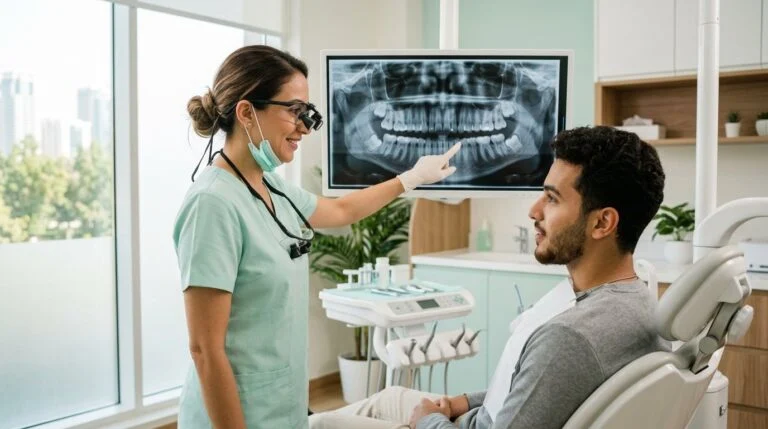
If there was an infection at the root tip, we usually take a follow-up X-ray at a later check-up to confirm the bone is healing after root canal treatment. The dark area seen on the original X-ray should gradually become smaller. Healing can take several months, and it happens quietly without you noticing. Keeping your regular check-ups lets us confirm all is well and catch any rare problem early.
Will I need time off work?
Most people go back to work or study straight away or the next day. The anaesthetic usually wears off within a few hours, and the tenderness that follows is normally mild enough to manage with ordinary painkillers. If your job involves heavy physical work, or if the treatment was long, you may prefer to rest for the remainder of the day. For children, a quiet afternoon at home is usually enough before returning to school the following day. If you have an important event coming up, tell us and we’ll plan the timing of each visit around it.
Questions after root canal
Is pain normal after root canal treatment?
Can I eat after root canal?
Do I need a crown after a root canal?
How long does the tooth last after root canal?
What if my temporary filling falls out?
Question after your root canal?
Message us any time we’re open. Same-day reviews until 10 PM.
About this page
Written by the dental team at Al Jazeera Dental Clinic, a family clinic on Al Khan Street, Al Majaz 3, Sharjah, open since 1998, and medically reviewed by Dr Ranjeet Kumar, Medical Director (BDS, Diploma in Endodontics), October 2026. This is general information. Your dentist can tell you what applies to you.
Related articles
Root Canal Cost in Sharjah: What You Pay For
Root canal cost in Sharjah explained: front vs back teeth, number of visits, crowns, re-treatment and insurance cover. Free consultation and X-ray …
Root Canal vs Extraction: Which Is Better for You?
Root canal vs extraction: comfort, cost over time, success rates, recovery and what replacing a tooth involves. An honest guide to saving or removi…
Pay in Instalments for Dental Treatment with Tabby, Tamara or Toothpick
How to pay in instalments for dental treatment in Sharjah with Tabby, Tamara or Toothpick: how it works, what you can use it for, tips and question…