

Dental anxiety: practical ways to feel calmer at the dentist
If the thought of a dental chair makes your heart race, you are far from alone. Fear of the dentist is one of the most common fears there is, and it can be managed.
You’re not the only one
Surveys in many countries suggest that a large share of adults feel some nervousness about dental visits, and a smaller group avoid the dentist altogether because of fear. Some people can name exactly where it started, often a painful visit as a child. Others simply feel tense at the sound of the drill or the feeling of lying back with someone working in their mouth.
Dental anxiety isn’t a weakness and it’s nothing to be embarrassed about. It’s a normal response that you can manage with the right approach and the right dental team. This guide shares practical steps that help, what to tell us, and how we adapt treatment for nervous patients at our clinic in Al Majaz.
Why people feel anxious about the dentist
Dental anxiety usually comes from a few common sources. A bad experience in the past is the most frequent, especially pain during treatment or a dentist who didn’t listen. Some people feel a loss of control lying back with their mouth open and unable to speak. Others worry about pain, needles, gagging, the noise of instruments, or being judged for the state of their teeth.
Avoidance tends to make dental anxiety worse. Problems that could have been fixed with a small filling grow into toothache that needs a root canal, and the bigger treatment feeds the fear. Breaking that cycle with a gentle, unhurried first visit is often the most important step.
Practical steps that help with dental anxiety
Tell us when you book
Just say you’re nervous. We can give you a longer appointment so nothing feels rushed.
Choose a quiet time
Morning appointments mean less time to worry during the day. Avoid scheduling straight after a stressful meeting.
Bring someone
A friend or family member in the waiting room, or beside you, can make a real difference.
Eat lightly and avoid caffeine
Caffeine can increase jitteriness. A light meal beforehand helps you feel steady.
Plan a reward
Something to look forward to afterwards gives the visit a better ending.
Start with a talk
Your first visit can be a conversation and an examination only, with no treatment that day.
Ways to stay in control during treatment
Agree a stop signal
Raising your hand means we stop immediately. Knowing you can pause at any time reduces the sense of losing control.
Ask us to explain each step
Some people want to know everything, others prefer not to. Tell us which suits you.
Breathe slowly
Breathe in through your nose for four counts and out for six. Slow breathing calms the body’s stress response.
Use music or headphones
Listening to music or a podcast masks the sound of instruments.
Take breaks
Short breaks to sit up, rinse and relax are always fine. Treatment can also be split over shorter visits.
Worried about pain?
Fear of pain is the most common reason behind dental fear, and modern dentistry is far more comfortable than many people remember. A numbing gel is applied before any injection, and the anaesthetic is given slowly, which makes a big difference to comfort. We wait until the area is fully numb before starting and check with you as we go.
If you have found that anaesthetic does not work well for you in the past, tell us. There are often reasons for this, such as infection in the area, and ways to manage it. Most patients are surprised by how little they feel during fillings and even root canal treatment.
Comfort measures
- Numbing gel before injections
- Slow, gentle anaesthetic
- Checking numbness before starting
- Breaks whenever you need
- Shorter visits if preferred
Not sure what you need?
Get a free check-up and X-ray. A dentist explains your options and gives you the cost in writing. Open until 10 PM on Al Khan Street, Al Majaz.
Gagging, embarrassment and other worries
A strong gag reflex is common and can make X-rays or impressions difficult. Tell us beforehand. Breathing through the nose, sitting more upright, and using smaller sensors or digital scans can all help.
Many people who have avoided the dentist for years feel embarrassed about the condition of their teeth. Please don’t let that stop you. We see every kind of situation, and our job is to help, not to judge. With embarrassment as with any dental fear, the first step is simply finding out where things stand, and the consultation and X-ray are free.
Helping children with dental anxiety
Dental fear in children often starts with a parent’s nerves, so try to talk about the dentist in a calm, positive way. Avoid words like hurt or needle, and don’t use the dentist as a threat. Early, regular check-ups when nothing is wrong help children get used to the clinic before they ever need treatment. Our guide to a child’s first dental visit and our children’s dentistry page have more tips.
When anxiety is severe
For some people, the fear is strong enough to be called a phobia: they can’t bring themselves to book at all, or they leave before treatment starts. If that sounds like you, gradual exposure helps. Start with a visit just to see the clinic and meet the dentist, then a check-up, then a simple clean, building confidence step by step.
Talking therapies, particularly cognitive behavioural therapy, are effective for dental phobia. Your doctor can advise on these. For some treatments, sedation may be an option; ask us whether it is suitable and available for the treatment you need. The NHS overview of phobias explains how specific fears are usually treated.
How we look after nervous patients
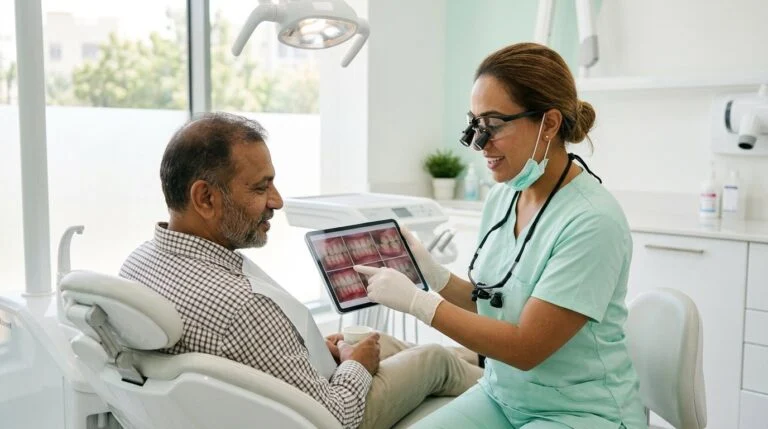
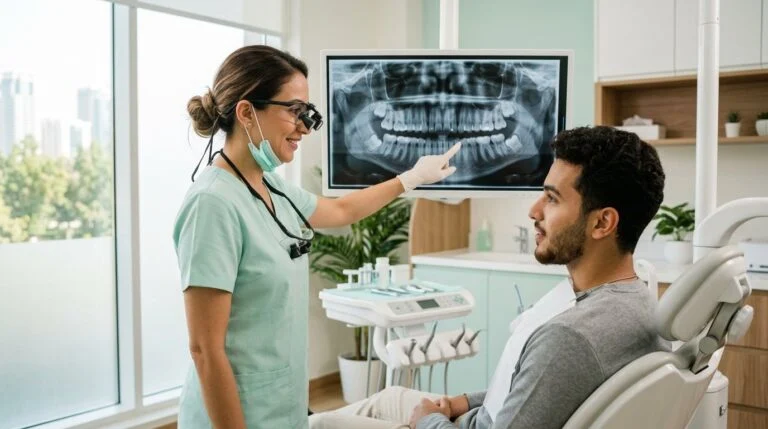
At Al Jazeera Dental Clinic we have cared for families in Sharjah since 1998, and many of our long-term patients first came to us feeling anxious. We take time to listen, explain what we see on a screen, give you a written plan with costs before any treatment, and never pressure you into starting the same day. You decide the pace.
We are open seven days a week, Sunday to Friday from 9 AM to 10 PM and Saturday from 12:30 PM to 10 PM, so you can choose a time that feels least stressful. You can also read more about our clinic or meet our dentists before you book.
Signs that dental anxiety is affecting your health
Dental fear becomes a health problem when it keeps you away from care. Common signs include cancelling appointments at the last minute, only visiting when you’re in pain, putting up with a broken tooth or bleeding gums for months, or feeling sick the night before a visit. If any of these sound familiar, it’s worth tackling the fear directly rather than waiting for an emergency, because emergency treatment is usually longer and more uncomfortable than a routine visit.
Small problems are quicker, cheaper and gentler to fix. A regular check-up every six months keeps treatment short, which in turn makes each visit easier.
A simple plan for your next visit
If dental fear has kept you away, try this: send us a WhatsApp message saying you’re nervous, book a morning slot, bring headphones and a friend, agree a stop signal, and ask for an examination only on the first day. Many patients find that once they have met the team and seen the room, much of their dental fear fades. Each calm visit makes the next one easier, and over time most people find that dental fear becomes manageable rather than overwhelming.
Dental anxiety questions
Is dental anxiety common?
Can I just come for a talk first?
Will the dentist judge me for not coming for years?
What if I panic during treatment?
Can I bring someone with me?
Nervous? Start with a conversation.
Book a free consultation in Al Majaz. Tell us you are anxious and we will take it slowly, explain everything and let you set the pace.
From our team
Written by the dental team at Al Jazeera Dental Clinic, a family clinic on Al Khan Street, Al Majaz 3, Sharjah, looking after Sharjah families since 1998, and medically reviewed by Dr Ranjeet Kumar, Medical Director (BDS, Diploma in Endodontics), October 2026. General advice only. For your own teeth, book a check-up: the consultation and X-ray are free.
Related articles
Signs of Gum Disease: What to Look For and When to Act
The early signs of gum disease, from bleeding and swelling to bad breath and loose teeth. How gingivitis becomes periodontitis, who is at risk and …
Dentist Open Late in Sharjah: Evening and Weekend Dental Care
Dental clinic open late in Sharjah: until 10 PM every day in Al Majaz 3, with same-day slots for toothache, swelling and broken teeth. Call 06 715 …
Your Child’s First Dental Visit: A Parent’s Guide
Your child's first dental visit made easy: when to go, what happens, how to prepare at home and what to avoid saying. Gentle children's dentistry i…