
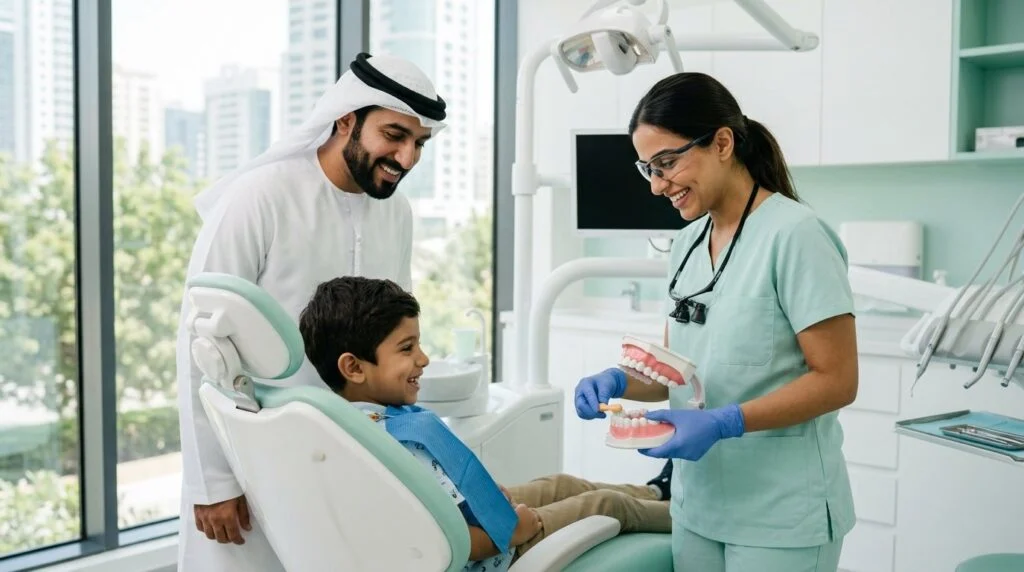
Baby tooth decay: causes, early signs and treatment
Milk teeth may fall out eventually, but they matter a great deal while they are here. Decay in young children is common, often painless at first, and largely preventable.
Why milk teeth deserve care
Parents sometimes tell us they didn’t worry about a dark spot on a toddler’s tooth because baby teeth fall out anyway. It is an understandable thought, but baby teeth do important jobs. They let children chew and eat properly, help speech develop, and hold space in the jaw for the adult teeth underneath. Some back milk teeth stay in place until age 11 or 12.
When decay is left untreated, it can cause pain, infection, disturbed sleep, missed school and, in some cases, damage to the developing adult tooth. Baby tooth decay is also a strong predictor of decay in adult teeth later. This guide explains what causes it, how to spot it early, how it’s treated and, most importantly, how to prevent it.
What causes baby tooth decay
Baby tooth decay happens when bacteria in plaque feed on sugars and produce acid. The acid dissolves the enamel. Baby teeth have thinner enamel than adult teeth, so decay can spread through them faster.
The main driver is how often teeth are exposed to sugar, not just how much. Frequent sips of juice, sweetened milk or flavoured drinks, snacking throughout the day, and particularly a bottle of milk or juice at bedtime or through the night all keep teeth bathed in sugar. During sleep, saliva flow drops, so sugars stay on the teeth for hours. This pattern is sometimes called early childhood caries or bottle decay, and it typically affects the upper front teeth first.
Bacteria can also pass from parent to child, for example by sharing spoons or cleaning a dummy in your mouth. And without fluoride toothpaste, enamel has less protection against acid.
7 early signs of baby tooth decay
Chalky white spots
Dull white bands near the gum line on the front teeth are often the first sign. At this stage decay can be reversed.
Yellow or brown patches
As enamel breaks down, spots turn yellow, then brown.
Dark holes or pits
Visible cavities, often on the chewing surfaces of back teeth or between teeth.
Sensitivity
Your child avoids cold drinks, ice cream or sweet foods, or complains when brushing.
Toothache or crying when eating
Young children may not say it hurts but may refuse food or chew on one side.
Swelling or a pimple on the gum
A sign of infection that needs prompt treatment.
Bad breath
Persistent bad breath can come from decay or infection.
When to see a dentist
Ideally, children should see a dentist by their first birthday, or within six months of the first tooth appearing, and then every six months. Early visits let us spot white spots before they become cavities and give you practical advice on feeding and brushing. Our guide to a child’s first dental visit explains what happens.
Don’t wait for pain. By the time a young child complains, decay is often deep. If your child has swelling, fever or severe pain, contact our emergency dentist service the same day.
See us promptly if
- You notice white, brown or dark spots
- Your child has toothache or refuses food
- There is swelling of the face or gum
- A tooth is broken after a fall
- Your child has not had a check-up in the last six months
How baby tooth decay is treated
Treatment for decay in baby teeth depends on how far it has gone and how cooperative your child is. Early white spots can often be reversed with fluoride varnish, better brushing and changes to diet. Small cavities can be filled with tooth-coloured materials; see our tooth filling page. Deeper decay that reaches the nerve may need a baby tooth nerve treatment (pulpotomy) and a small crown to protect the tooth until it falls out naturally.
If a tooth is badly broken down or infected, it may need to be removed. When a back milk tooth is lost early, a space maintainer may be recommended to stop neighbouring teeth drifting into the gap.
We always explain the options to parents first and go at the child’s pace. Our children’s dentistry page describes how we make visits relaxed and positive.
Not sure what you need?
Get a free check-up and X-ray. A dentist explains your options and gives you the cost in writing. Open until 10 PM on Al Khan Street, Al Majaz.
How to prevent baby tooth decay at home
Start brushing with the first tooth
Use a soft baby brush twice a day, especially last thing at night.
Use the right amount of fluoride toothpaste
A smear for children under three; a pea-sized amount from three to six. Encourage them to spit, not rinse.
No bottle in bed
If your child needs a bottle to sleep, use plain water only. Remove milk or juice bottles once your child is asleep.
Move to a cup
Introduce an open or free-flow cup from around six months, and aim to stop bottles by about one year.
Keep sugar to mealtimes
Limit sweets, juice and sweetened drinks, and keep them to meal times rather than all day. Water and plain milk are the best drinks between meals.
Help with brushing
Children need an adult to brush or check their brushing until about age seven.
Hidden sugars in children’s diets
Hidden sugar is a major cause of early childhood decay. Many foods marketed for children contain more sugar than parents expect: flavoured yoghurts, fruit pouches, biscuits for teething, cereal bars, fruit juices and flavoured milks. Dates are healthy but very sticky and sweet, so they are best eaten at mealtimes and followed by water. Check labels for sugar, glucose, fructose, syrup and honey. Medicines in sweet syrups can also contribute; ask your pharmacist about sugar-free versions when available.
Breastfeeding, night feeds and teeth
Breastfeeding has many benefits and isn’t something to stop because of teeth. Once teeth appear, however, wipe or brush them after the last feed where possible, and be mindful of frequent night feeds combined with other sugars in the diet. Every family is different, so we give advice that fits your situation rather than strict rules. The NHS guide to looking after your baby’s teeth is a helpful reference.
Is baby tooth decay common in the UAE?
Unfortunately, yes. Studies of young children in the UAE and the wider Gulf region have reported high rates of decay in baby teeth, often higher than in many European countries. Frequent sweetened drinks, sticky snacks, bottle use at night and late first dental visits are common contributing factors. The encouraging part is that early childhood decay is almost entirely preventable with simple daily habits and regular check-ups from an early age.
School and nursery snacks are worth a look too. Packing water instead of juice, cheese or fruit instead of biscuits, and keeping sweets for after lunch rather than through the day all make a noticeable difference.
What happens if baby tooth decay is left untreated
Untreated decay in baby teeth usually gets worse rather than better. The cavity grows towards the nerve, causing toothache and, eventually, an abscess, which can make a child unwell and need urgent treatment. Pain affects eating, sleep, concentration and mood. Infection around a milk tooth can also affect the adult tooth developing just underneath it, leaving white or brown marks on the new tooth. Early care is simpler, cheaper and much easier for your child. If you have any doubt about a spot or a dark area, it’s always worth a quick look.
Baby tooth decay questions
Do decayed baby teeth need treatment if they will fall out?
Can early decay be reversed?
Is fluoride safe for babies?
What age should my child first see a dentist?
Will my child need to be asleep for treatment?
Worried about a spot on your child’s tooth?
Book a free check-up in Al Majaz. We will look gently, explain what we find and give you simple steps to protect your child’s teeth.
About our clinic
Written by the dental team at Al Jazeera Dental Clinic, a family clinic on Al Khan Street, Al Majaz 3, Sharjah, seeing patients since 1998, and medically reviewed by Dr Ranjeet Kumar, Medical Director (BDS, Diploma in Endodontics), October 2026. This is general information, not a diagnosis. If something feels wrong, come in and let us look.
Related articles
تسوس الأسنان: الأسباب والمراحل والعلاج والوقاية
تسوس الأسنان: الأسباب والأعراض والمراحل، ومتى يكفي الحشو ومتى تحتاج علاج العصب، مع نصائح الوقاية للكبار والأطفال. عيادة الجزيرة لطب الأسنان، المجاز…
Wisdom Tooth Pain: Causes, Relief and When to See a Dentist
Wisdom tooth pain explained: why it happens, quick relief at home, warning signs of infection, and when removal is the best option. Free X-ray at o…
After Root Canal Treatment: What Is Normal and What Is Not
What to expect after root canal treatment: normal tenderness, eating, temporary fillings, crowns, warning signs and how long healing takes. Advice …