
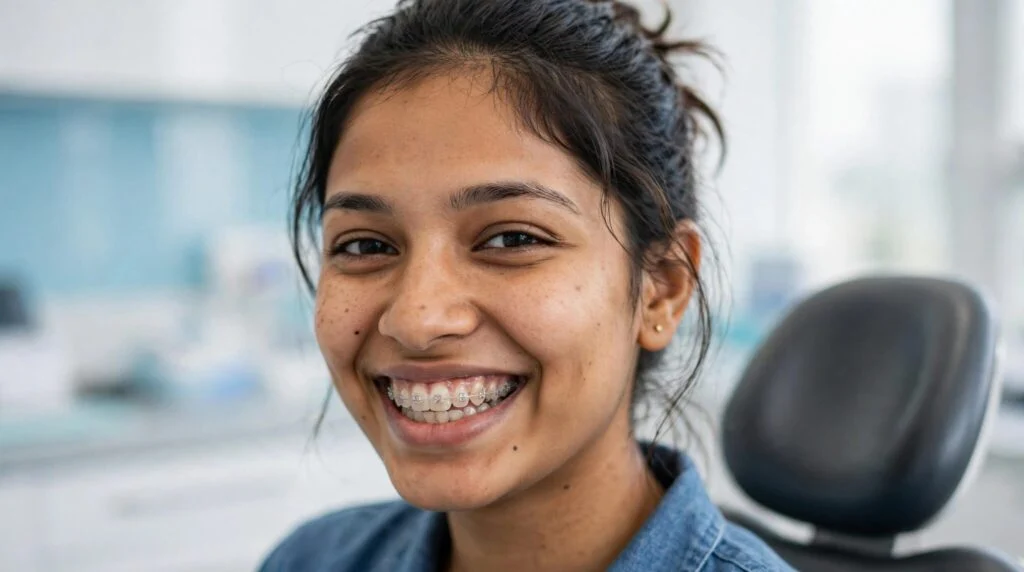
Ceramic braces: tooth-coloured braces for a discreet smile
Ceramic braces work like traditional braces but blend in with your teeth. They are a popular middle ground between metal braces and clear aligners.
Fixed braces, less visible
Some people want the reliability of fixed braces but don’t want a mouth full of metal, especially at work or in photos. Others have tried aligners and found it hard to wear them 22 hours a day. Ceramic braces offer a practical alternative.
This guide explains how ceramic braces work, their pros and cons compared with metal braces and clear aligners, how to avoid staining, how long treatment takes and what affects the cost in Sharjah.
How ceramic braces work
Clear braces use small brackets made from a tooth-coloured or clear ceramic material instead of metal. They are bonded to the front of the teeth and connected by an archwire, which may be metal or coated to look lighter. The way they move teeth is the same as metal braces: gentle, steady pressure guides each tooth into position, with adjustments every few weeks.
Because they are fixed, they work around the clock. There is nothing to remember to put back in, which makes them a good choice for people who worry about wearing aligners consistently.
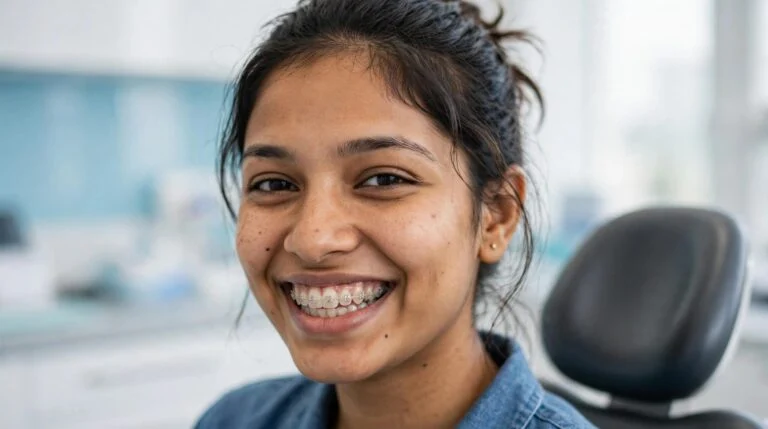
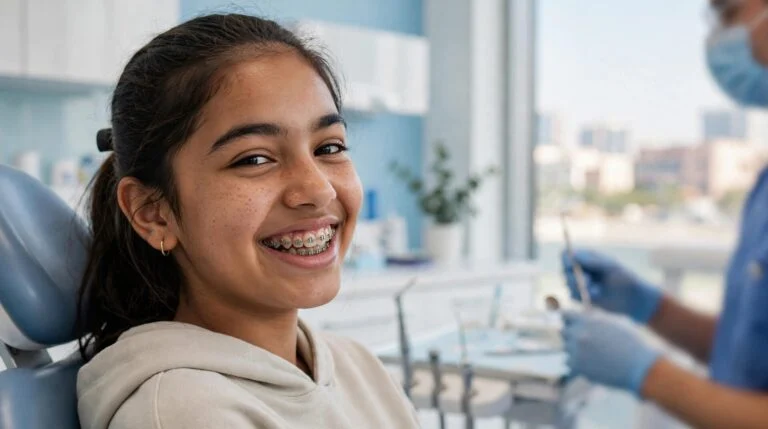

Ceramic braces at a glance
Pro: discreet
Tooth-coloured brackets blend in, especially from a normal speaking distance.
Pro: reliable
Fixed braces work 24 hours a day and suit complex movements.
Pro: no trays to lose
Nothing to remove, clean or remember.
Con: elastic staining
Clear elastic ties can stain from coffee, tea and curry between visits.
Con: slightly larger brackets
Ceramic brackets are a little bulkier than metal ones.
Con: care with hard food
Ceramic is strong but can chip if you bite very hard foods.
Ceramic braces vs metal braces
Metal braces are the most robust and usually the most affordable. Tooth-coloured braces cost a little more because the brackets are more expensive and require more care to place and remove. In terms of results, both can achieve the same outcome in most cases. The choice usually comes down to appearance and budget. Our main braces page compares the options.
Ceramic braces vs clear aligners
Clear aligners are almost invisible and removable, which makes eating and brushing easy. But they only work when they are worn, and some complex movements are more predictable with fixed braces. Clear braces are slightly more visible than aligners but always working. If you’re disciplined and your case is mild to moderate, aligners may suit you; if you want a fixed solution without metal, tooth-coloured brackets are a strong choice. See clear aligners vs braces.
Not sure what you need?
Get a free check-up and X-ray. A dentist explains your options and gives you the cost in writing. Open until 10 PM on Al Khan Street, Al Majaz.
Avoiding stains
The ceramic brackets themselves resist staining, but the elastic ties that hold the wire can pick up colour from strongly coloured foods and drinks. The ties are changed at each adjustment, so any staining is temporary. Rinsing with water after coffee, tea and curry, and brushing after meals, keeps everything looking clean.
Stain-smart habits
- Rinse after coffee, tea and karak
- Brush after curries and tomato sauces
- Use a straw for coloured drinks
- Avoid smoking and shisha
- Keep check-ups on schedule
Treatment with ceramic braces
Consultation and X-ray
We assess your teeth, gums and bite. The consultation and X-ray are free.
Planning
Photos and records are taken and a plan with costs is written for you.
Fitting
Brackets are bonded and the wire is placed in a single visit.
Adjustments
Visits every 4 to 8 weeks to adjust the wire and change ties.
Retention
When the teeth are straight, retainers keep them there.
How long does treatment take?
Treatment usually takes 12 to 24 months, similar to metal braces, depending on how much the teeth need to move. Keeping appointments, avoiding broken brackets and wearing elastics if prescribed all keep treatment on track. Adults are welcome; see our guide to braces for adults.
Cost factors
The cost of clear braces depends on the complexity of your case, how long treatment takes, whether one or both arches are treated and which retainers are included. Most UAE insurance plans do not cover adult orthodontics, but some include limited cover for children. You can spread the cost with Tabby, Tamara or Toothpick. Our guide to braces cost in Sharjah explains the factors in more detail.
Eating with ceramic braces
Cut food into small pieces and chew with your back teeth. Avoid very hard foods such as ice, hard nuts and crunchy bones, and sticky foods like toffee, which can loosen brackets. Corn on the cob, whole apples and crusty bread are easier when sliced. If a bracket comes loose, call us; it isn’t an emergency, but it should be fixed so treatment stays on track.
Cleaning around ceramic braces
Plaque builds up quickly around every bracket, and leaving it can cause white marks on the enamel that stay after the braces come off. Brush carefully above and below each bracket, use small interdental brushes between the wire and teeth, and clean between teeth daily. Many patients find an electric toothbrush helpful. Regular professional cleanings during treatment keep clear braces and gums looking their best.
Who chooses tooth-coloured brackets?
We often see these chosen by working adults, university students and teenagers who are self-conscious about metal. They are also popular for wedding plans, when people want straighter teeth without obvious metal in photos. For very complex bite corrections, the orthodontist may still suggest metal for some or all teeth, because metal brackets are smaller and more robust.
What removal day looks like
At the end of treatment the brackets are gently removed and any remaining adhesive is polished away. Ceramic brackets are removed with a special technique to protect the enamel. Impressions or scans are taken for retainers, which are usually fitted the same day or soon after. Many patients choose to whiten their teeth once the brackets are off.
Sport and musical instruments
If you play contact sport, wear a mouthguard designed for braces. If you play a wind instrument, there may be an adjustment period of a week or two as your lips get used to the brackets. Orthodontic wax helps in both cases. Tell us about your activities at the consultation so we can plan around them.
Retainers after treatment
When the brackets come off, teeth naturally try to drift back. Retainers prevent that. Most people wear a clear removable retainer at night and some have a thin wire bonded behind the front teeth. Wearing retainers as instructed protects the time and money you have invested. Bring your retainers to check-ups so we can make sure they still fit well.
Will my speech change?
Fixed brackets sit on the outside of the teeth, so speech is rarely affected for more than a day or two. Your lips and cheeks may feel the brackets at first; orthodontic wax helps until the skin adapts. Most adults find they quickly forget they are wearing braces at all, even in meetings and presentations.
Emergencies during treatment
True orthodontic emergencies are rare. A poking wire can be pushed flat with the eraser end of a pencil or covered with wax until your appointment. A loose bracket should be checked within a few days. Severe pain, swelling or an injury to the mouth needs a prompt visit; call us on 06 715 6001, and we’re open every day until 10 PM.
Choosing between the options
There is no single best type of brace. The right choice balances your bite, how visible you’re happy for the brace to be, how reliable you will be with removable trays and your budget. We’ll show you each option for your own teeth.
Ceramic braces questions
Are ceramic braces really less visible?
Do ceramic braces stain?
Are ceramic braces weaker than metal?
Do ceramic braces take longer?
Can adults have ceramic braces?
Want straighter teeth without metal?
Book a free orthodontic consultation in Al Majaz. We’ll tell you whether clear braces, metal braces or aligners suit you best.
Who wrote this
Written by the dental team at Al Jazeera Dental Clinic, a family clinic on Al Khan Street, Al Majaz 3, Sharjah, open since 1998, and medically reviewed by Dr Ranjeet Kumar, Medical Director (BDS, Diploma in Endodontics), November 2026 (how we write and review). Use it as a guide only. Every mouth is different, so a check-up is the only way to know what you need.
Related articles
Types of Braces: Metal, Ceramic, Self-Ligating, Lingual and Aligners Compared
Metal, ceramic, coloured, self-ligating, lingual and clear aligners compared: how each works, who it suits, and a free braces consultation in Sharjah.
Braces Cost in Sharjah: Metal, Ceramic and Aligners Compared
Compare braces costs in Sharjah: metal, ceramic and clear aligners, treatment time, retainers and insurance. Free orthodontic assessment, pay month…
Hollywood Smile Cost in Sharjah: What Affects the Price
Thinking of a Hollywood smile in Sharjah? See your new smile as a free mock-up first. Composite vs porcelain, what sets the price, written quote an…