

Retainers after braces: types, wear time and care
Straight teeth are only half the job. Without a retainer, teeth slowly drift back. Here is how to keep the result you worked for.
Why the last step matters most
After months of braces or aligners, it’s tempting to think the work is done. But the bone and gum fibres around the teeth take time to settle, and teeth naturally try to move back towards where they started. They also shift gradually throughout life. A retainer holds them in place.
This guide explains the main retainer types, how long to wear one, how to clean it, what to do if it breaks or gets lost and the common mistakes that undo good orthodontic results.
Fixed and removable retainer types
Fixed (bonded) retainer
A thin wire bonded behind the front teeth. Invisible from the front and always working.
Clear removable retainer
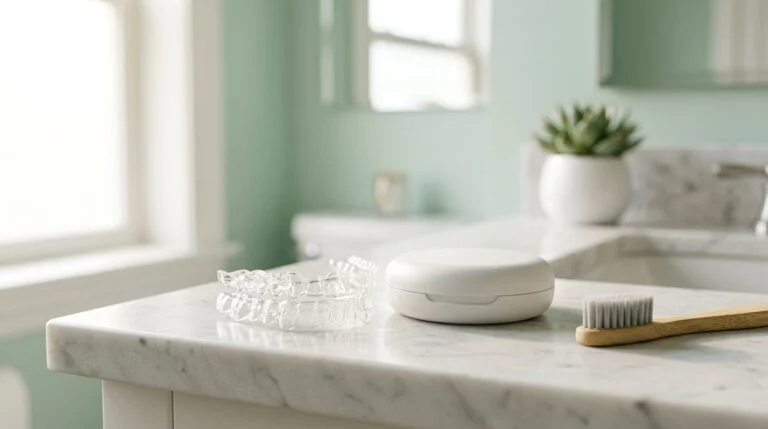
A thin transparent tray, similar to an aligner, usually worn at night.
Hawley retainer
The classic removable retainer: a wire across the front teeth and an acrylic plate. Hardwearing and adjustable.
Combination
Many people have a fixed wire plus a clear night-time retainer for extra security.


Why teeth move back
When teeth move during orthodontic treatment, the bone around them remodels and the gum fibres stretch. The fibres in particular have a memory and pull teeth back towards their old positions for months, sometimes longer. On top of that, everyone’s teeth shift a little with age. That is why wearing a retainer is now considered a long-term commitment, not just a few months.
How long to wear a retainer
Instructions vary, but a common pattern is full-time wear for the first weeks or months (except when eating and cleaning), then night-time wear long term. Many orthodontists now advise wearing a retainer at night indefinitely. Always follow the plan your dentist gives you.
Typical plan
- First few months: as instructed, often most of the day
- Then: every night
- Long term: most nights, for as long as you want straight teeth
- Bring it to every check-up
Fixed retainers: pros and cons
A fixed retainer works all the time and can’t be forgotten. It is invisible from the front. The downsides are that it makes cleaning between the front teeth harder and the wire can occasionally come unstuck. If you feel a loose wire or the bond breaks, call us promptly, because teeth can move quickly once it’s no longer held. Use floss threaders or small interdental brushes to clean under the wire every day.
Not sure what you need?
Get a free check-up and X-ray. A dentist explains your options and gives you the cost in writing. Open until 10 PM on Al Khan Street, Al Majaz.
Removable retainers: pros and cons
Removable retainers are easy to clean and let you brush and floss normally. Clear ones are almost invisible. Their weakness is human: they only work when worn, and they are easy to lose, crack or leave in a hotel room. Keep the case with you, never wrap the retainer in a napkin and keep it away from pets, who are attracted to the smell.
Cleaning your retainer
Rinse
Rinse with cool water every time you take it out.
Brush gently
Brush with a soft toothbrush and mild soap; toothpaste can scratch clear plastic.
Soak occasionally
Use a retainer or denture cleaning tablet as advised.
Dry and store
Store in a ventilated case away from heat and direct sun.
If your retainer is lost or broken
Contact us as soon as possible. Teeth can start to move within days without a retainer, especially soon after treatment. If you have an older retainer that still fits, wear it in the meantime. A replacement can usually be made quickly from a scan or impression. If teeth have already shifted slightly, a new retainer may gently push them back; larger movements may need short aligner treatment.
Signs your retainer no longer fits
A retainer that feels very tight after a few nights off, rocks on the teeth, has cracks or has yellowed and roughened may need replacing. Do not force a retainer onto teeth if it causes pain. Bring it in and we will check whether it still fits. Clear retainers wear over time and are usually replaced every few years.
Retainers after aligners
Clear aligner treatment needs a retainer just as much as braces. The final aligner isn’t a retainer; it’s too thin to last. A proper retainer is made at the end of treatment. Read our guides to clear aligners cost and clear aligners for how retention fits into the plan, and our braces page for fixed treatment.
Retainers for children and teens
Teenagers are often busy and forgetful, so a fixed retainer behind the front teeth plus a night-time removable retainer is a common choice. Parents can help by keeping a spare case in the car or school bag and reminding them at bedtime. Losing a retainer is common; acting quickly prevents months of treatment being undone.
Cost and insurance
Retainers are often included in an orthodontic treatment fee, but replacements are usually charged separately. Most UAE insurance plans do not cover adult retainers. Ask what is included before you start treatment. For background, see the NHS guide to orthodontics.
Common retainer mistakes
The most common mistakes are stopping wear after a few months, leaving the retainer in a hot car, cleaning it with very hot water, using toothpaste that scratches it and wrapping it in a napkin at restaurants. Each one is easy to avoid with a simple routine: case always with you, cool water, gentle cleaning and wearing it every night.
Retainer and night grinding
Some people grind on their retainer at night. That can wear through a clear retainer quickly. If you see holes or thinning, tell us. In some cases a slightly thicker retainer or a separate night guard is recommended. Grinding also stresses fixed retainer wires, which can come loose.
Travelling and Ramadan
When travelling, pack your retainer and its case in your hand luggage. During Ramadan, wear it at night as usual; it doesn’t affect your fast. Brush after suhoor and before putting it back in so food isn’t trapped against the teeth.
Your long-term plan
Think of a retainer like a seatbelt for your smile. It’s a small daily habit that protects a large investment. Bring it to every check-up so we can confirm the fit and catch any problems early.
How retainers protect your investment
Orthodontic treatment takes time and money. Retainers are the inexpensive part that protects it. Studies of patients years after treatment show that teeth very often move when retainers aren’t worn, while those who keep wearing retainers at night usually keep their result. If you’re planning treatment for yourself or your child, include retainers in your budget and routine from day one.
Choosing between fixed and removable retainers
The choice depends on how your teeth moved, how likely they are to relapse and your habits. Teeth that were very crowded or rotated, or a gap that was closed, often benefit from a fixed wire. People who are reliable with routines may do well with removable retainers alone. Many patients have both for extra security. We will recommend what suits your teeth.
Replacement retainers
Clear retainers wear and crack over time. Keeping a recent scan on file makes replacement quick. If you had braces elsewhere and need new retainers, bring any records you have; if your teeth are still straight, we can scan and make replacement retainers without starting treatment again.
In short
Wear your retainers every night, clean them gently, keep them in their case and bring them to check-ups. Contact us quickly if they crack, feel loose or get lost.
Retainer questions
How long do I need to wear a retainer?
Can I eat with my retainer in?
What if my retainer feels tight?
How often should a retainer be replaced?
Can a retainer fix crooked teeth?
Retainer lost, loose or tight?
Book a quick check in Al Majaz. We’ll check your retainer and teeth and replace it if needed.
About our clinic
Written by the dental team at Al Jazeera Dental Clinic, a family clinic on Al Khan Street, Al Majaz 3, Sharjah, seeing patients since 1998, and medically reviewed by Dr Ranjeet Kumar, Medical Director (BDS, Diploma in Endodontics), October 2026. This is general information, not a diagnosis. If something feels wrong, come in and let us look.
Related articles
Types of Braces: Metal, Ceramic, Self-Ligating, Lingual and Aligners Compared
Compare the types of braces: metal, ceramic, coloured, self-ligating, lingual and clear aligners. Pros, cons, comfort and who each suits. Free brac…
Braces for Adults: Is It Too Late to Straighten Your Teeth?
Braces for adults explained: whether it is too late, metal vs ceramic vs clear aligners, how long treatment takes, discomfort, costs in Sharjah and…
Aligners vs Braces: Which Is Right for You?
Aligners vs braces compared by a Sharjah dental team: looks, comfort, results, speed, cost, cleaning and who each suits. Free orthodontic assessmen…