
Sensitivity after whitening: why it happens and how to ease it
A short-lived twinge after whitening is common and harmless. Here is why it happens, how to calm it quickly, how to prevent it next time, and when it’s worth getting checked.
Common, short-lived and manageable
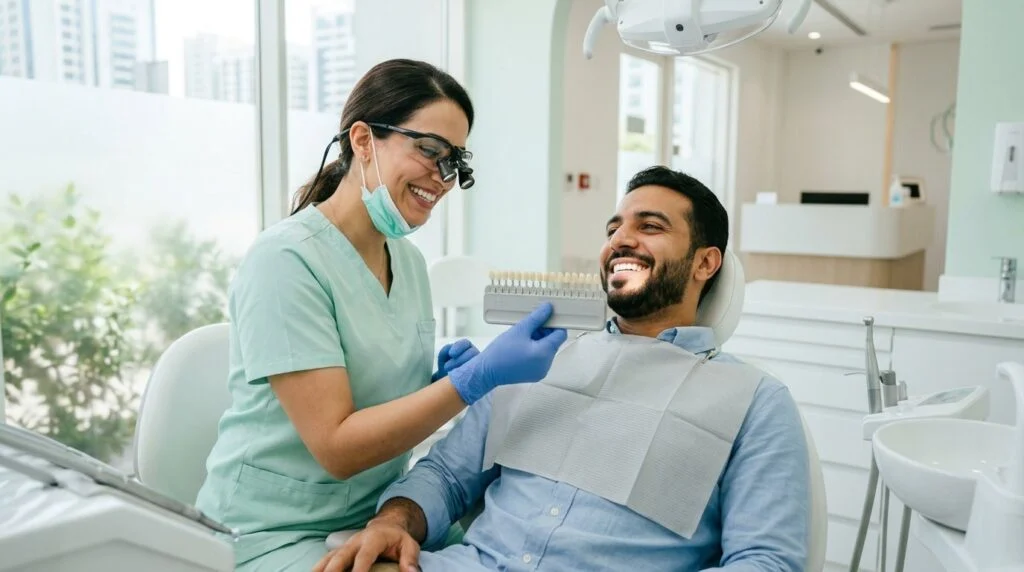
Many people notice their teeth feel sharper or more sensitive to cold for a day or two after professional whitening. Sensitivity after whitening is the most common side effect of the treatment, and in most cases it is mild and settles quickly without any lasting effect on the teeth.
This guide explains what causes sensitivity after whitening, how long it usually lasts, eight simple ways to ease it, how to reduce it next time, and the signs that mean something else may be going on.
Why whitening can make teeth sensitive
Whitening gels work by releasing oxygen that passes through the enamel and breaks down stain molecules. While this is happening, the enamel is temporarily more porous and fluid inside the tiny tubes of the dentine moves more easily. That movement is what the nerve feels as a sharp twinge, usually with cold drinks or cold air. The effect is temporary: once the treatment ends, the enamel settles and the sensitivity fades.
Sensitivity after whitening doesn’t mean the enamel has been damaged. Dentist-supervised whitening doesn’t thin or weaken healthy enamel.
Factors that increase sensitivity
Already sensitive teeth
If teeth twinge with cold before whitening, they are more likely to afterwards.
Exposed roots
Receding gums expose the root surface, which has no enamel.
Stronger gel or longer wear
Higher concentrations and longer sessions can increase sensitivity.
Untreated problems
Cracks, leaking fillings or decay let the gel reach the nerve more easily.
How long does it last?
For most people, sensitivity after whitening lasts from a few hours to two days after each session. With take-home trays it may come and go during the course and settle within a day or two of finishing. If sensitivity lasts longer than a week, or is getting worse rather than better, it’s worth a check-up to rule out another cause.
8 ways to ease sensitivity after whitening
These simple steps calm sensitivity after whitening for most people. Use a toothpaste for sensitive teeth twice a day, and after brushing spit but don’t rinse, so the active ingredient stays on the teeth. You can also rub a little onto the sensitive teeth at night. Choose lukewarm rather than very cold or very hot food and drinks for a day or two, and breathe through your nose on cold, windy days or in strong air conditioning.
Quick relief
- Sensitivity toothpaste twice a day
- Spit, don’t rinse
- Lukewarm food and drinks
- Soft brush and gentle technique
- Skip a day of home whitening
- Shorter wear time with trays
- Avoid acidic food and drinks
- Ordinary painkiller if needed, as directed
Not sure what you need?
Get a free check-up and X-ray. A dentist explains your options and gives you the cost in writing. Open until 10 PM on Al Khan Street, Al Majaz.
Preventing it next time
Preventing sensitivity after whitening starts before the treatment, ideally at a check-up a week or two beforehand. A check-up first means cracks, leaking fillings and decay are treated before any gel touches the teeth. Using a sensitivity toothpaste for one to two weeks before whitening reduces sensitivity after whitening for many people. With take-home trays, we can adjust the gel strength and wear time, and suggest rest days between sessions if needed. For in-clinic whitening, a desensitising treatment can be applied afterwards.
Gum irritation is different
If the gums, rather than the teeth, feel sore or look white in patches after whitening, a little gel probably touched them. This is usually mild and settles within a day or two. Rinse with water, avoid spicy food and keep the area clean. With take-home trays, use only a small drop of gel in each tooth space and wipe away any excess. Custom trays from a dentist fit closely and reduce this problem, unlike loose shop-bought trays.
When to see a dentist
Book a check-up if sensitivity after whitening lasts more than a week, if one tooth hurts much more than the others, if pain lingers for more than a few seconds after a cold drink, or if a tooth starts to ache on its own. These can be signs of a crack, a leaking filling or an inflamed nerve that needs treatment. Our guide to sensitive teeth explains other causes.
Is it worth whitening if you have sensitive teeth?
Usually, yes. With a gentler plan most people with sensitive teeth can whiten comfortably. We may suggest a lower-strength take-home gel, shorter wear times and a sensitivity toothpaste before and during treatment. The result often takes a little longer but looks just as good. Read our guide to the teeth whitening cost in Sharjah, or see the NHS guide to teeth whitening for independent information.
In-clinic vs take-home: which causes more sensitivity?
In-clinic whitening uses a stronger gel for a shorter time, so any sensitivity after whitening tends to come on quickly and fade within a day or two. Take-home whitening uses a gentler gel over one to two weeks, so sensitivity is usually milder but may come and go during the course. People with naturally sensitive teeth often find take-home whitening more comfortable because the strength and wear time can be adjusted day by day.
A combined approach, a short in-clinic session followed by home trays, can give quick results while keeping sensitivity under control.
In short
- In-clinic: quicker, may twinge for a day or two
- Take-home: gentler, adjustable
- Combined: balance of speed and comfort
- All: much easier with a check-up first
Food and drink in the first 48 hours
For two days after whitening, the enamel picks up colour more easily and may feel more sensitive. Choose lukewarm, light-coloured food such as rice, chicken, fish, eggs, yoghurt and pasta, and drink water or milk. Avoid very cold drinks and ice cream if they trigger sensitivity after whitening, and avoid strongly coloured or acidic drinks such as coffee, tea, karak, cola and citrus juice, which can both stain and sting. After two days you can return to your normal diet.
Myths about whitening sensitivity
Myth: sensitivity means the whitening is working better. Not true. Good results don’t require discomfort, and a gentler plan often gives the same shade.
Myth: it will be permanent. Sensitivity after whitening from professional treatment is temporary in almost everyone.
Myth: whitening toothpaste will help. Whitening pastes can be more abrasive and may make sensitivity worse. Use a sensitivity toothpaste instead until things settle.
Children and teenagers
Whitening is not recommended for children, and teenagers should wait until all their adult teeth are fully developed. Young teeth have larger nerves and are more prone to sensitivity. If a teenager is unhappy with the colour of their teeth, a professional clean, better brushing and fluoride often make a visible difference. Ask us for advice at their next check-up.
Keeping your new shade without discomfort
Once any sensitivity after whitening has settled, keeping your result is simple. Brush twice a day with a fluoride toothpaste, clean between teeth daily, and rinse with water after coffee, tea or karak. Short top-ups with your custom trays every six to twelve months keep teeth bright; if your teeth tend to be sensitive, use the trays for less time per session and keep a sensitivity toothpaste for the days around each top-up. Regular professional cleans remove new surface stain before it builds up, which means you need fewer top-ups overall. If you ever notice a sudden change in sensitivity, especially in a single tooth, book a check-up rather than assuming it’s the whitening.
Questions about sensitivity after whitening
Is sensitivity after whitening normal?
Does it mean my enamel is damaged?
What helps the most?
Should I stop using my trays?
When should I worry?
Teeth still sensitive after whitening?
Free check-up to find the cause. Open until 10 PM, seven days a week.
Written by our dentists
Written by the dental team at Al Jazeera Dental Clinic, a family clinic on Al Khan Street, Al Majaz 3, Sharjah, caring for patients since 1998, and medically reviewed by Dr Ranjeet Kumar, Medical Director (BDS, Diploma in Endodontics), October 2026.
Related articles
Teeth Whitening Cost in Sharjah: In-Clinic vs Take-Home
Teeth whitening price in Sharjah: in-clinic vs take-home trays, what is included, how long it lasts and safe options. Free shade check and Tabby or…
Home Whitening: Kits, Strips and Dentist Trays Compared
Home whitening compared: strips, LED kits, charcoal, whitening toothpaste and dentist-made trays. What works, what is risky, and how to whiten safe…
Aligners vs Braces: Which Is Right for You?
Aligners vs braces compared by a Sharjah dental team: looks, comfort, results, speed, cost, cleaning and who each suits. Free orthodontic assessmen…