

Wisdom tooth removal recovery: a day-by-day guide
Most people recover from wisdom tooth removal within a week. Here is what to expect each day, how to stay comfortable, what to eat, and the signs that mean you should call us.
A smooth recovery is mostly in your hands
After wisdom tooth removal, the body starts healing straight away. A blood clot forms in the socket, the gum begins to close over, and within a week or two most of the discomfort has gone. What you do in the first few days makes a big difference to how quickly and comfortably you heal.
This guide walks through recovery after wisdom tooth removal day by day, explains how to manage swelling and pain, what to eat and drink, how to keep the area clean, and the warning signs that mean you should contact us.

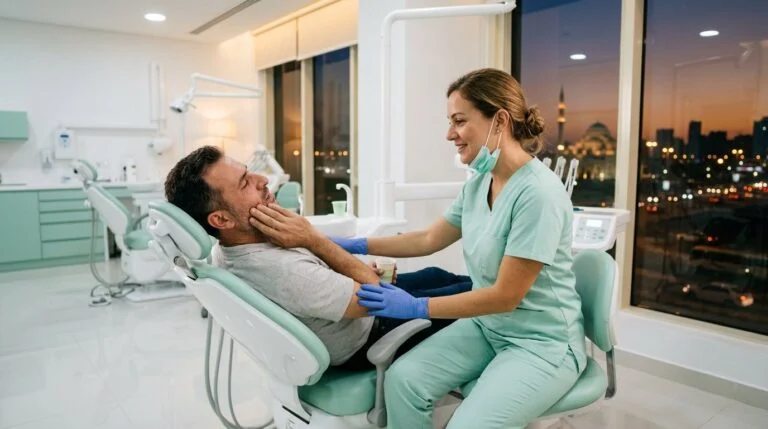
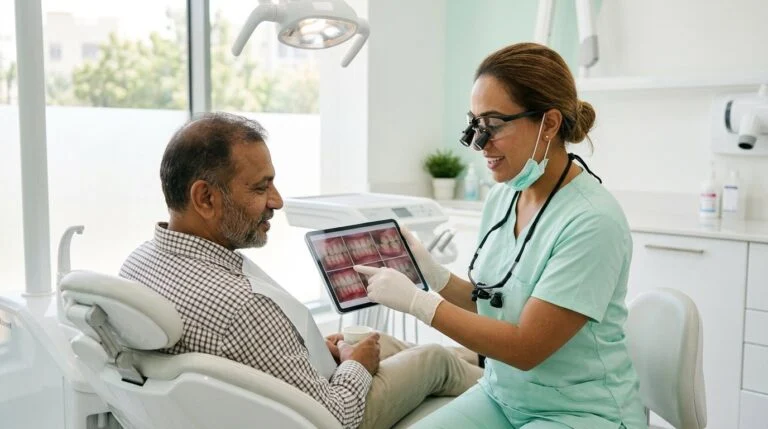
The first hour
Bite firmly on the gauze pad for 30 to 45 minutes without checking it. Try to stay calm and sit upright; a little pink saliva is normal and not a sign of a problem. This pressure helps the blood clot form, which is the foundation of healing. The numbness usually lasts two to four hours, so take care not to bite your lip, cheek or tongue, and avoid hot drinks until you can feel normally. Take your first dose of painkiller before the numbness wears off, as directed.
What to expect after wisdom tooth removal
Day 1
Some oozing of blood is normal. Rest with your head raised, use a cold compress and don’t rinse.
Days 2 and 3
Swelling and stiffness usually peak. Keep up painkillers as directed and start gentle salt water rinses.
Days 4 and 5
Swelling starts to go down and opening your mouth gets easier. Bruising may appear and fade.
Days 6 and 7
Most people feel much better. Stitches may dissolve or be removed at a review.
Weeks 2 to 4
The gum closes over and the socket slowly fills in. Keep the area clean.
Managing swelling and pain
Hold a cold compress against your cheek for 15 minutes on and 15 minutes off for the first day. From day two, gentle warmth can help stiffness. Take ordinary painkillers exactly as directed on the pack or by your dentist, and check with a pharmacist if you take other medicines. Sleep with your head raised on an extra pillow for the first two nights. Some people have mild bruising on the cheek or jaw; this fades within a week.
Comfort tips
- Cold compress on day one
- Painkillers as directed
- Head raised at night
- Rest for the first 24 hours
- Avoid strenuous exercise for a few days
What to eat and drink
For the first few days after wisdom tooth removal, choose soft, cool or lukewarm food and chew on the other side. Good choices include yoghurt, labneh, soups that have cooled, scrambled eggs, mashed potato, hummus, soft rice and smoothies eaten with a spoon. Drink plenty of water. Avoid very hot food and drinks on the first day, and avoid crunchy, spicy or seeded food, such as nuts, chips and sesame, that can get stuck in the socket.
Easy foods
- Yoghurt and labneh
- Cooled soups
- Scrambled eggs
- Mashed potato and hummus
- Soft rice and pasta
Not sure what you need?
Get a free check-up and X-ray. A dentist explains your options and gives you the cost in writing. Open until 10 PM on Al Khan Street, Al Majaz.
What not to do
For the first 24 hours do not rinse, spit forcefully or drink through a straw, because suction can dislodge the clot. Do not smoke or use shisha for at least 48 hours, and ideally longer; smoking is the biggest risk factor for dry socket. Avoid alcohol while the area is healing and while taking painkillers. Don’t poke the socket with your tongue or fingers.
Keeping the area clean
From the day after wisdom tooth removal, rinse gently with warm salt water after meals and before bed: dissolve half a teaspoon of salt in a cup of warm water and let it wash around the mouth, then let it fall out rather than spitting hard. Brush your other teeth normally, and brush gently near the socket once it is less tender. If we give you a syringe to irrigate a lower socket, start using it when we advise.
Warning signs: when to call us
Call us if pain gets worse after day three rather than better, as this can be a sign of dry socket. Also call if you have bleeding that doesn’t stop after 30 minutes of firm pressure on gauze, swelling that keeps increasing after day three, a fever, pus or a bad taste, or numbness of the lip or tongue that has not gone after the first day.
Go to a hospital emergency department or call 998 if swelling spreads towards your eye or neck, or if you have difficulty breathing or swallowing.
Call us if
- Pain worsening after day three
- Bleeding that will not stop
- Swelling still increasing
- Fever, pus or bad taste
- Numbness that doesn’t wear off
Dry socket in brief
Dry socket happens when the blood clot is lost or breaks down too early, leaving the bone exposed. It causes a deep, throbbing pain that often spreads to the ear and usually starts two to four days after the extraction. It isn’t dangerous, but it’s very uncomfortable. We clean the socket and place a soothing dressing, which usually brings relief quickly. Read our full guide to dry socket.
Getting back to normal
Most people take one or two days off work or study after wisdom tooth removal, longer if several teeth were removed or the extraction was more complex. Light activity is fine after a day; avoid heavy exercise for about three days because it can restart bleeding. You can usually return to a normal diet within a week, starting with softer food and building up. For more independent guidance, see the NHS wisdom tooth removal recovery guide.
Preparing before wisdom tooth removal
A little planning makes recovery after wisdom tooth removal much easier. Stock the fridge with soft food before your appointment, have ordinary painkillers at home, and make sure you have a clean cold compress or a bag of frozen peas wrapped in a cloth. Plan to rest for the rest of the day, and if possible avoid important meetings, exams or travel for two or three days.
Tell us about any medicines you take, especially blood thinners, and any health conditions such as diabetes. Eat a light meal beforehand unless we advise otherwise, and wear comfortable clothes.
Before the day
- Soft food in the fridge
- Painkillers at home
- A cold compress ready
- Two or three quiet days planned
- Medicines list for the dentist
Upper or lower: does it make a difference?
Upper wisdom teeth are usually simpler to remove, and recovery after upper wisdom tooth removal is often quicker, with less swelling. Lower wisdom teeth sit in denser bone and are more often impacted, so they may need a small cut in the gum and the tooth removed in sections. Swelling and stiffness tend to be greater after lower wisdom tooth removal, and the risk of dry socket is a little higher. Having both sides done at once means one recovery period instead of two, but some people prefer one side at a time so they can still chew comfortably.
Fasting and wisdom tooth removal
If you are planning to fast, for example during Ramadan, talk to us about timing. In the first days after wisdom tooth removal you need regular painkillers and plenty of fluids, which can be difficult while fasting. Many patients choose to have the tooth out before Ramadan or after Eid, unless the tooth is causing pain or infection that cannot wait.
Wisdom tooth removal recovery questions
How long does recovery after wisdom tooth removal take?
When can I eat normally?
When can I brush my teeth?
Is swelling normal?
When should I worry about pain?
Question about your recovery?
Message us any time we’re open. Same-day reviews until 10 PM.
From our team
Written by the dental team at Al Jazeera Dental Clinic, a family clinic on Al Khan Street, Al Majaz 3, Sharjah, looking after Sharjah families since 1998, and medically reviewed by Dr Ranjeet Kumar, Medical Director (BDS, Diploma in Endodontics), October 2026. General advice only. For your own teeth, book a check-up: the consultation and X-ray are free.
Related articles
Wisdom Tooth Removal Cost in Sharjah: What to Expect
Wisdom tooth removal cost in Sharjah depends on position, impaction and number of teeth. How the price is set, insurance, recovery and when removal…
Pericoronitis: Swollen Gum Over a Wisdom Tooth
Swollen, painful gum around a wisdom tooth? Pericoronitis symptoms, safe home relief, when it is urgent and how a dentist treats it. Same-day care …
Wisdom Tooth Pain: Causes, Relief and When to See a Dentist
Wisdom tooth pain explained: why it happens, quick relief at home, warning signs of infection, and when removal is the best option. Free X-ray at o…