
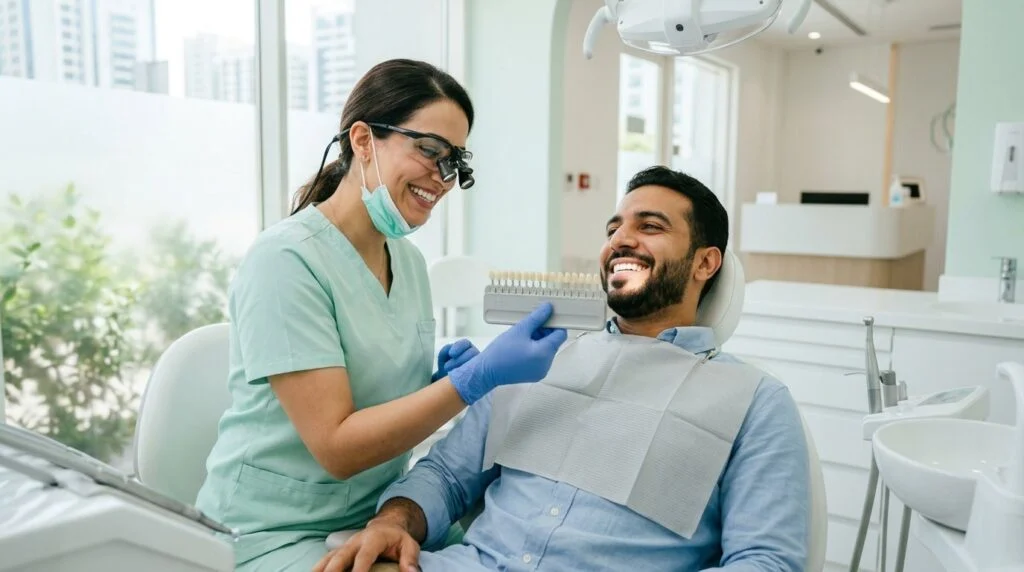
Home whitening: kits, strips and dentist trays compared
The shelves and online stores are full of whitening products. Some work a little, some do nothing, and some can harm your teeth. Here is an honest comparison.
Looking for treatment? See our main page on teeth whitening in Sharjah: what is involved, who it suits, and how to book a free consultation and X-ray.
Whiter teeth without leaving the house?
Home whitening is appealing: no appointments, lower prices and the promise of a brighter smile in a week. But products vary enormously in what they contain and how safely they deliver it. A few are effective and safe when used properly, some only polish away surface stain, and some can burn the gums or wear down enamel.
This guide ranks five common home whitening options from most to least effective, explains why dentist-made trays work best, the risks of unregulated products, and how to get a lasting result safely in the UAE.
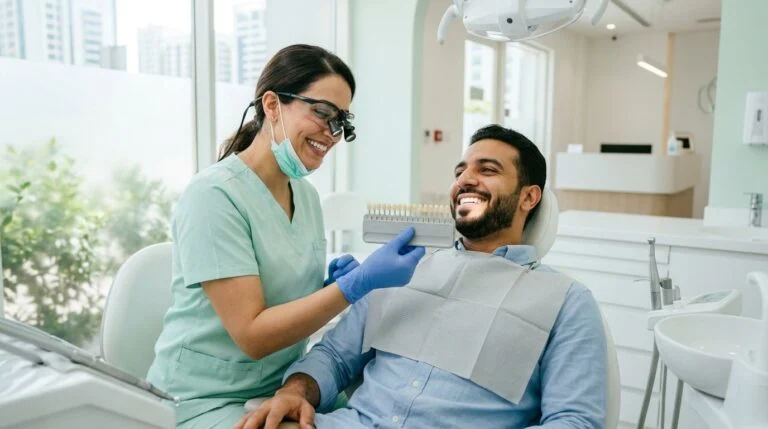
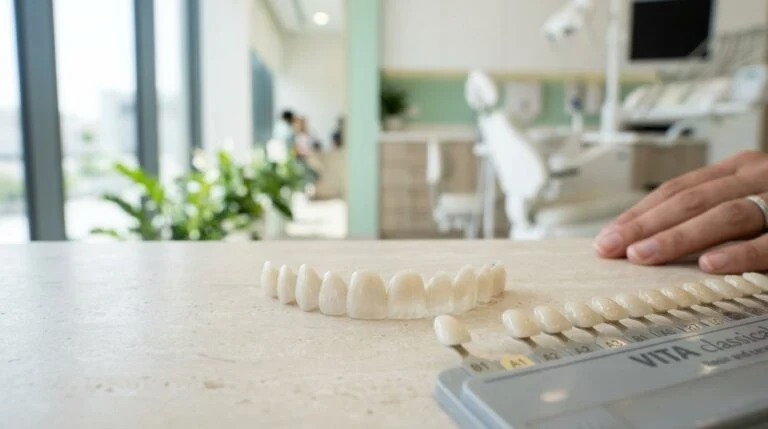
5 home whitening options ranked
1. Dentist-made trays
Custom trays from moulds of your teeth with a professional gel. Even, effective and safe under supervision.
2. Whitening strips
Thin strips coated with a mild gel. Can lighten front teeth a little, but often miss curves and gaps.
3. LED and light kits
The light adds little on its own; results depend on the gel, which is often weak or unclear.
4. Whitening toothpaste
Polishes away surface stain but doesn’t change the natural colour of the tooth.
5. Charcoal powders
Abrasive and can scratch enamel, making teeth look more yellow over time.
Why dentist-made trays work best
The most effective home whitening uses trays made from moulds of your own teeth. Because they fit closely, the gel stays on the teeth and off the gums, giving even results and less irritation. The dentist checks your teeth first, chooses the right strength for you and tells you how long to wear the trays each day. You keep the trays for top-ups later, so the result lasts for years with occasional use.
The risks of unregulated products
Some products sold online or applied in beauty salons contain strong bleaching agents in concentrations that are not intended for unsupervised use. Others use acids or abrasives that strip enamel. Loose, one-size trays let gel leak onto the gums, causing burns and patchy colour. In the UAE, tooth whitening should be carried out or supervised by a licensed dentist. Damaged enamel can’t grow back.
Warning signs
- No clear ingredients or strength
- Promises of extreme results
- Acidic or gritty formulas
- Boil-and-bite or one-size trays
- Sold for use without a check-up
Check before you whiten
Whitening over untreated decay, cracked teeth or gum disease can be painful and the results uneven. Crowns, veneers and fillings will not change colour, so they may stand out afterwards. A quick check-up before any home whitening tells you whether your teeth are healthy enough, what result to expect, and whether a clean alone might be enough. Many people are surprised how much brighter their teeth look after a professional scale and polish.
Not sure what you need?
Get a free check-up and X-ray. A dentist explains your options and gives you the cost in writing. Open until 10 PM on Al Khan Street, Al Majaz.
Who should not use home whitening
DIY whitening is not suitable for everyone. Children and teenagers whose teeth are still developing should not whiten, and whitening isn’t recommended during pregnancy or breastfeeding. People with untreated decay, gum disease, cracked teeth or very worn enamel should have those problems treated first. If your front teeth have several crowns, veneers or large fillings, whitening the natural teeth may make them look mismatched.
A short consultation tells you whether DIY whitening is right for you or whether another option, such as bonding or veneers, would give a better result.
Wait if you
- Are under 18
- Are pregnant or breastfeeding
- Have decay or gum disease
- Have cracked or very worn teeth
- Have many front crowns or veneers
How to use whitening trays
Brush and floss first. Place a small drop of gel in each tooth space of the tray, seat the trays and wipe away any gel that squeezes onto the gums. Wear them for the time your dentist recommends, usually once a day for one to two weeks. Remove, rinse the trays in cool water and brush your teeth gently. Avoid coloured food and drinks for an hour or two afterwards and keep the trays in their case.
What causes stains in the first place
Understanding your stains helps you choose the right approach. Surface stains from coffee, tea, karak, saffron, turmeric, cola and smoking sit on the enamel and respond well to a professional clean and DIY whitening. Yellowing with age comes from thinning enamel showing more of the yellower layer underneath, and whitening lightens it well. Grey or banded staining from childhood medicines or an injured tooth responds less predictably and may need other treatment. Read our guide to stained teeth.
Home whitening vs in-clinic whitening
In-clinic whitening uses a stronger gel applied by the dentist with the gums protected, giving a noticeable change in a single appointment. DIY whitening with custom trays works more gradually over one to two weeks and is often gentler on sensitive teeth. Many people combine the two: a quick boost in the clinic, then trays at home to fine-tune and maintain the shade. Both work best after a professional clean.
Managing sensitivity
Mild sensitivity is the most common side effect of whitening and usually fades within a day or two. Using a sensitivity toothpaste for a week before and during treatment helps, as do shorter wear times and rest days. If one tooth hurts much more than the others, stop and book a check-up. Read our guide to sensitivity after whitening.
Protecting your smile while you whiten
Use a soft toothbrush and fluoride toothpaste, and avoid very acidic food and drink during your whitening course, since acid softens enamel and can increase sensitivity. Drink coloured drinks through a straw if you can’t avoid them, and rinse with water afterwards. Do not wear trays overnight unless your dentist advises it, and never use more gel than recommended; more gel does not mean faster results, only more irritation.
Keeping trays clean
Rinse your trays in cool water after each use and brush them gently with a soft brush and no toothpaste, which can scratch the plastic. Never use hot water, as it can warp the trays and spoil the fit. Store them dry in their case, away from heat, and bring them to your check-ups so we can make sure they still fit well. A well-kept pair of trays can last for many years of occasional top-ups.
The cost of getting it wrong
Cheap shop products can seem like good value until something goes wrong. Gum burns, severe sensitivity and enamel damage take time and money to put right, and patchy results often need professional whitening or bonding to even out. Supervised whitening with custom trays usually costs more upfront than a shop kit, but you only pay once for the trays and use them for years of safe top-ups.
How long do results last?
Results from dentist-supervised DIY whitening often last many months to a few years. Coffee, tea, karak, cola, smoking and shisha bring stains back sooner. Short top-ups with your trays every six to twelve months keep teeth bright. Whitening toothpaste can help maintain the result between top-ups, but on its own it won’t whiten. See our guide to the teeth whitening cost in Sharjah, and the NHS guide to teeth whitening for independent advice.
Diet and habits that keep the shade
Whatever method you choose, the result fades faster if the same staining habits continue. Coffee, black tea, red sauces, turmeric-heavy curries and smoking are the usual culprits in Sharjah. You don’t have to give them up; drinking water straight after, using a straw for iced coffee and brushing thirty minutes later all help. A six-monthly cleaning removes the surface film before it settles, which means fewer top-up sessions over the year and less sensitivity overall. Patients who follow these small steps usually keep a brighter shade for well over a year.
Home whitening questions
Does home whitening really work?
Are whitening strips safe?
Is charcoal good for whitening?
How long does it take?
Can I whiten crowns or veneers at home?
Want safe whitening at home?
Free shade check and custom trays. Pay later with Tabby, Tamara or Toothpick.
About our clinic
Written by the dental team at Al Jazeera Dental Clinic, a family clinic on Al Khan Street, Al Majaz 3, Sharjah, looking after Sharjah families since 1998, and medically reviewed by Dr Ranjeet Kumar, Medical Director (BDS, Diploma in Endodontics), October 2026. This is general information, not a diagnosis. If something feels wrong, come in and let us look.
Related articles
Teeth Whitening Cost in Sharjah: In-Clinic vs Take-Home
Teeth whitening price in Sharjah: in-clinic vs take-home trays, what is included, how long it lasts and safe options. Free shade check and Tabby or…
Types of Braces: Metal, Ceramic, Self-Ligating, Lingual and Aligners Compared
Compare the types of braces: metal, ceramic, coloured, self-ligating, lingual and clear aligners. Pros, cons, comfort and who each suits. Free brac…
Dental Care During Pregnancy: What Is Safe and When
Dental care during pregnancy: which treatments are safe, the best time for a check-up, pregnancy gingivitis, morning sickness and teeth, X-rays, an…