
Night guard cost in Sharjah: custom vs shop-bought
If you grind or clench at night, a night guard is one of the simplest ways to protect your teeth. Here is what it costs, what you get and how to choose.
Looking for treatment? See our main page on night guards in Sharjah: what is involved, who it suits, and how to book a free consultation and X-ray.
Small appliance, big protection
Many people grind or clench their teeth in their sleep without knowing it. A partner may hear it, or the dentist spots flattened, chipped or cracked teeth at a check-up. Morning jaw ache, headaches and sensitive teeth are other clues.
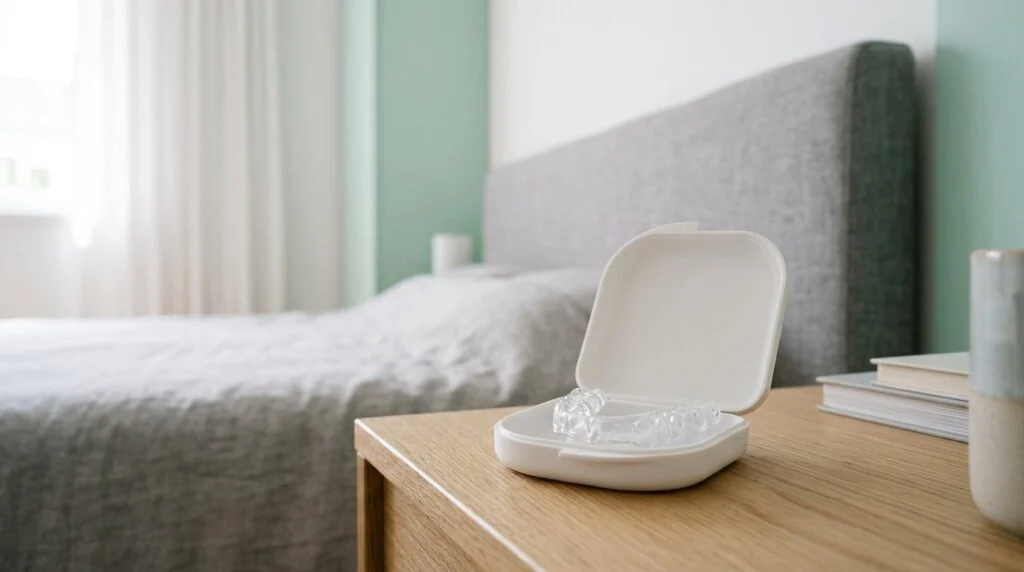
A night guard is a thin, custom-made plastic cover worn over your upper or lower teeth while you sleep. It doesn’t stop the grinding, but it takes the force so your teeth, fillings, crowns and veneers don’t. This guide explains night guard cost in Sharjah, the difference between custom and shop-bought guards, and how to look after one.
Do you need a night guard?
Worn or flat teeth
Edges that look flattened, chipped or shorter than before.
Morning jaw ache
Tired or sore jaw muscles when you wake up.
Headaches
Dull headaches at the temples, especially in the morning.
Sensitive teeth
Grinding wears enamel and can expose sensitive areas.
Cracked teeth or fillings
Repeated broken fillings or cracks without an obvious cause.
A partner hears it
Grinding noises at night are a strong sign.

Custom night guard vs shop-bought
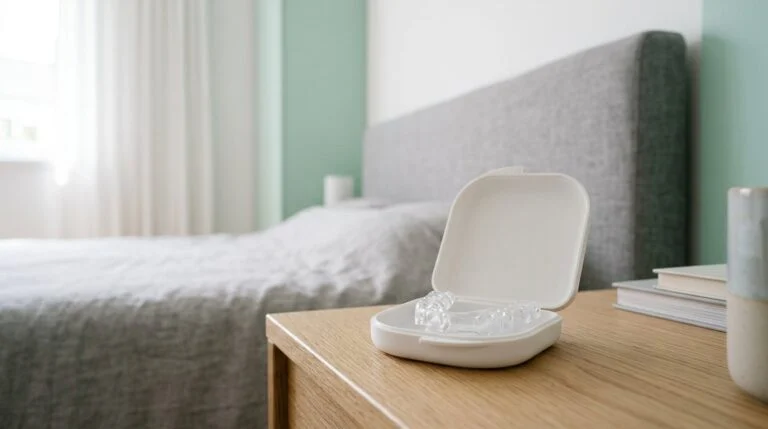
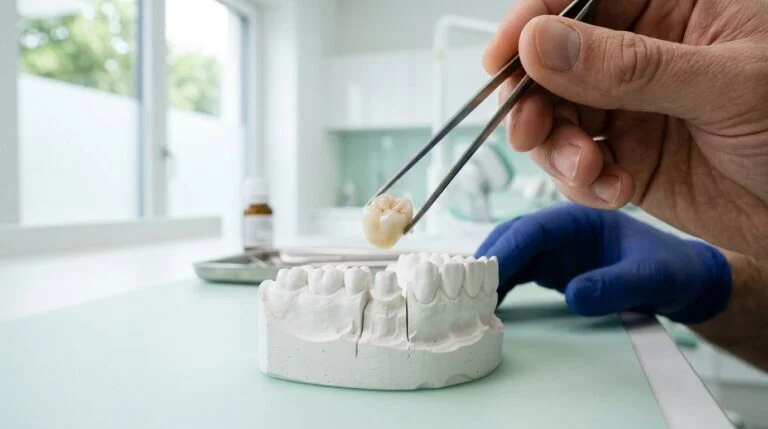
Shop-bought guards are usually boil-and-bite or one-size-fits-all. They are cheaper but bulky, can loosen during the night and may not cover all the teeth evenly. Some people find they clench more on soft guards. A custom bite guard is made from an accurate impression or scan of your teeth. It is thinner, more comfortable, stays in place and spreads the biting force evenly. That accuracy is the main reason a custom guard costs more, and the main reason it works better.
What affects night guard cost
Hard or soft material
Hard acrylic guards are durable and easy to adjust. Soft guards suit some people but wear faster.
Upper or lower
Most guards are made for one arch; the dentist chooses based on your bite.
Fitting and adjustment
A proper fit includes checking the bite and adjusting the guard.
Insurance
Many plans treat bite guards as cosmetic or optional, so cover varies.
How a custom night guard is made
Check-up
We look for wear, cracks and jaw muscle tenderness. The consultation is free.
Impression or scan
An accurate mould of your teeth is taken in a few minutes.
Making the guard
The guard is made to fit your teeth precisely.
Fitting
At the second visit we fit it, check your bite and adjust it until it feels even.
Not sure what you need?
Get a free check-up and X-ray. A dentist explains your options and gives you the cost in writing. Open until 10 PM on Al Khan Street, Al Majaz.
Caring for your night guard
Rinse it in cool water every morning and brush it gently with a soft toothbrush and mild soap, not toothpaste, which can scratch it. Let it dry and store it in its case away from heat, direct sun and pets, who love to chew them. Bring it to check-ups so we can check the fit.
Daily care
- Rinse and brush every morning
- Keep it in a ventilated case
- Avoid hot water and car dashboards
- Bring it to every check-up
- Replace when worn or cracked
How long does a night guard last?
A hard custom guard often lasts several years, depending on how strongly you grind. Heavy grinders may wear through it sooner, which is still far cheaper than replacing broken teeth or crowns. If your guard cracks, feels loose or develops holes, book a check. Bite guard cost is best viewed as protection for everything else in your mouth.
Night guards with crowns and veneers
If you have crowns, veneers or a Hollywood smile, grinding is the biggest threat to their lifespan. Porcelain is strong, but repeated grinding forces can chip or crack it. We strongly recommend a guard for anyone with cosmetic work who grinds or clenches. See our guide to how long veneers last for more.
Reducing grinding during the day
Many people also clench during the day, especially when concentrating or stressed. Notice whether your teeth are touching; at rest they should be slightly apart, with lips together. Cut down on caffeine late in the day, try to wind down before bed, and avoid chewing gum constantly. These habits help, but they do not replace wearing a guard at night. Read more on our teeth grinding page and the NHS guide to teeth grinding.
Night guard vs sports mouthguard
A bite guard is thin and hard, designed for grinding while you sleep. A sports mouthguard is thicker and softer, designed to absorb impacts during contact sport. They aren’t interchangeable. If you play football, rugby, boxing or martial arts and also grind at night, you need both. Our guide to bite guards explains the options.
Getting used to a night guard
Most people get used to a custom guard within a week or two. At first you may notice extra saliva or feel it is strange to sleep with something in your mouth. That passes quickly. If it hurts, feels tight on certain teeth or your bite feels different in the morning for more than a few minutes, come back and we’ll adjust it. A good fit is what makes it comfortable to wear every night.
Grinding, stress and sleep
Stress, poor sleep, caffeine, alcohol and some medicines are linked to grinding. Some people grind more during busy periods at work or exams. Snoring and sleep apnoea are also associated with grinding, so if you snore heavily or wake unrefreshed, mention it to your doctor. The guard protects the teeth while you work on the triggers.
Signs your teeth are already affected
Grinding leaves clues that we look for at every check-up: flattened tips on the canines, small chips along the front edges, cracks in the enamel, worn fillings and notches near the gum line. Some people develop thickened jaw muscles that make the face look slightly wider at the angle of the jaw. Others notice sensitivity to cold because worn enamel exposes the softer layer beneath. If any of these appear, protecting the teeth early is far easier than repairing them later.
Children and grinding
Grinding is common in young children and often stops as adult teeth come through. We usually monitor rather than treat, because the teeth and jaws are still growing. If a child has jaw pain, headaches or noticeable wear, we’ll check the bite and discuss options with parents. Snoring or very restless sleep in children is worth mentioning to your doctor too.
What happens at your follow-up
At follow-up visits we check the fit, look for wear marks on the appliance and examine your teeth and jaw muscles. Wear patterns show how and where you grind, which helps us adjust the bite and spot problems early. If the appliance has thinned or cracked, we will advise when to replace it.
Travelling with your guard
Take your appliance with you when you travel; grinding often increases with jet lag, unfamiliar beds and stress. Keep it in its hard case in your hand luggage so it isn’t crushed. If you forget it for a night or two, no harm is done, but long breaks let the old wear pattern return. Many frequent flyers keep a travel case packed permanently with their toiletries so it’s never left behind.
Your first step
Book a check-up and mention any jaw ache, headaches or chipped teeth. We’ll look for signs of grinding and tell you honestly whether you need protection.
Night guard questions
Will a night guard stop me grinding?
Is a custom night guard worth the cost?
Upper or lower guard?
Does insurance cover a night guard?
Can children use a night guard?
Waking up with a sore jaw?
Book a free consultation in Al Majaz. We will check for signs of grinding and tell you whether a bite guard would help.
Who wrote this
Written by the dental team at Al Jazeera Dental Clinic, a family clinic on Al Khan Street, Al Majaz 3, Sharjah, caring for patients since 1998, and medically reviewed by Dr Ranjeet Kumar, Medical Director (BDS, Diploma in Endodontics), October 2026. Use it as a guide only. Every mouth is different, so a check-up is the only way to know what you need.
Related articles
Wisdom Tooth Removal Cost in Sharjah: What to Expect
Wisdom tooth removal cost in Sharjah depends on position, impaction and number of teeth. How the price is set, insurance, recovery and when removal…
Dentures Cost in Sharjah: Full, Partial and Flexible Dentures
Dentures cost in Sharjah explained: full vs partial, acrylic vs flexible vs metal, relines and insurance. Free consultation in Al Majaz, pay in ins…
Root Canal Cost in Sharjah: What You Pay For
Root canal cost in Sharjah explained: front vs back teeth, number of visits, crowns, re-treatment and insurance cover. Free consultation and X-ray …