
How long do veneers last? Porcelain vs composite lifespan
Veneers are an investment, so it makes sense to ask how long they will look good. The answer depends on the material, the way they are made and, very much, on you.
Looking for treatment? See our main page on veneers in Sharjah: what is involved, who it suits, and how to book a free consultation and X-ray.
The honest answer on lifespan
Veneers are thin shells bonded to the front of the teeth to change their colour, shape or size. They are the foundation of most smile makeovers, including the popular Hollywood smile. Before committing, most patients ask the same practical question: how long do veneers last, and what will it cost to keep them looking good?
There is no single number. Porcelain and composite veneers last very different lengths of time, and the way they are planned, bonded and cared for makes a big difference. This guide gives realistic ranges, explains what shortens or extends their life, and lists the signs that a veneer needs attention.
How long veneers last, by type
Porcelain veneers
Typically 10 to 15 years, and often longer with good care. Porcelain is strong, resists staining and keeps its shine.
Composite veneers
Typically 4 to 8 years. Composite is softer, can chip and gradually picks up stain, but it can be repaired and polished.
E-max and other ceramics
Modern pressed ceramics are strong and natural-looking, with a lifespan similar to or better than traditional porcelain.

Why porcelain veneers last longer
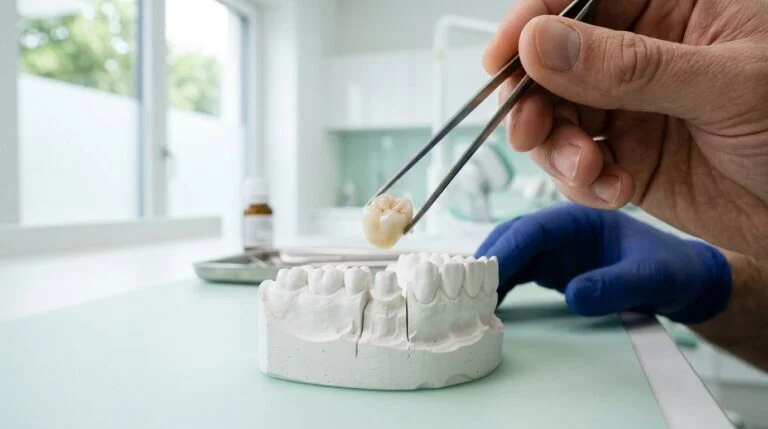
Porcelain is a ceramic, fired in a dental laboratory to a hard, glass-like finish. It does not absorb stain the way resin does, so the colour stays stable for many years. Its surface stays smooth and shiny, which also means less plaque sticks to it. When porcelain veneers are well planned and bonded to healthy enamel, they are very durable.
Studies that follow patients over long periods report that a high proportion of porcelain veneers are still in place and functioning after ten years, and many after fifteen or twenty. That is why, for patients who want a long-term result, porcelain is usually the recommendation.
Why composite veneers need more upkeep
Composite veneers are built up directly on the tooth with tooth-coloured resin, usually in a single visit. They cost less and need little or no removal of enamel, which is a real advantage. But resin is softer than porcelain. Over time it can chip at the edges, lose its polish and pick up stain from coffee, tea, turmeric and smoking.
The good news is that composite can be repaired, re-polished or topped up without replacing the whole veneer. With regular maintenance, composite veneers last well within their expected range and sometimes beyond. Our comparison of composite vs porcelain veneers explains the trade-offs in more detail.
What shortens the life of veneers
Veneers rarely fail on their own. Most problems come from forces or habits that would damage natural teeth too. Night-time grinding and clenching is the single biggest risk; the pressure can crack porcelain or loosen the bond. If you grind, a custom night guard is essential. Read about the signs of teeth grinding if you aren’t sure.
Using the front teeth as tools, biting nails or pens, and chewing ice all put sudden stress on the edges. Gum disease and decay around the margins can undermine veneers from underneath, which is why cleaning and check-ups still matter.
Main risks
- Grinding or clenching at night
- Biting nails, pens or ice
- Opening packets with your teeth
- Contact sports without a mouthguard
- Poor cleaning at the gum line
- Missed check-ups
Not sure what you need?
Get a free check-up and X-ray. A dentist explains your options and gives you the cost in writing. Open until 10 PM on Al Khan Street, Al Majaz.
8 ways to help your veneers last
Brush gently twice a day
Use a soft brush and a non-abrasive fluoride toothpaste. Harsh whitening pastes scratch composite.
Clean between teeth daily
Floss or interdental brushes keep the gum line healthy, which protects the veneer edges.
Wear a night guard if you grind
This one habit protects veneers more than anything else.
Don’t use teeth as tools
No opening bottles, tearing tape or biting thread.
Cut hard foods
Slice apples and crusty bread instead of biting straight into them with your front teeth.
Go easy on stain
Particularly with composite: rinse with water after coffee, tea or red sauces.
Keep regular check-ups
We check the margins and bond and polish composite every visit.
Fix small problems early
A small chip is quick to repair. Left alone it can spread.
Signs a veneer needs attention
Book a visit if you notice a chip or crack, a dark line appearing at the gum edge, a veneer that feels rough or catches floss, sensitivity under one veneer, or a change in how your bite feels. A veneer that has come loose should be kept safe and brought to the clinic; it can often be re-bonded if the tooth underneath is healthy. Don’t try to glue it back yourself.
Gums naturally recede a little with age, which can reveal the edge of a veneer over many years. This is one of the most common reasons for replacing veneers that are otherwise in good condition.
What happens when veneers need replacing
Replacing a porcelain veneer involves carefully removing the old one, checking the tooth, and fitting a new veneer made to match your other teeth. Usually little extra enamel is removed. Composite veneers are often refreshed rather than replaced. Either way, we’ll explain the options and costs in writing before any work starts. For an idea of costs, see our guide to the Hollywood smile cost in Sharjah.
Planning makes a difference
How long veneers last depends heavily on decisions made before they are fitted. A careful assessment of your bite, gums and habits; preserving as much enamel as possible, because veneers bond best to enamel; precise fit at the gum line; and a realistic shape that doesn’t overload the edges all add years of life. That is why we take time over planning rather than rushing to fit. You can read more about our approach on the cosmetic dentistry page, and general background is available from the NHS healthy teeth and gums guide.
Lifestyle factors that help veneers last
Daily life in the UAE brings a few specific challenges. Strong Arabic coffee, karak tea and spiced dishes stain composite over time, so a quick rinse with water afterwards helps composite veneers last longer between polishes. Smoking and shisha stain both composite and the natural teeth around porcelain, making veneers stand out. Sports such as football, padel and martial arts call for a mouthguard, because a single knock can crack a veneer.
Stress is another factor that patients rarely consider. Many people clench harder during busy periods at work, often without realising. If you wake with tired jaw muscles or headaches, mention it at your next visit.
Realistic expectations before you start
Patients sometimes hear that veneers last a lifetime. That is not quite accurate. Well-made porcelain veneers last a long time, but you should expect to replace or refresh them at some point, particularly if you have them in your twenties or thirties. Composite veneers last a shorter time but cost less and are easier to touch up. It helps to think of the full cost over 10 or 20 years, not just the first fitting.
At your consultation we’ll talk through how long veneers last in your particular case, taking into account your bite, gums and habits, and we’ll put the options and costs in writing so you can compare them calmly. How long your veneers last is, in the end, a partnership between careful dentistry and good daily care. When both are in place, veneers last well and continue to look natural for many years.
Questions about how long veneers last
Do veneers last forever?
Can veneers be whitened?
Can a broken veneer be repaired?
Will my teeth be damaged when veneers are replaced?
Does insurance cover veneers?
Thinking about veneers?
Book a free consultation in Al Majaz. We’ll tell you honestly which option suits your teeth, how long it should last and what it will cost.
A note from us
Written by the dental team at Al Jazeera Dental Clinic, a family clinic on Al Khan Street, Al Majaz 3, Sharjah, looking after Sharjah families since 1998, and medically reviewed by Dr Ranjeet Kumar, Medical Director (BDS, Diploma in Endodontics), October 2026. Not a diagnosis. Questions about your own teeth? Call or WhatsApp us.
Related articles
Composite vs Porcelain Veneers: Pros, Cons and Who Each Suits
Porcelain veneers vs composite veneers: lifespan, looks, cost, tooth preparation, repairs and aftercare explained by our Sharjah dental team. Free …
Dental Crown Cost in Sharjah: Zirconia, Porcelain and Metal
What a dental crown costs in Sharjah depends on material, tooth and prep work. Compare zirconia, porcelain and metal, check insurance, and get a fr…
Tooth Abscess: Signs, Treatment and When It Is an Emergency
Tooth abscess explained: symptoms, the different types, why antibiotics alone are not enough, treatment options and when swelling is an emergency. …