
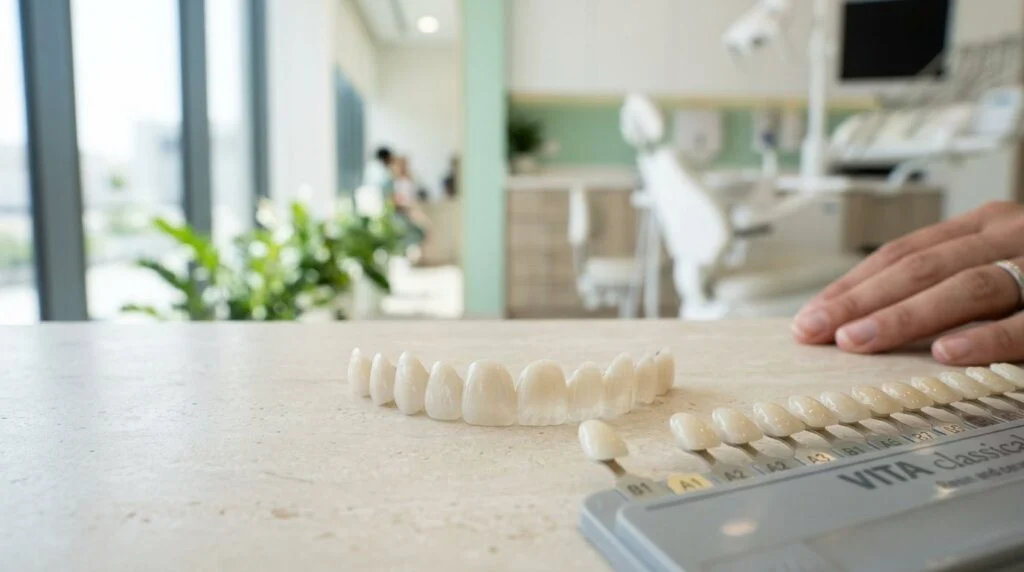
Composite vs porcelain veneers: an honest comparison
Both can transform your smile. They differ in how they are made, how long they last, how much tooth is prepared and what they cost. Here is how to choose.
Looking for treatment? See our main page on veneers in Sharjah: what is involved, who it suits, and how to book a free consultation and X-ray.
The decision behind every smile makeover
Once you decide veneers are right for you, the next choice is the material. Composite veneers are shaped directly on your teeth from tooth-coloured resin. Porcelain veneers are crafted in a dental laboratory from ceramic and bonded on at a later visit. Each has real advantages, and the right one depends on your teeth, your budget and how long you want the result to last.
This guide compares composite and porcelain veneers on seven practical points, explains who each suits, and covers aftercare, so you can walk into your consultation already knowing what to ask.

How each type is made
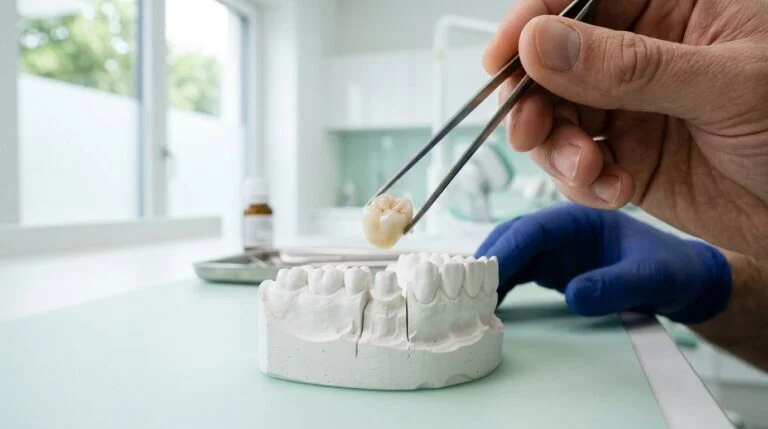
Composite veneers are built up layer by layer directly on the tooth. The dentist chooses shades of resin, sculpts the shape by hand, hardens each layer with a light and polishes the result. It is often done in a single long appointment, and usually little or no enamel is removed.
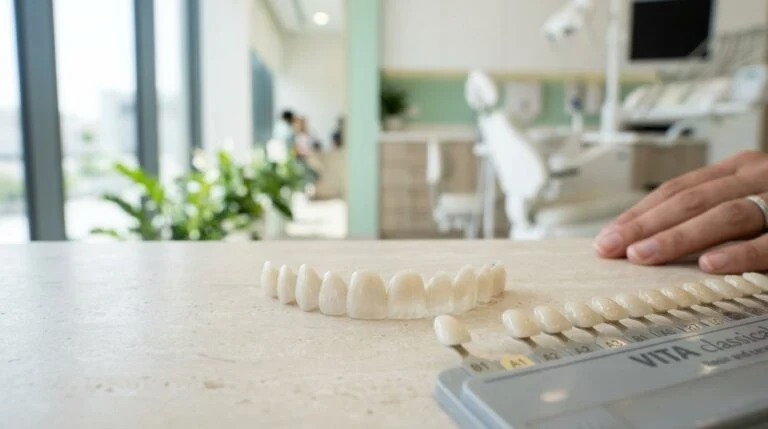
Porcelain veneers start with careful preparation: a thin layer of enamel, often less than a millimetre, is removed so the veneer sits naturally. Impressions or scans go to a dental technician who makes each veneer from ceramic. At a second visit the veneers are tried in, adjusted and bonded permanently. Temporary veneers protect your teeth in between.
7 differences between composite and porcelain veneers
1. Lifespan
Ceramic veneers commonly last many years. Composite usually needs repairs or replacement sooner.
2. Stain resistance
Porcelain keeps its colour. Composite can pick up stains from tea, coffee and smoking.
3. Appearance
Both look natural when done well. Porcelain has a lifelike translucency that’s hard to match.
4. Tooth preparation
Composite needs little or none. Porcelain usually needs a thin layer of enamel removed.
5. Visits
Composite: often one visit. Porcelain: usually two or three.
6. Repairs
Composite chips can be repaired in the chair. A chipped porcelain veneer may need replacing.
7. Cost
Composite costs less upfront. Ceramic veneers cost more but last longer.
Who porcelain veneers suit best
Ceramic veneers are ideal if you want a long-lasting, very stain-resistant result and are happy to commit to a permanent change. They suit people with deep or grey staining that whitening can’t lift, worn or chipped front teeth, or teeth with old discoloured fillings.
Because enamel is removed, ceramic veneers are a lifelong decision: if one is ever removed, the tooth will need another veneer or a crown. That is why we always show a mock-up first.
Good candidates
- Healthy teeth and gums
- Deep staining whitening can’t fix
- Worn, chipped or uneven front teeth
- You want a long-lasting result
- You don’t grind heavily, or will wear a guard
Who composite veneers suit best
Composite veneers are a great choice if you want to improve your smile with minimal change to your natural teeth, or if your budget is limited. They suit small chips, gaps, uneven edges and mild discolouration, and younger patients who want a reversible or adjustable option.
Expect to have composite polished regularly and repaired from time to time. Many people start with composite and later move to ceramic veneers when they are ready.
Good candidates
- Small chips or gaps
- Mild discolouration
- You want little or no drilling
- A lower upfront budget
- You’re happy with regular polishing
Not sure what you need?
Get a free check-up and X-ray. A dentist explains your options and gives you the cost in writing. Open until 10 PM on Al Khan Street, Al Majaz.
Do porcelain veneers look fake?
They should not. The fake look comes from veneers that are too thick, too white or all the same shape. Well-planned ceramic veneers are shaded to suit your skin tone, have subtle translucency at the edges, and follow the curve of your lower lip when you smile. We design the shape and shade with you and let you try a mock-up in your own mouth before anything permanent is done.
Cost and value over time
Composite has the lower upfront price. Ceramic veneers cost more because of the laboratory work and extra visits. But when you divide the cost by the number of years each lasts, porcelain is often the better long-term value for people who look after their teeth. Veneers are cosmetic, so they are usually not covered by insurance; we accept Tabby, Tamara and Toothpick so you can spread the payments. See our guide to the Hollywood smile cost in Sharjah.
What happens to the teeth underneath?
With composite, the natural tooth is usually untouched or only lightly roughened, so the process can often be reversed. With ceramic veneers, a thin layer of enamel is removed, so the teeth will always need a covering afterwards. Healthy enamel underneath a well-fitted veneer stays healthy as long as you keep the edges clean.
Decay can still form at the edge of any veneer if plaque is left there, so brushing along the gum line and cleaning between teeth daily remain essential.
How we plan your veneers
Consultation
We check your teeth and gums and discuss what you want to change.
Smile design
We plan shade and shape and explain composite and ceramic veneers for your case.
Mock-up
You try a preview of the new smile before any permanent work.
Fitting and review
Veneers are fitted, your bite is checked and we review the result.
Caring for veneers
Brush twice a day with a non-abrasive fluoride toothpaste and clean between teeth daily. Avoid biting very hard objects such as ice, nut shells and pens. If you grind your teeth, wear a night guard, because grinding is the most common reason veneers chip. Composite benefits from professional polishing every few months; ceramic veneers simply need regular check-ups and cleans.
Read more on our Hollywood smile and veneers page. The NHS overview of cosmetic dentistry is a useful independent read.
Before veneers: getting your mouth ready
A beautiful result needs a healthy base. Before any veneer is made we treat decay, replace leaking fillings and make sure the gums are healthy, because inflamed gums change shape as they heal and can leave a visible edge. A professional clean is usually the first step.
If some teeth won’t be covered, whitening them first lets us match the new veneers to the brighter shade. If teeth are quite crooked, a short course of aligners can reduce how much enamel needs to be removed and gives a more natural finish. Planning in this order saves time and money, and means you only do the cosmetic work once.
Typical order
- Check-up and clean
- Fillings or gum care if needed
- Straightening, if needed
- Whitening the other teeth
- Veneers last
How many veneers do you need?
Not everyone needs a full set. If only one or two front teeth are chipped or discoloured, they can sometimes be treated on their own, although matching a single veneer to natural neighbours takes particular skill. Many people choose four to six veneers on the most visible front teeth. A full smile makeover usually covers eight to ten upper teeth, the number that show when you smile broadly.
We look at your smile from the side as well as the front, because teeth further back can show in photos. The aim is a balanced smile, not the highest number of veneers. Fewer, well-chosen veneers often look more natural and keep more of your own teeth untouched.
Questions to ask at your consultation
Ask to see examples of the clinic’s own work, whether a mock-up is included, who makes the laboratory veneers, how much enamel will be removed, what the plan is if a veneer chips, and whether a night guard is recommended. Clear answers to these questions are a good sign that your smile is being planned with care rather than sold as a package.
Veneer questions
Which lasts longer, composite or porcelain veneers?
Do porcelain veneers damage teeth?
Can composite veneers be upgraded to porcelain later?
Can veneers be whitened?
Are veneers covered by insurance?
Which veneers suit your smile?
Free smile consultation and a mock-up before you decide.
Who wrote this
Written by the dental team at Al Jazeera Dental Clinic, a family clinic on Al Khan Street, Al Majaz 3, Sharjah, caring for patients since 1998, and medically reviewed by Dr Ranjeet Kumar, Medical Director (BDS, Diploma in Endodontics), October 2026. Use it as a guide only. Every mouth is different, so a check-up is the only way to know what you need.
Related articles
How Long Do Veneers Last? Porcelain vs Composite Lifespan
How long veneers last: typical lifespan of porcelain and composite veneers, what shortens it, signs they need replacing, and simple habits that hel…
Zirconia Crowns: Strength, Looks and Who They Suit
Zirconia crowns explained: strength, natural looks, monolithic vs layered, who they suit, how long they last and how they compare with porcelain. F…
Dental Crown Cost in Sharjah: Zirconia, Porcelain and Metal
What a dental crown costs in Sharjah depends on material, tooth and prep work. Compare zirconia, porcelain and metal, check insurance, and get a fr…