
Zirconia crowns: strength, looks and who they suit
Zirconia has become the most popular crown material in many clinics. Here is why, where it works best, where porcelain may be better, and how to look after it.
Looking for treatment? See our main page on dental crowns in Sharjah: what is involved, who it suits, and how to book a free consultation and X-ray.
Why zirconia is everywhere
Ten or fifteen years ago, most crowns were porcelain fused to a metal base. Today, many patients ask for zirconia crowns by name. Zirconia is a very strong, tooth-coloured ceramic that’s milled precisely from a solid block, so it combines the strength that back teeth need with a natural look and no metal underneath.
This guide explains what zirconia crowns are, the main types, the benefits and the honest drawbacks, who they suit best, how they compare with other materials, and how to make them last.
What zirconia actually is
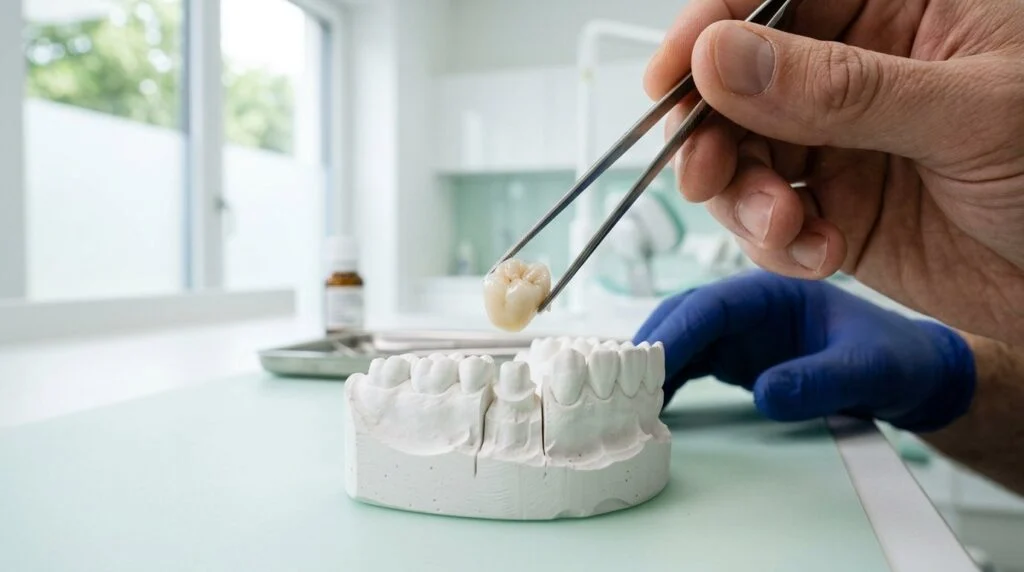
Zirconia, or zirconium dioxide, is a ceramic material known for its toughness. Dental laboratories mill zirconia crowns from a block using a digital design of your prepared tooth, then sinter them in a furnace so they become extremely hard. Because there is no metal core, there is no dark line at the gum and no risk of metal showing through as the gum changes over the years.
Monolithic and layered zirconia
Monolithic zirconia
Made from one solid piece. Extremely strong and resistant to chipping. Ideal for back teeth and people who grind.
Layered zirconia
A zirconia core with porcelain layered on top for extra translucency and lifelike detail. Often chosen for front teeth.
High-translucency zirconia
Newer zirconia types let more light through and look more natural, while staying strong.
7 benefits of zirconia crowns
1. Very strong
Resists cracking under heavy chewing forces.
2. Natural colour
Tooth-coloured, with no metal line at the gum.
3. Precise fit
Digitally designed and milled for an accurate fit.
4. Biocompatible
Well tolerated by the gums and suitable for people with metal sensitivities.
5. Stain-resistant
Keeps its colour over time.
6. Thinner preparation
Strong enough that less tooth may need removing in some cases.
7. Long-lasting
With good care, zirconia crowns can last many years.
The honest drawbacks
Zirconia isn’t perfect for every tooth. Monolithic zirconia can look a little more opaque than natural enamel, which matters most on front teeth in strong light. Very hard zirconia can, if not polished well, wear the opposing tooth, so a smooth, highly polished surface is essential. Adjusting or removing a zirconia crown takes more time than with other materials.
That is why the choice of crowns made of zirconia versus porcelain should depend on the tooth, your bite and how much appearance matters in that area.
Consider
- Slightly more opaque on front teeth
- Needs a high polish
- Harder to adjust once fitted
- Higher cost than metal-based crowns
Not sure what you need?
Get a free check-up and X-ray. A dentist explains your options and gives you the cost in writing. Open until 10 PM on Al Khan Street, Al Majaz.
Who zirconia crowns suit best
Crowns made of zirconia are often the first choice for back teeth after root canal treatment, for heavily filled molars, for people who grind or clench their teeth, and for patients who want to replace old metal-based crowns with a dark line at the gum. Layered or high-translucency zirconia can also work beautifully on front teeth. For a single front tooth that must match its neighbours perfectly, an all-porcelain crown may still be the most natural option.
Zirconia vs porcelain vs metal
Porcelain and e.max crowns give excellent translucency and are ideal for front teeth, but they are less strong than zirconia. Porcelain fused to metal crowns are strong and proven, but a grey line can appear at the gum as it recedes, and porcelain can chip off the metal. Full metal crowns are very durable but not tooth-coloured. Crowns made of zirconia sit in the middle: strong like metal, tooth-coloured like porcelain. See our guide to the dental crown cost in Sharjah for how the materials compare on price.
How zirconia crowns are made and fitted
Assessment
We check the tooth, take an X-ray and confirm a crown is the right option.
Preparation and scan
The tooth is numbed and shaped, and an impression or scan is taken.
Temporary crown
A temporary protects the tooth while the laboratory mills your zirconia crown.
Fitting
We check fit, shade and bite, polish the surface and cement the crown.
How long do zirconia crowns last?
With good care, crowns made of zirconia can last many years. The crown itself is very durable; the most common problems are decay at the edge where the crown meets the tooth, or gum recession. Brushing along the gum line, cleaning between teeth daily, cutting down on sugary snacks and keeping up check-ups protect the tooth underneath. If you grind, a night guard protects both the crown and your other teeth.
Replacing old metal crowns with zirconia
Many people come to us unhappy with an older crown that shows a dark line at the gum or looks grey compared with the teeth next to it. Replacing it with a zirconia crown can make a big difference to how the smile looks. We check the tooth underneath with an X-ray first, because old crowns sometimes hide decay that needs treating before the new crown is made.
Caring for zirconia crowns
Brush twice a day with fluoride toothpaste, clean between teeth daily and avoid biting ice, nut shells or pens. Choose a non-abrasive toothpaste to keep the surface smooth. Six-monthly check-ups let us check the margins and the gum. Read more on our dental crowns page, and see the NHS guide to crowns for independent information.
Signs a tooth may need a crown
Many people only find out they need a crown when a tooth breaks. A few warning signs can help you act earlier. A filling that covers most of the biting surface, a crack line you can see or feel, sharp pain when you bite and release, a tooth that has darkened after root canal treatment, or teeth that have worn short from grinding are all reasons to ask about a crown at your next check-up.
Acting early usually means a simpler, more predictable result, because there is more healthy tooth left to support the new restoration and less chance of the tooth splitting below the gum.
Watch for
- A very large old filling
- A visible crack line
- Pain when biting and releasing
- A darkened root-treated tooth
- Teeth worn short by grinding
What it feels like to have a crown fitted
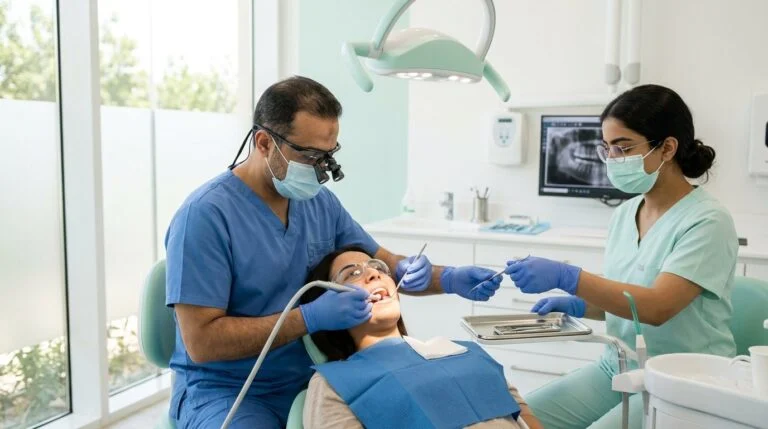
The tooth is numbed before preparation, so you should feel pressure and vibration but not pain. Shaping the tooth usually takes under an hour. The temporary crown can feel slightly different from your natural tooth, and you should avoid very sticky or hard food on that side until the permanent crown is fitted. At the fitting visit we check how the new crown meets your other teeth from every angle and adjust it until your bite feels completely normal. Some mild sensitivity for a few days afterwards is common and settles on its own.
Crowns for children and teenagers
Children occasionally need crowns too, usually on baby molars with large cavities, where a pre-formed crown protects the tooth until it falls out naturally. Teenagers who chip a front tooth in sport are usually treated with bonding first, because their teeth and gums are still developing and a permanent crown is best delayed until adulthood. Our children’s team will explain the options and the timing for your child.
Insurance and paying in instalments
Some UAE insurance plans cover crowns as major treatment, often with a higher co-payment or a pre-approval step; others classify them as cosmetic. Crowns placed after root canal treatment to protect a weakened tooth are more likely to be covered than crowns placed only to improve appearance. Send a photo of your card on WhatsApp and we’ll check your benefits before you decide. If your plan does not cover the full cost, you can spread the payments with Tabby, Tamara or Toothpick, subject to each provider’s approval, and you always receive the full plan and price in writing first.
Zirconia crowns questions
Are zirconia crowns better than porcelain?
Do zirconia crowns look natural?
How long do zirconia crowns last?
Can zirconia crowns chip?
Are zirconia crowns covered by insurance?
Thinking about a zirconia crown?
Free consultation and a written plan before anything starts.
A note from us
Written by the dental team at Al Jazeera Dental Clinic, a family clinic on Al Khan Street, Al Majaz 3, Sharjah, seeing patients since 1998, and medically reviewed by Dr Ranjeet Kumar, Medical Director (BDS, Diploma in Endodontics), October 2026. Not a diagnosis. Questions about your own teeth? Call or WhatsApp us.
Related articles
Composite vs Porcelain Veneers: Pros, Cons and Who Each Suits
Porcelain veneers vs composite veneers: lifespan, looks, cost, tooth preparation, repairs and aftercare explained by our Sharjah dental team. Free …
Dental Crown Cost in Sharjah: Zirconia, Porcelain and Metal
What a dental crown costs in Sharjah depends on material, tooth and prep work. Compare zirconia, porcelain and metal, check insurance, and get a fr…
Signs of Gum Disease: What to Look For and When to Act
The early signs of gum disease, from bleeding and swelling to bad breath and loose teeth. How gingivitis becomes periodontitis, who is at risk and …