
- Home
- Dental problems
- Loose tooth
Loose tooth in adults: causes and treatment
Adult teeth should feel firm. A loose tooth is a sign that something is affecting the gum, bone or tooth itself, and early treatment gives the best chance of keeping it.
Why an adult tooth becomes loose
Healthy adult teeth move very slightly in their sockets, but you should not be able to wiggle them. When a loose tooth appears in an adult, it usually means the gum and bone holding it have been damaged, or the tooth has been injured or overloaded. Sometimes it is painless, which makes it easy to ignore.
This page explains the common causes, what you can do now, and how a dentist assesses and treats a loose tooth. If a child’s baby tooth is loose, that’s usually normal; this page is about adult teeth.
6 causes of a loose tooth
Gum disease
The most common cause. Infection destroys the bone that supports the tooth.
Injury
A fall, sports knock or accident can loosen a tooth.
Grinding and clenching
Heavy forces at night can make teeth mobile over time.
Infection
An abscess at the root can weaken support around the tooth.
Pregnancy
Hormones can make gums and ligaments looser for a while.
Bone loss
Some medical conditions and medicines affect the jaw bone.
Gum disease and a loose tooth
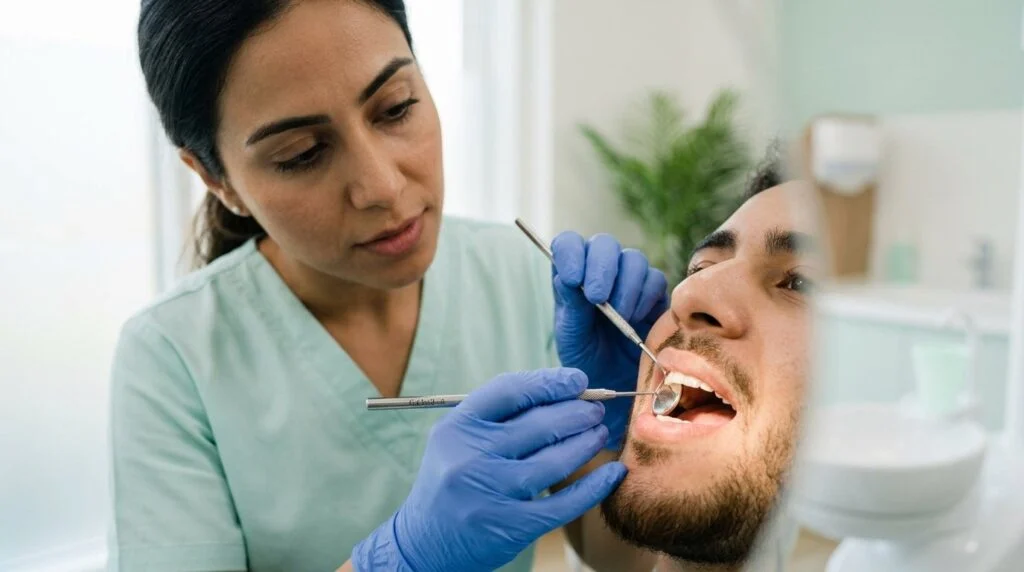
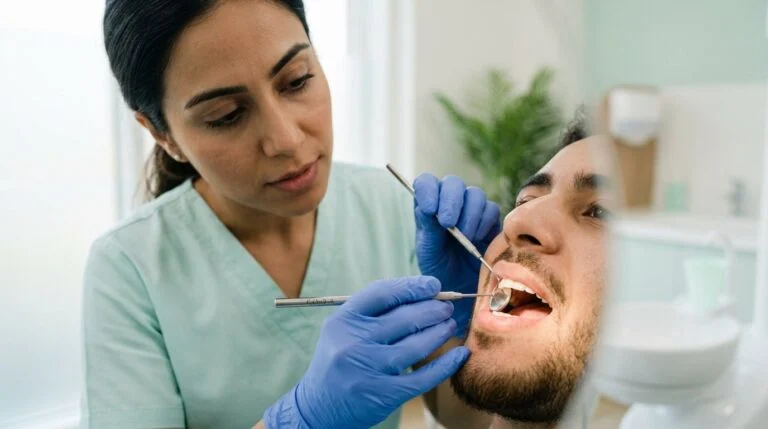
Gum disease starts as gingivitis, with red, swollen gums that bleed when you brush. If plaque and tartar stay on the teeth, the infection can spread below the gum line into periodontitis. Over months and years, it destroys the bone around the roots. The gums may recede and teeth can drift, develop gaps and eventually become loose.
Gum disease is usually painless until it’s advanced, which is why bleeding gums should never be ignored. Smoking, shisha, diabetes and stress all increase the risk. See our bleeding gums page.
A loose tooth after an injury
A blow to the mouth can stretch the ligament that holds the tooth, or crack the root or surrounding bone. If a tooth is loose after an accident, see a dentist the same day. The tooth may need to be gently repositioned and splinted to its neighbours while it heals. If an adult tooth has been knocked out completely, keep it in milk and come straight in. See our emergency dentist page.
Grinding and bite problems
Grinding or clenching, often during sleep, puts heavy forces on teeth. Over time this can widen the ligament space so that a tooth feels slightly loose, especially if the gums are also weak. A tooth that hits first when you bite can be overloaded in the same way. A custom night guard and adjusting a high spot on a filling or crown can help. See our teeth grinding page.
What to do now
Until you can see a dentist, protect the tooth and keep the area clean.
Until your appointment
- Avoid chewing on that side
- Eat soft foods
- Don’t wiggle the tooth with your tongue or finger
- Brush gently, including along the gum line
- Rinse with warm salt water if the gum is sore
- Book a check-up as soon as possible
How a dentist assesses a loose tooth
History
We ask when you noticed it, any injury, grinding and your general health.
Mobility check
The dentist checks how much the tooth moves and in which directions.
Gum measurements
A thin probe measures the pockets around the tooth.
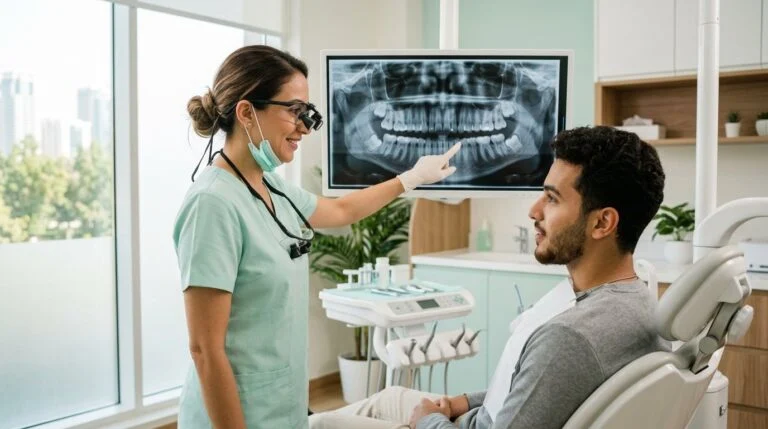
X-ray
Shows the bone level, root and any infection. Free at your first visit.
Plan
You see the results and get options and costs in writing.
Treatment for a loose tooth
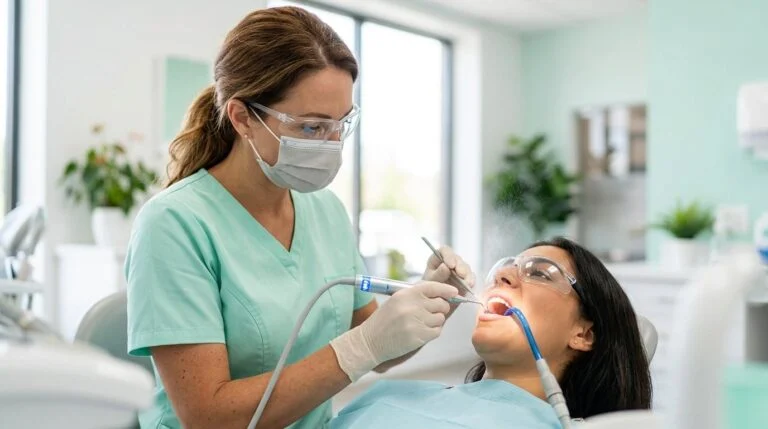
Treatment depends on the cause and how much support is left. For gum disease, a deep cleaning removes tartar and bacteria from the root surfaces so the gums can heal and tighten. Regular maintenance cleaning then keeps the infection under control. A splint can bond a wobbly tooth to its neighbours for stability. If grinding is a factor, a night guard reduces the load. An infection may need root canal treatment.
If too much bone has been lost, the tooth may need to be removed. We will explain all the options, including how the gap could be replaced. Implant cases are referred to a trusted specialist. See our gum treatment page.
Can a loose tooth tighten again?
Often, yes, when the cause is treated early. A tooth loosened by a minor knock or a temporary gum infection can firm up over a few weeks once the area heals. Teeth loosened by advanced bone loss may not fully tighten, but treatment can stop the damage getting worse and help you keep them longer. The key isn’t to wait.
Preventing loose teeth
Brush twice a day with fluoride toothpaste, clean between teeth daily and have regular check-ups and cleaning. Don’t ignore bleeding gums. Stop smoking or shisha if you can, keep diabetes well controlled and wear a mouthguard for contact sports. If you grind your teeth, ask about a night guard.
Loose tooth questions
Is a loose tooth in an adult an emergency?
Can a loose tooth be saved?
Does a loose tooth always hurt?
Will I need an extraction?
Is the check-up free?
Have a loose tooth?
Free check-up and X-ray at Al Khan Street, Al Majaz 3. Open until 10 PM.
About our clinic
Written by the dental team at Al Jazeera Dental Clinic, a family clinic on Al Khan Street, Al Majaz 3, Sharjah, looking after Sharjah families since 1998, and medically reviewed by Dr Ranjeet Kumar, Medical Director (BDS, Diploma in Endodontics), October 2026. This is general information, not a diagnosis. If something feels wrong, come in and let us look.
Related articles
Baby Tooth Decay: Causes, Early Signs and Treatment
Baby tooth decay explained for parents: why milk teeth matter, early white spots, bottle and night feeding, treatment options for children and how …
Braces for Adults: Is It Too Late to Straighten Your Teeth?
Braces for adults explained: whether it is too late, metal vs ceramic vs clear aligners, how long treatment takes, discomfort, costs in Sharjah and…
Pay in Instalments for Dental Treatment with Tabby, Tamara or Toothpick
How to pay in instalments for dental treatment in Sharjah with Tabby, Tamara or Toothpick: how it works, what you can use it for, tips and question…