
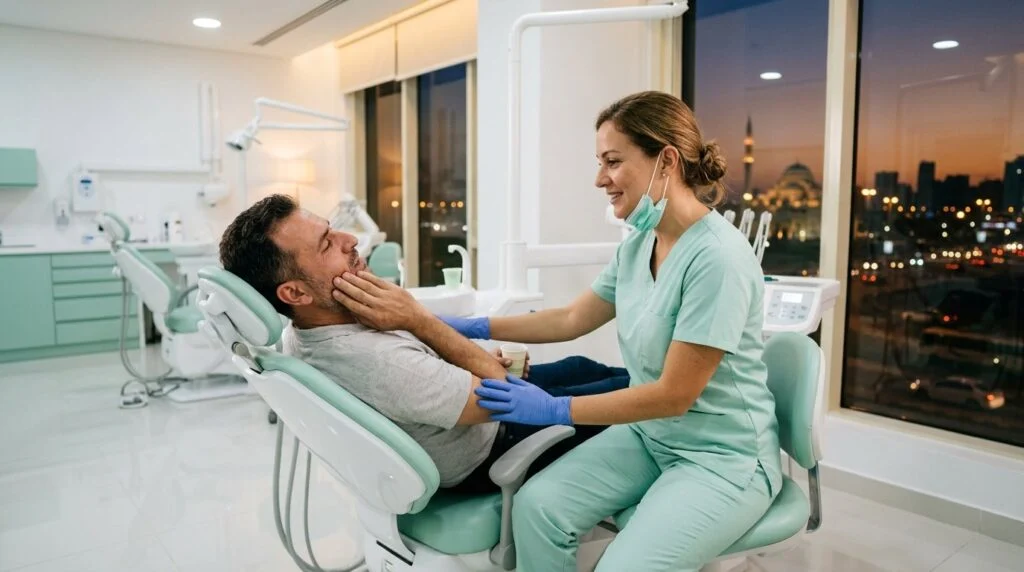
What to do after tooth extraction: a simple aftercare guide
The first 48 hours after a tooth comes out make the biggest difference to how quickly you heal. Here are the twelve things that matter most, and the signs that mean you should call us.
Protect the clot, and the rest follows
Whether it was a wisdom tooth, a broken molar or a baby tooth that wouldn’t come out on its own, the healing process after tooth extraction is the same. A blood clot forms in the socket, new gum grows over it and the bone gradually fills in. Almost every aftercare instruction is about protecting that clot in the first few days.
This guide sets out twelve simple aftercare tips, explains what is normal and what isn’t, and covers when to think about replacing the tooth.
12 aftercare tips after tooth extraction
1. Bite on gauze
Keep firm pressure for 30 to 45 minutes to help the clot form.
2. Rest
Take it easy for the rest of the day and keep your head raised.
3. Cold compress
15 minutes on, 15 off, on the first day to limit swelling.
4. Painkillers as directed
Take your first dose before the numbness wears off.
5. Don’t rinse on day one
Rinsing and spitting can dislodge the clot.
6. No straws
Suction can pull the clot out of the socket.
7. No smoking or shisha
Avoid for at least 48 hours, ideally longer.
8. Soft, cool food
Chew on the other side for a few days.
9. Salt water from day two
Gentle warm rinses after meals keep the area clean.
10. Brush the other teeth
Keep the rest of your mouth clean from the first night.
11. Avoid hard exercise
Wait about three days to avoid restarting bleeding.
12. Take medicines as advised
Follow any instructions about blood thinners or antibiotics.
If the socket keeps bleeding
Some oozing is normal for up to a day after tooth extraction, and saliva may look pink. If bleeding is more than oozing, fold a clean piece of gauze, place it directly over the socket and bite firmly for 30 minutes without checking. A damp tea bag works too, because tannins help blood clot. Sit upright and stay calm. If bleeding continues after two rounds of firm pressure, call us; if it’s heavy and will not stop, go to a hospital emergency department.
To stop bleeding
- Fold clean gauze over the socket
- Bite firmly for 30 minutes
- Don’t keep checking
- Sit upright and stay calm
- Call us if it continues
What is normal in the first week
In the days after tooth extraction, mild to moderate pain that improves day by day, some swelling that peaks on the second or third day, slight bruising, a little stiffness when opening wide, and a whitish layer over the socket after a few days are all normal after tooth extraction. You may also feel the edges of the bone with your tongue; these smooth over as the gum heals. Most people feel much better within three to five days.
What to eat after tooth extraction
For the first day choose cool or lukewarm, soft food: yoghurt, labneh, soup that has cooled, eggs, mashed potato, hummus and soft rice. Over the next few days you can add pasta, fish and soft bread, chewing on the other side. Avoid crunchy, spicy or seeded food such as nuts, sesame, chips and popcorn until the socket has closed. Drink plenty of water, but not through a straw.
Good choices
- Yoghurt and labneh
- Cooled soup
- Eggs and mashed potato
- Hummus and soft rice
- Fish and pasta from day two
Not sure what you need?
Get a free check-up and X-ray. A dentist explains your options and gives you the cost in writing. Open until 10 PM on Al Khan Street, Al Majaz.
Warning signs: when to call us
Call us if pain gets worse after the third day rather than better, as this can be a dry socket. Also call if you have bleeding that won’t stop, swelling that keeps increasing after day three, a fever, pus or a bad taste, or numbness of the lip or tongue that has not worn off the next day. Go to hospital or call 998 if swelling spreads towards your eye or neck or you have difficulty breathing or swallowing. Read our guide to dry socket.
Children after an extraction
Children recover quickly after tooth extraction, but they often play with the area or bite their numb lip. Keep an eye on them for the first few hours, give soft food, and use a children’s painkiller suitable for their age and weight if needed. Praise them for being brave and keep the rest of the day calm. If a baby tooth was removed early, we may suggest a space maintainer to stop neighbouring teeth drifting. See our children’s dentistry page.
Replacing the tooth
If a back tooth or a front tooth has been removed, it’s worth thinking about replacement soon after tooth extraction, because neighbouring teeth can start to drift into the gap within months. Options include a bridge, a partial denture or, for some people, an implant. A bridge or denture is usually made once the gum has settled, often after a few weeks to a few months; an immediate denture can be fitted on the day for front teeth. Read our guides to implant vs bridge and missing teeth.
Getting back to normal
Most people return to work or study the next day after tooth extraction if it was simple, and after one or two days after a more complex one. Avoid heavy exercise for about three days. You can usually return to your normal diet within a week. For independent guidance, see the NHS guide to having a tooth removed.
Sleeping after tooth extraction
Sleep with your head raised on an extra pillow for the first two nights after tooth extraction. Keeping your head above your heart reduces throbbing and swelling. Put an old towel over your pillow in case of a little oozing, which is normal. Avoid sleeping on the side of the extraction for the first night if you can. If pain wakes you, take your painkiller as directed and use a cold compress for a few minutes.
Night-time tips
- Head raised on an extra pillow
- Old towel over the pillowcase
- Painkiller before bed as directed
- Avoid lying on the sore side
Fasting, prayer and travel
If you fast, it’s best to plan an extraction outside the fasting period, because you need regular fluids and painkillers in the first two days after tooth extraction. Wudu is fine, but rinse very gently around the socket for the first day rather than swishing. If you’re travelling, avoid flying for 24 hours after a surgical extraction if possible, and carry gauze and painkillers in your hand luggage. Let us know your plans and we’ll time the extraction to suit.
Medicines after tooth extraction
Most people need only ordinary painkillers after tooth extraction. Antibiotics aren’t routinely needed and are only given when there is a specific reason, such as a spreading infection. If you take blood thinners, follow the advice we agreed before the extraction and do not stop or change them without speaking to your doctor. If you are unsure whether a medicine is safe to take, ask a pharmacist or call us.
Caring for the socket in week two
By the second week after tooth extraction most discomfort has gone, but the socket is still filling in. Keep rinsing gently after meals to clear food, brush normally, and return to your usual diet. If a lower socket keeps trapping food, we can give you a small syringe to rinse it out. Any bony edges usually smooth over on their own; tell us if a sharp edge is rubbing your tongue.
Questions about aftercare
How long does pain last after tooth extraction?
When can I eat normally?
When can I smoke after an extraction?
Can I brush my teeth?
When should I replace the tooth?
Worried about healing?
Message us any time we’re open. Same-day reviews until 10 PM.
Who wrote this
Written by the dental team at Al Jazeera Dental Clinic, a family clinic on Al Khan Street, Al Majaz 3, Sharjah, caring for patients since 1998, and medically reviewed by Dr Ranjeet Kumar, Medical Director (BDS, Diploma in Endodontics), October 2026. Use it as a guide only. Every mouth is different, so a check-up is the only way to know what you need.
Related articles
Root Canal vs Extraction: Which Is Better for You?
Root canal vs extraction: comfort, cost over time, success rates, recovery and what replacing a tooth involves. An honest guide to saving or removi…
Tooth Extraction Cost in Sharjah: Simple vs Surgical
Tooth extraction cost in Sharjah: simple vs surgical extractions, wisdom teeth, insurance cover, aftercare and what to ask before you agree to have…
Wisdom Tooth Pain: Causes, Relief and When to See a Dentist
Wisdom tooth pain explained: why it happens, quick relief at home, warning signs of infection, and when removal is the best option. Free X-ray at o…