
- Home
- Dental problems
- Sensitive teeth
Sensitive teeth in Sharjah
A sharp twinge with ice water, hot tea or something sweet? Sensitivity is common and very treatable. We find out why it’s happening and protect your teeth.
If the sensitivity is sharp rather than general, read about decay that has reached the dentine.
Sensitivity is usually traced at a routine appointment. See what a check-up covers under general dentistry.
That sudden sharp twinge
Sensitive teeth are one of the most common reasons people visit a dentist. The pain is usually short and sharp, triggered by cold drinks, ice cream, hot coffee, sweet food or even breathing in cold air. It can make you avoid foods you enjoy or chew only on one side.
This guide explains why teeth become sensitive, the 6 most common causes, what you can do at home, the treatments we offer and how to stop sensitivity coming back, at Al Jazeera Dental Clinic in Al Majaz, Sharjah.
Why do teeth become sensitive?
Each tooth has a hard outer layer of enamel on the crown and a layer called cementum over the root. Underneath is dentine, which contains thousands of tiny tubes leading to the nerve. When enamel wears thin or the gum shrinks back and exposes the root, those tubes are opened up. Hot, cold, sweet or acidic things then reach the nerve and cause a short, sharp pain.
Sensitive teeth aren’t usually a sign of serious damage, but they are a sign that the protective layer of the tooth has been lost somewhere. Sometimes sensitivity is caused by something that does need treatment, such as decay, a cracked tooth or a leaking filling, which is why a check-up is worthwhile.
Common triggers
- Cold drinks and ice cream
- Hot tea and coffee
- Sweet food and fizzy drinks
- Citrus fruit and acidic food
- Cold air when breathing in
- Brushing or touching the tooth
6 common causes of sensitive teeth
1. Brushing too hard
A hard brush and heavy scrubbing wear enamel away at the gum line and push gums back.
2. Receding gums
Gum disease, ageing or hard brushing expose root surfaces, which have no enamel to protect them.
3. Acid erosion
Fizzy drinks, juices, citrus, energy drinks and reflux soften and thin the enamel over time.
4. Tooth decay
A cavity or leaking filling lets stimuli reach the nerve. This needs a filling, not just toothpaste.
5. Grinding and clenching
Grinding wears enamel flat and can cause tiny cracks, leaving teeth sensitive.
6. After dental treatment
Whitening, fillings or a deep clean can cause temporary sensitivity that usually settles within days.
Relief for sensitive teeth at home
Most people with sensitive teeth notice a real improvement with a few simple changes. Switch to a toothpaste made for sensitive teeth and use it twice a day. After brushing, spit but do not rinse, so the active ingredient stays on the teeth. You can also rub a small amount onto the sensitive area at night.
Use a soft brush and gentle, small circular movements rather than hard scrubbing. Wait at least 30 minutes after acidic food or drink before brushing, because enamel is softer straight afterwards. Drink fizzy drinks and juices with a meal, through a straw, and follow them with water.
Sensitivity toothpaste usually takes two to four weeks to work fully, so keep going. If there is no improvement after a month, or if one tooth is much worse than the others, come and see us.
Small changes that help
- Sensitivity toothpaste twice a day
- Soft brush and gentle technique
- Spit, don’t rinse, after brushing
- Wait 30 minutes after acidic food
- Water instead of fizzy drinks
Sensitive teeth or something more serious?
Sensitivity that’s short, sharp and affects several teeth is usually from worn enamel or exposed roots. Pain that lingers for more than a few seconds after the trigger is removed, pain that starts on its own, or pain in a single tooth when you bite can point to decay, a crack or an inflamed nerve.
These need more than toothpaste. Leaving them can lead to toothache or an infection that needs root canal treatment. If you aren’t sure, a check-up and X-ray will tell us exactly what is going on.
How we treat sensitive teeth
How long the pain lasts tells us where it comes from. A sharp twinge that fades within seconds of the cold going usually means exposed root surface, which responds to desensitising treatment and a change in brushing technique. Pain that lingers beyond thirty seconds points to the nerve and needs different treatment.
Find the cause
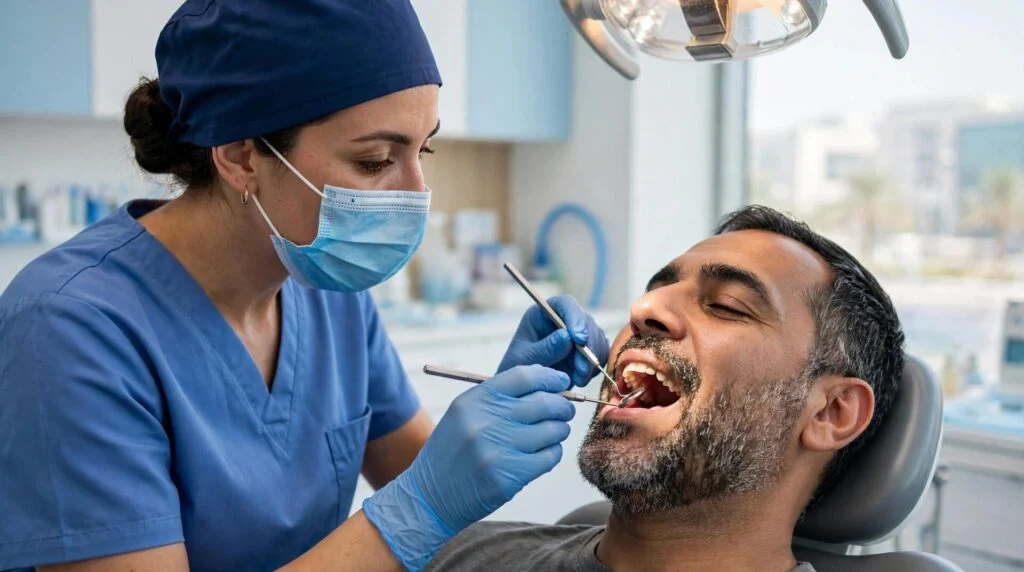
We examine your teeth and gums, check your bite and brushing pattern and take an X-ray if needed.
Treat any damage
Decay, leaking fillings, cracks or gum problems are treated first, because they are the real cause.
Seal and protect
Desensitising varnish or bonding seals exposed dentine and calms the nerve.
Prevent it coming back
We show you a light brushing technique and talk about diet, grinding and reflux.
Treatments for sensitive teeth
Desensitising varnish
A protective coating painted onto sensitive areas in a few minutes. It can be repeated as needed.
Fluoride treatment
High-strength fluoride strengthens enamel and dentine and reduces sensitivity.
Bonding
Tooth-coloured resin covers exposed roots or worn notches at the gum line.
Fillings
Decay or a leaking filling is replaced with a new tooth filling.
Gum treatment
Gum treatment stops gum disease from exposing more root surface.
Night guard
A custom night guard protects teeth worn down by grinding.
Sensitive teeth after whitening or treatment
It’s normal for teeth to feel sensitive for a few days after teeth whitening, a deep clean or a new filling. After whitening, the gel temporarily opens the pores of the enamel. After a deep clean, root surfaces that were covered by tartar are exposed for the first time. A new filling may take a little while to settle.
Using a sensitivity toothpaste for a week before and after treatment helps. If sensitivity after treatment lasts more than two weeks or gets worse rather than better, please let us know so we can check the tooth.
Usually settles within
- Whitening: 1 to 2 days
- Deep clean: 1 to 2 weeks
- New filling: a few days to 2 weeks
- Crown or bridge: up to 2 weeks
Preventing sensitive teeth
Protecting your enamel and gums is the best way to stop sensitive teeth coming back. Brush twice a day with a soft brush and fluoride toothpaste, clean between your teeth daily, and limit acidic drinks such as cola, juice and energy drinks. If you have reflux, ask your doctor about treating it, as stomach acid can erode teeth.
Regular check-ups and cleans every six months catch gum problems, worn fillings and early decay before they cause pain. If you grind your teeth or wake with a sore jaw, mention it, because a night guard can protect your enamel.
Protect your enamel
- Soft brush, careful pressure
- Fluoride toothpaste twice a day
- Fewer acidic drinks
- Treat reflux and grinding
- Check-up every six months
Sensitive teeth: myths and facts
Myth: sensitivity means my teeth are rotting
Fact: most sensitive teeth have worn enamel or exposed roots, not decay. A check-up tells you which it is.
Myth: whitening toothpaste helps
Fact: many whitening pastes are more abrasive and can make sensitivity worse. Use a sensitivity toothpaste instead.
Myth: harder brushing cleans better
Fact: a soft brush and calm pressure clean just as well and protect your enamel and gums.
Myth: I just have to live with it
Fact: in most people the pain can be controlled once the cause is found and treated.
How much does treatment for sensitive teeth cost in Sharjah?
It depends on the cause. Many people only need advice and a desensitising varnish, while others need fillings, bonding or gum treatment. That is why we do not put one number on this page that could be wrong for you. Your check-up is free and you get the full cost in writing before anything starts.
Treatment for sensitive teeth is usually covered by UAE insurance plans. We accept FMC, NGI, Inayah, Aafiya, SAICO / Damana, GlobeMed and MSH, plus the Fazaa and Esaad discount cards, and you can spread the cost with Tabby, Tamara or Toothpick. Insurance and payment options.
Sensitive teeth treatment near you in Sharjah
- Open Sunday to Friday 9 AM to 10 PM, Saturday 12:30 PM to 10 PM
- Free consultation and X-ray
- Written cost before treatment
- Insurance: FMC, NGI, Inayah, Aafiya, SAICO / Damana, GlobeMed and MSH, plus the Fazaa and Esaad discount cards
- Pay later with Tabby, Tamara or Toothpick
We’re on Al Khan Street, Al Majaz 3, a short drive from Al Qasba, Al Nahda, Al Taawun, Rolla, Abu Shagara and Buhairah Corniche, with parking in front.
Get directionsSensitive teeth questions
Is it normal to have sensitive teeth?
How long does sensitivity toothpaste take to work?
Can sensitive teeth be cured permanently?
Why is only one tooth sensitive?
Does whitening make teeth sensitive?
Is treatment for sensitive teeth covered by insurance?
Tired of that twinge?
Free check-up to find the cause of your sensitivity. Open till 10 PM.
About this page
Written by the dental team at Al Jazeera Dental Clinic, a family clinic on Al Khan Street, Al Majaz 3, Sharjah, caring for patients since 1998, and medically reviewed by Dr Ranjeet Kumar, Medical Director (BDS, Diploma in Endodontics), November 2026 (how we write and review). Sensitivity has several possible causes, and the treatment is different for each one, so the examination comes first.
Related articles
Baby Tooth Decay: Causes, Early Signs and Treatment
Baby tooth decay explained for parents: why milk teeth matter, early white spots, bottle and night feeding, treatment options for children and how …
Wisdom Tooth Pain: Causes, Relief and When to See a Dentist
Wisdom tooth pain explained: why it happens, quick relief at home, warning signs of infection, and when removal is the best option. Free X-ray at o…
Tooth Abscess: Signs, Treatment and When It Is an Emergency
Tooth abscess explained: symptoms, the different types, why antibiotics alone are not enough, treatment options and when swelling is an emergency. …