
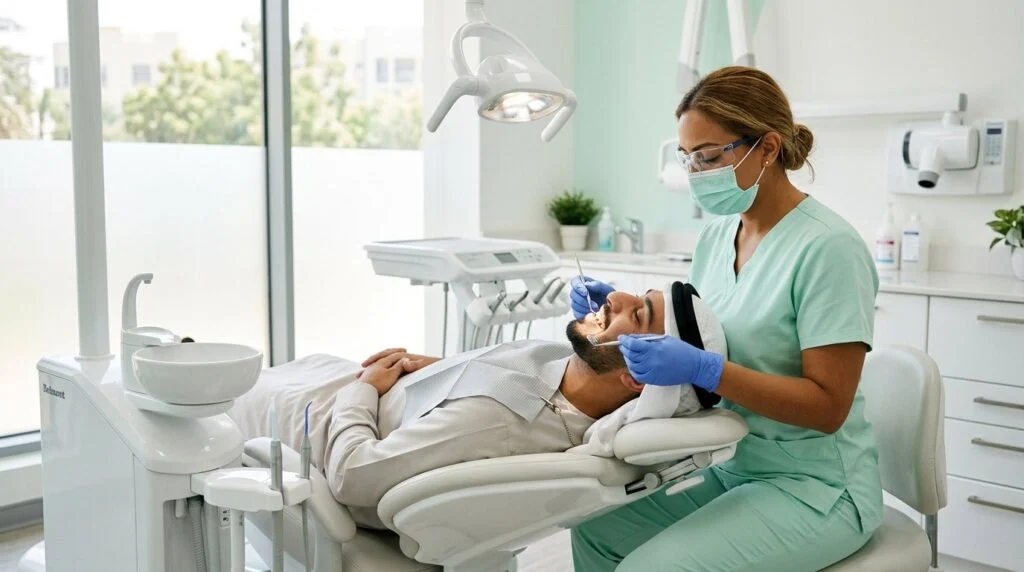
Ramadan dental care: fresh breath and healthy teeth while fasting
Fasting changes your daily routine, and your teeth notice. Here is how to keep your breath fresh, protect your teeth and gums, and plan any dental treatment around Ramadan.
A healthy month for your teeth too
During Ramadan, long hours without food or water mean less saliva, and saliva is the mouth’s natural cleaner. Many people notice drier mouths and stronger breath in the afternoon, and the late-night meals can include more sweets and sugary drinks than usual. With a few simple changes to your routine, you can keep your mouth fresh and healthy all month.
This guide shares ten practical Ramadan dental care tips, covers miswak and toothpaste during the fast, foods that help and harm teeth, and how to plan check-ups and treatment around the holy month.
10 Ramadan dental care tips
1. Brush after suhoor
Brush thoroughly with fluoride toothpaste before the fast begins.
2. Brush after iftar
Brush again after your evening meal, waiting about 30 minutes.
3. Clean between teeth
Floss or use interdental brushes once a day, ideally at night.
4. Clean your tongue
The back of the tongue is the main source of bad breath.
5. Hydrate well
Drink water steadily between iftar and suhoor.
6. Limit sweets
Enjoy traditional desserts with meals rather than grazing all night.
7. Choose water over juice
Sugary drinks at night feed decay.
8. Cut down on caffeine
Coffee and tea dry the mouth and stain teeth.
9. Avoid smoking
Smoking and shisha worsen dry mouth and bad breath.
10. Book a check-up before
Treat small problems before Ramadan starts.
Why breath changes during Ramadan
When you aren’t eating or drinking, saliva flow drops. Bacteria on the tongue and around the teeth multiply and release sulphur compounds, which cause bad breath, often called fasting breath. Breath also changes as the body uses its energy stores. Good cleaning after suhoor, especially the tongue, and plenty of water overnight make a real difference. Read our guide to bad breath for more causes.
Miswak and toothpaste while fasting
Many people use a miswak during the day in Ramadan, and it can help clean the teeth and freshen the mouth. Use it gently along the gum line and on the tongue. Scholars differ on using toothpaste while fasting; many people choose to brush with toothpaste after suhoor and after iftar only, and use a miswak or a dry brush during the day. Follow the guidance you trust. Either way, the most important brushing is after suhoor and after iftar.
A simple routine
- After suhoor: brush and clean tongue
- Daytime: miswak if you wish
- After iftar: brush again
- Before bed: clean between teeth
Suhoor and iftar foods that help your teeth
Choose suhoor foods that keep you full and hydrated: oats, eggs, yoghurt, labneh, cheese, wholemeal bread, cucumber and water-rich fruit. Cheese and yoghurt are good for teeth because they help neutralise acid. At iftar, breaking the fast with dates and water is traditional; dates are sticky, so rinse with water afterwards. Enjoy desserts such as kunafa or luqaimat as part of the meal rather than snacking on them through the night, which keeps teeth under constant sugar attack.
Not sure what you need?
Get a free check-up and X-ray. A dentist explains your options and gives you the cost in writing. Open until 10 PM on Al Khan Street, Al Majaz.
Planning dental treatment around Ramadan
The best time for a check-up and clean is a week or two before Ramadan, so any small problems can be treated before the month begins. Routine treatment can continue during Ramadan; many patients prefer evening appointments after iftar, and we’re open until 10 PM seven days a week. Treatments that need regular painkillers or fluids afterwards, such as wisdom tooth removal, are usually better planned before Ramadan or after Eid unless they are urgent.
Does dental treatment break the fast?
This is a religious question, and many patients ask their imam or follow the guidance of their own scholars. In general, people often choose evening appointments after iftar to avoid any concern about swallowing water or materials during treatment. If you need urgent treatment during the day, tell us you’re fasting and we’ll take extra care with suction and rinsing. We respect whatever you decide.
Children and Ramadan
Children who are learning to fast, and children who aren’t fasting but staying up late with the family, can end up eating more sweets at night. Keep brushing routines firm: a good brush after the evening meal and before bed, even on late nights. Offer water rather than juice, and keep sweets to mealtimes. A check-up before Ramadan is a good way to catch early decay.
Dry mouth: simple fixes
A dry mouth is the root of many fasting-month complaints, from bad breath to a higher risk of decay. Between the evening meal and the pre-dawn meal, spread your water intake rather than drinking a large amount at once, and include water-rich foods such as cucumber, watermelon, oranges and soups. Limit salty and very spicy food at night, which increases thirst the next day. Sleep with the air conditioning set to a comfortable temperature rather than very cold, and if you snore or breathe through your mouth, mention it to your doctor or dentist.
If your mouth feels dry most of the year, not just while fasting, some medicines may be the cause, and we can suggest ways to manage it.
Helpful habits
- Sip water steadily overnight
- Water-rich foods at both meals
- Less salty and spicy food
- Comfortable bedroom temperature
- Ask about medicines that dry the mouth
Sensitive teeth and cold drinks
After a long day without food or drink, many people reach for very cold water or iced drinks at sunset. If your teeth are sensitive, start with water at room temperature and let it cool your mouth gradually. A toothpaste for sensitive teeth used twice a day often helps within a couple of weeks. If one tooth hurts sharply with cold and the pain lingers, book a check-up, as it can be a sign of decay or a crack. Our guide to sensitive teeth explains more.
Gum care during the holy month
Late nights, tiredness and changes in routine can mean brushing gets rushed, and gums are often the first to show it. If your gums bleed when you brush, don’t avoid the area; clean more gently and more thoroughly along the gum line, and clean between your teeth every day. Bleeding that continues for two weeks usually means tartar needs removing by a professional. A scale and polish before the month begins makes fresh breath much easier to maintain.
After Eid: back to routine
Eid celebrations often bring sweets, chocolates and visits from family and friends. Enjoy them with meals, drink water and keep brushing twice a day. Once the celebrations are over, it’s a good time to book any treatment you postponed during the month, and to get the whole family back to six-monthly check-ups. We are open seven days a week until 10 PM, so it’s easy to fit appointments around family plans.
Diabetes and fasting
People with diabetes should speak to their doctor before fasting. Diabetes increases the risk of gum disease, dry mouth and infections, and changes in blood sugar during the fast can make gums more sensitive. Keep up careful brushing and cleaning between teeth, drink enough water at night, and tell us if you notice bleeding or swollen gums. Well-controlled blood sugar and healthy gums support each other, so a check-up and clean before the month begins is especially worthwhile. If you take medicines that cause a dry mouth, we can suggest sugar-free products to use outside fasting hours.
Ramadan dental questions
How can I avoid bad breath during Ramadan?
Can I use a miswak while fasting?
When should I brush during Ramadan?
Are you open during Ramadan?
Should I have a check-up before Ramadan?
Getting ready for Ramadan?
Book a check-up and clean beforehand. Evening appointments until 10 PM.
About this page
Written by the dental team at Al Jazeera Dental Clinic, a family clinic on Al Khan Street, Al Majaz 3, Sharjah, caring for patients since 1998, and medically reviewed by Dr Ranjeet Kumar, Medical Director (BDS, Diploma in Endodontics), October 2026. This is general information. Your dentist can tell you what applies to you.
Related articles
Dentures Cost in Sharjah: Full, Partial and Flexible Dentures
Dentures cost in Sharjah explained: full vs partial, acrylic vs flexible vs metal, relines and insurance. Free consultation in Al Majaz, pay in ins…
What to Do After Tooth Extraction: Aftercare Guide
What to do after tooth extraction: stopping bleeding, pain relief, what to eat, cleaning, smoking, exercise, warning signs and replacing the tooth….
Root Canal Cost in Sharjah: What You Pay For
Root canal cost in Sharjah explained: front vs back teeth, number of visits, crowns, re-treatment and insurance cover. Free consultation and X-ray …