
- Home
- Dental problems
- Bad breath
Bad breath in Sharjah
Bad breath is common, often embarrassing and usually very treatable. In most people the cause is in the mouth, and a check-up and clean make a real difference.
One cause people miss is decay sitting between the teeth.
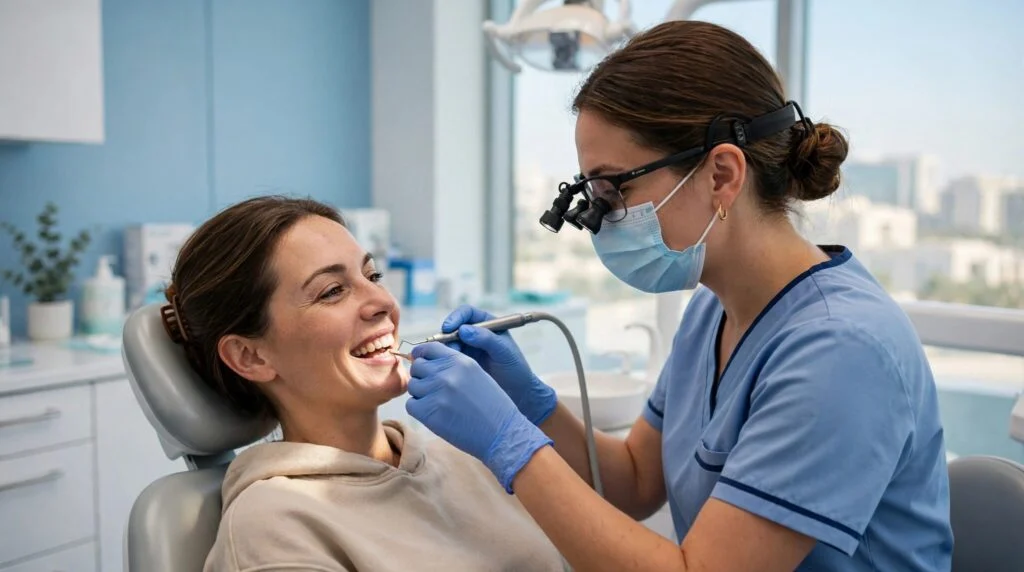
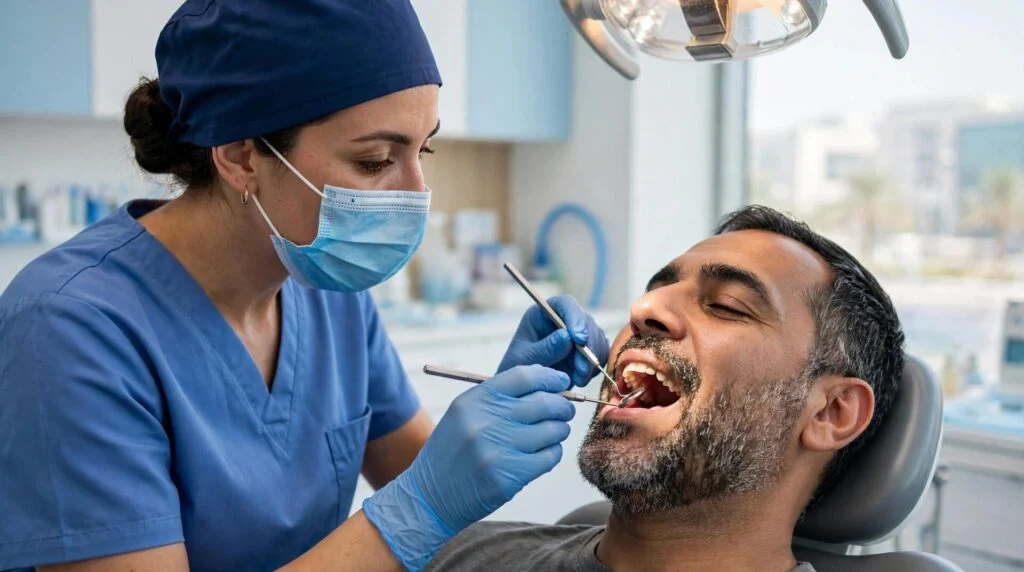
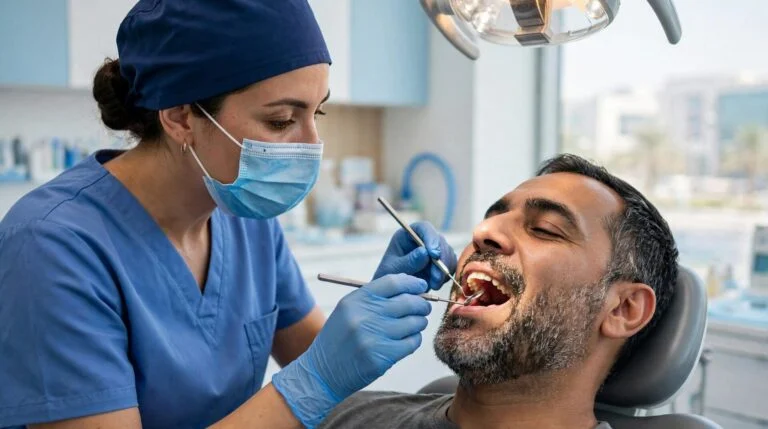
Persistent bad breath is investigated at a general dentistry appointment, where the cause is usually found in the gums or between the teeth.
You aren’t alone
Almost everyone has bad breath sometimes, especially first thing in the morning or after strong food. Persistent bad breath, known as halitosis, is different: it lasts through the day and doesn’t go away with brushing or mints. It can affect confidence at work and in relationships, yet many people never mention it to a dentist.
This guide explains the 6 most common causes, how to tell if you have it, simple habits that help, how we treat it, and when to see a doctor, at Al Jazeera Dental Clinic in Al Majaz, Sharjah. We treat every concern discreetly and without judgement.
What causes bad breath?
In about nine out of ten people, bad breath starts in the mouth. Bacteria living on the back of the tongue, between the teeth and under the gums break down tiny food particles and dead cells. As they do, they release sulphur gases that smell unpleasant. The more plaque and coating there is, the stronger the smell.
Anything that lets bacteria build up makes it worse: gum disease, food trapped between teeth or under a bridge, a dry mouth, decayed teeth, or a denture that is not cleaned properly. Less often, halitosis comes from the nose, throat, sinuses or stomach, or from conditions such as diabetes.
Signs to look out for
- A bad taste that doesn’t go away
- A white or yellow coating on the tongue
- Bleeding or swollen gums
- Dry mouth, especially in the morning
- Friends or family mentioning it
6 common causes of bad breath
1. Tongue coating
Bacteria on the back of the tongue are the single most common source of odour.
2. Gum disease
Bacteria in deep gum pockets produce strong-smelling gases. Bleeding gums are a clue.
3. Dry mouth
Saliva washes bacteria away. Mouth breathing, fasting, some medicines and not drinking enough water reduce it.
4. Food and drink
Garlic, onions, spices, coffee and alcohol cause temporary odour.
5. Smoking and shisha
Tobacco smells on its own, dries the mouth and increases the risk of gum disease.
6. Decay and dental work
Deep cavities, broken fillings and poorly cleaned dentures or bridges trap food and bacteria.
How to tell if you have bad breath
It’s surprisingly hard to smell your own breath, because the nose gets used to it. A simple test is to lick the inside of your wrist, wait ten seconds and smell it. Another is to gently scrape the back of your tongue with a spoon and smell the coating. If the result is unpleasant, the tongue is probably a source.
The most reliable way is to ask someone you trust, or to let us check during a visit. We look for the source rather than just the symptom, so you get a solution that lasts rather than a mint that wears off in minutes.
Quick self-checks
- The wrist test
- The spoon test on your tongue
- Ask a trusted friend
- Notice a bad taste in the morning
Fixing bad breath at home
Brush twice a day for two minutes with a fluoride toothpaste, and clean between your teeth every day with floss or interdental brushes. Clean your tongue every morning with a tongue scraper or your toothbrush, working from the back to the front. This step alone makes a big difference for many people.
Drink plenty of water during the day, especially in the UAE heat and when fasting. Sugar-free gum stimulates saliva. Cut down on coffee and alcohol, and if you smoke, stopping is one of the best things you can do for your breath and gums. Mouthwash can help for a few hours, but choose an alcohol-free one, as alcohol dries the mouth.
Daily fresh-breath routine
- Brush twice a day
- Clean between teeth daily
- Scrape your tongue each morning
- Drink water through the day
- Clean dentures and retainers daily
Bad breath while fasting
During Ramadan many people notice their breath is worse in the afternoon. Without food and drink, saliva flow drops and bacteria multiply. Brushing well and cleaning your tongue after suhoor and iftar, drinking plenty of water between iftar and suhoor, and avoiding very salty or sugary food at night all help.
A professional clean before Ramadan removes tartar and makes it easier to keep your mouth fresh through the month. Many scholars consider brushing without toothpaste, or using a miswak, acceptable during the fast; follow the guidance you trust.
How we treat bad breath
We find the source first. The great majority of persistent bad breath starts in the mouth rather than the stomach, usually from bacteria on the back of the tongue, between the teeth or under the gumline. A thorough clean and gum treatment settles most cases. Decay and dry mouth are the other causes we check.
Discreet consultation
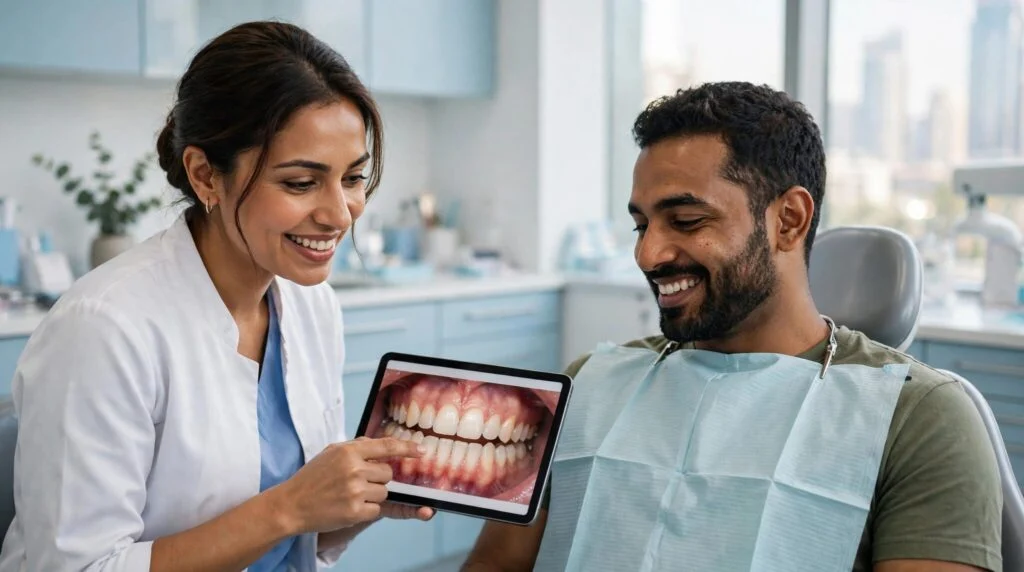
We ask about your symptoms, diet, medicines and health in a private, judgement-free conversation.
Find the source
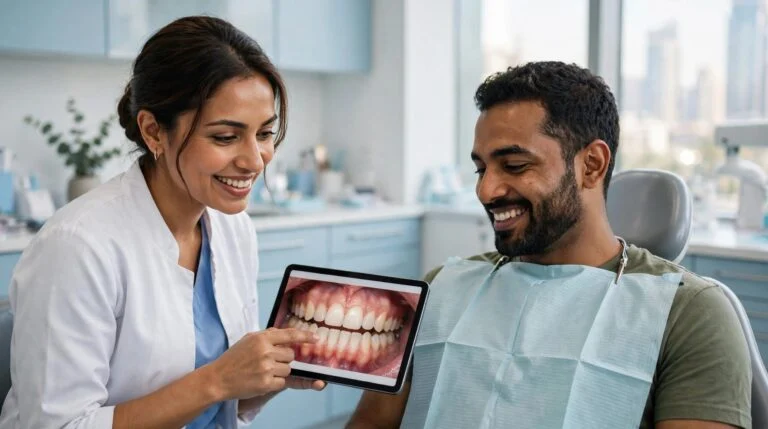
We check your tongue, gums, teeth, fillings and any dentures, and take X-rays if needed.
Treat the cause
A professional clean, gum treatment, fillings or replacing old dental work removes the source.
Follow up
We review your breath and home care, and refer you to a doctor if the cause is not in the mouth.
Treatments that help
Scale and polish
A professional teeth cleaning removes plaque and tartar where bacteria hide.
Gum treatment
Deep cleaning and gum treatment clear bacteria from gum pockets.
Fillings and repairs
Decay and broken fillings that trap food are repaired with a tooth filling.
Dry mouth advice
We suggest saliva substitutes and changes that help, and review your medicines with your doctor.
When bad breath isn’t from your mouth
If your teeth and gums are healthy and the smell continues, the cause may be elsewhere. Sinus infections, tonsil stones, post-nasal drip, acid reflux, diabetes and some kidney or liver conditions can all affect the breath. Certain diets, such as very low-carbohydrate or fasting diets, can cause a fruity or acetone smell.
We’ll tell you honestly if your mouth is healthy and suggest seeing your doctor or an ear, nose and throat specialist for further checks.
See a doctor if you also have
- A blocked nose or sinus pain
- Heartburn or acid reflux
- Increased thirst or passing urine often
- White stones on your tonsils
- Unexplained weight loss
Bad breath: myths and facts
Myth: mouthwash cures it
Fact: mouthwash masks odour for a few hours. Removing the bacteria is what fixes it.
Myth: it comes from the stomach
Fact: in most people the source is the mouth, especially the tongue and gums.
Myth: brushing harder helps
Fact: gentle, thorough cleaning plus tongue cleaning works better than scrubbing.
Myth: you can always smell it yourself
Fact: the nose gets used to your own breath, so many people don’t notice.
Bad breath in children
Children can have breath odour too. Common causes are a coated tongue, food trapped between teeth, decay in baby teeth, mouth breathing because of a blocked nose or large tonsils, and sometimes a small object stuck in the nose. Morning breath in children is normal and fades after breakfast and brushing.
Help your child brush twice a day, gently clean their tongue and drink water through the day. If the smell persists, book a check-up. Our children’s dentistry visits are gentle, and we’ll suggest seeing your paediatrician if we think the cause is in the nose or throat.
Check with us if your child has
- Breath that smells all day
- Brown or dark spots on teeth
- Snoring or mouth breathing
- Swollen or bleeding gums
How much does bad breath treatment cost in Sharjah?
It depends on the cause. Many people only need a professional clean and advice, while others need gum treatment or fillings. That is why we don’t put one number on this page that could be wrong for you. Your check-up is free and you get the full cost in writing before anything starts.
Cleaning and gum treatment are usually covered by UAE insurance plans. We accept FMC, NGI, Inayah, Aafiya, SAICO / Damana, GlobeMed and MSH, plus the Fazaa and Esaad discount cards, and you can spread the cost with Tabby, Tamara or Toothpick. Insurance and payment options.
Bad breath treatment near you in Sharjah
- Open Sunday to Friday 9 AM to 10 PM, Saturday 12:30 PM to 10 PM
- Free consultation and X-ray
- Written cost before treatment
- Insurance: FMC, NGI, Inayah, Aafiya, SAICO / Damana, GlobeMed and MSH, plus the Fazaa and Esaad discount cards
- Pay later with Tabby, Tamara or Toothpick
We’re on Al Khan Street, Al Majaz 3, a short drive from Al Qasba, Al Nahda, Al Taawun, Rolla, Abu Shagara and Buhairah Corniche, with parking in front.
Get directionsBad breath questions
Can bad breath be cured?
Why is my breath bad even after brushing?
Does a tongue scraper really help?
Can braces or aligners cause bad breath?
Is bad breath treatment covered by insurance?
Want fresher breath with confidence?
Free, discreet check-up to find the cause. Open till 10 PM.
About this page
Written by the dental team at Al Jazeera Dental Clinic, a family clinic on Al Khan Street, Al Majaz 3, Sharjah, caring for patients since 1998, and medically reviewed by Dr Ranjeet Kumar, Medical Director (BDS, Diploma in Endodontics), November 2026 (how we write and review). Persistent bad breath almost always has a findable cause, most often in the gums or between the teeth.
Related articles
Baby Tooth Decay: Causes, Early Signs and Treatment
Baby tooth decay explained for parents: why milk teeth matter, early white spots, bottle and night feeding, treatment options for children and how …
Tooth Abscess: Signs, Treatment and When It Is an Emergency
Tooth abscess explained: symptoms, the different types, why antibiotics alone are not enough, treatment options and when swelling is an emergency. …
After Root Canal Treatment: What Is Normal and What Is Not
What to expect after root canal treatment: normal tenderness, eating, temporary fillings, crowns, warning signs and how long healing takes. Advice …