
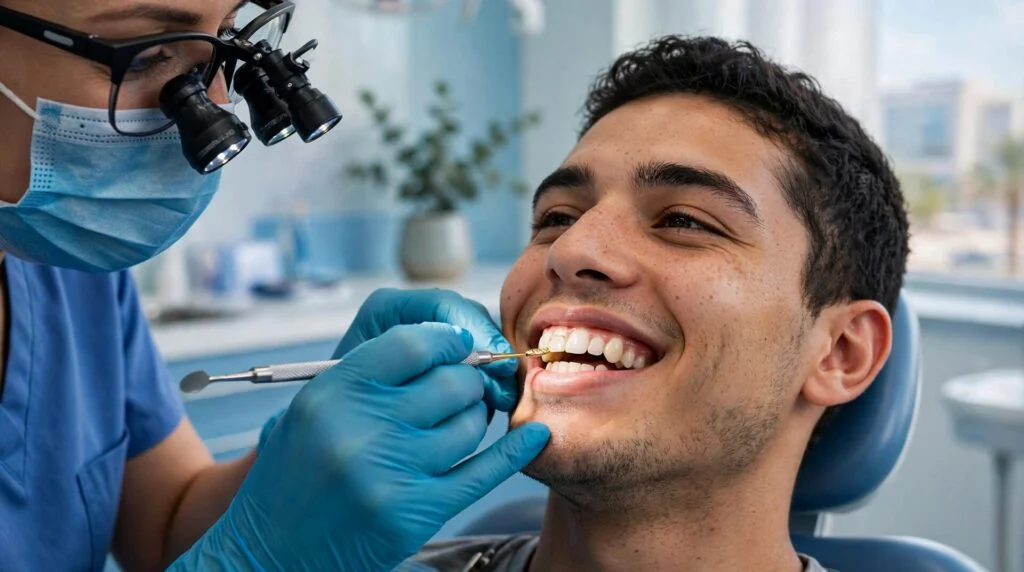
Composite bonding in Sharjah: quick fixes for chips and gaps
Composite bonding can repair a chipped tooth, close a small gap or even out an edge in a single visit, usually with little or no drilling.
Small changes, big difference
Not every smile needs veneers or braces. Sometimes the thing that bothers you is a small chip on a front tooth, a narrow gap, one tooth slightly shorter than its neighbour or a dark spot near the edge. Composite bonding is designed for exactly these situations.
This guide explains what composite bonding is, what it can and cannot do, how long it lasts, how it compares with porcelain veneers and what affects the cost in Sharjah. If you want a subtle, natural improvement without a big commitment, bonding is often the best place to start.
What is composite bonding?
Bonding uses tooth-coloured resin, the same family of materials as white fillings, to add shape to a tooth. The surface of the tooth is gently prepared, a bonding agent is applied, and the composite is built up in thin layers, sculpted by hand and hardened with a curing light. Finally it’s polished to match the shine of natural enamel.
Because it adds material rather than removing it, little or no healthy tooth needs to be drilled away. That makes it one of the most conservative cosmetic treatments available.

What composite bonding can fix
Bonding works well for small chips, worn edges, narrow gaps between the front teeth, and reshaping a tooth that sits slightly out of line. It is added to the tooth rather than cut into it, so it is usually reversible. One tooth takes about thirty minutes and is finished in a single visit.
Chipped edges
Small chips on front teeth can be rebuilt invisibly.
Small gaps
Narrow spaces between front teeth can be closed.
Uneven lengths
A slightly short or worn tooth can be lengthened to match.
Minor shape issues
Pointed, narrow or slightly rotated-looking teeth can be reshaped.
Some discolouration
Small stains or marks can be covered.
Exposed roots
Sensitive areas near the gum can sometimes be covered.
What composite bonding can’t do
Bonding isn’t the answer for every smile. It can’t move teeth that are significantly crooked, correct a bite problem or whiten your natural teeth. Very dark teeth may show through thin composite. Large changes across many teeth are usually better with aligners, whitening or porcelain veneers. We’ll tell you honestly what bonding can achieve for your teeth.
Not suitable for
- Severely crooked teeth
- Bite problems
- Very dark or heavily stained teeth
- Heavy grinders without a night guard
- Large changes on many teeth
A composite bonding appointment
Consultation
We check your teeth and gums and agree the result you want. The consultation is free.
Shade matching
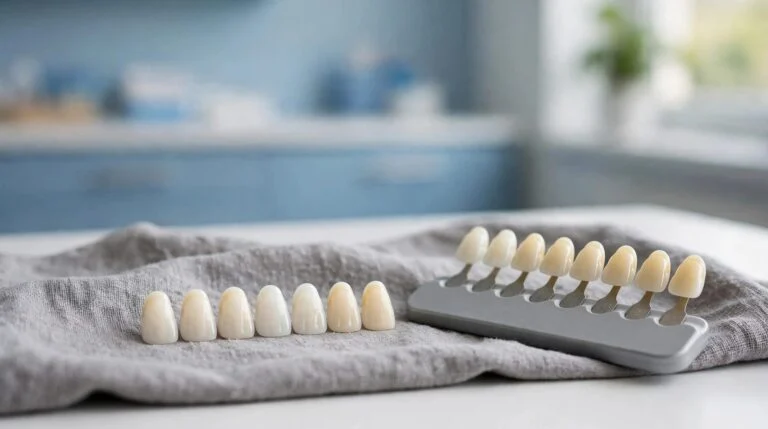
The composite shade is chosen to blend with your teeth. If you want whitening, do it first.
Preparation
The surface is cleaned and lightly roughened; usually no anaesthetic is needed.
Building and sculpting
Composite is added layer by layer and shaped by hand.
Polishing
The bonding is polished to a natural shine and your bite is checked.
Not sure what you need?
Get a free check-up and X-ray. A dentist explains your options and gives you the cost in writing. Open until 10 PM on Al Khan Street, Al Majaz.
How long does composite bonding last?
Bonding typically lasts around five to seven years, sometimes longer with good care. It can pick up stain from coffee, tea and turmeric over time and may chip at the edges, especially if you bite nails or grind. The good news is that it can be repaired, polished or topped up easily without starting again. Regular cleaning appointments include polishing to keep it bright.
Composite bonding vs veneers
Porcelain veneers last longer, resist staining better and are ideal for bigger transformations, but they usually need some enamel removed and cost more. Bonding is quicker, cheaper and usually reversible, but needs more maintenance. Many patients start with resin and move to veneers later if they want a bigger change. Our guide to composite vs porcelain veneers explains the differences in detail.
What affects composite bonding cost
Cost depends on how many teeth are treated and how much shaping each one needs. A single chipped corner is quick, while rebuilding the edges of six front teeth takes longer and more material. We agree which teeth are being treated, and the cost, in writing beforehand.
Number of teeth
One chipped tooth costs less than reshaping several teeth.
Size of the change
Small edge repairs are quick; closing gaps takes more material and time.
Complexity
Matching translucency and texture on front teeth takes skill and time.
Insurance
Cosmetic bonding is usually not covered. Repairing a broken tooth may be.
Caring for bonded teeth
Brush twice a day with a non-abrasive fluoride toothpaste and clean between your teeth daily. Rinse with water after coffee, tea or red sauces. Avoid biting your nails, pens or hard foods directly with bonded front teeth. If you grind at night, a night guard protects the resin. For general background, see the NHS healthy teeth and gums guide.
Composite bonding for chipped teeth after accidents
Chipped front teeth from falls, sport or biting something hard are one of the most common reasons for bonding. If you chip a tooth, keep the broken piece if you find it and book soon. Small chips are usually repaired in one visit with bonding. Larger breaks may need a crown or, if the nerve is involved, other treatment first. See our page on a chipped or broken tooth.
Will people notice composite bonding?
When it’s done well, no. Good bonding matches the colour, translucency and surface texture of your natural teeth. The edges blend in, and light reflects naturally. The aim is for friends to notice that your smile looks better without being able to say why. That subtle result is why many people choose bonding over more dramatic treatments.
Is bonding right for teenagers?
Teenagers often chip front teeth during sport or play. Bonding is a good option at this age because it’s conservative and can be updated as the teeth and gums mature. Porcelain veneers are usually postponed until adulthood. We always check whether orthodontic treatment would be better first, since straightening teeth can change how much reshaping is needed.
Bonding and whitening together
If you would like whiter teeth, whiten first and wait about two weeks for the colour to settle before bonding. The resin is then matched to your new shade. Whitening products don’t change the colour of resin, so whitening after bonding can leave the bonded teeth looking darker. Planning the order saves time and money. See our teeth whitening cost guide.
Repairs and touch-ups
Small chips in bonded teeth are usually repaired in a short visit by adding fresh resin and polishing. Stained surfaces can often be polished back to a brighter finish. Over the years, larger repairs may be needed, and eventually the bonding may be replaced. Because nothing permanent was done to the enamel, you keep your options open, including veneers later.
How to choose a dentist for bonding
Bonding is as much an art as a technique. Ask to see before-and-after photos of the dentist’s own work, ask how the shade will be chosen, and ask what happens if a piece chips in the first months. A good result looks natural in daylight, not just under clinic lights. At your consultation we will talk through exactly what is possible for your teeth and show you examples, so there are no surprises on the day.
Lifestyle tips for long-lasting results
Daily habits make a real difference to how long cosmetic work lasts. Drink coffee and karak tea in one sitting rather than sipping all day, and follow with a glass of water. If you smoke or use shisha, the resin will stain faster. Use a soft toothbrush and avoid very abrasive whitening pastes, which dull the polish. Book a polish at your six-monthly cleaning to keep the surface smooth and bright.
Your first step
Book a consultation and tell us what bothers you about your smile. We will check your teeth and gums, talk through the options and give you a clear written price before anything is done.
Composite bonding questions
Does composite bonding damage teeth?
Does composite bonding hurt?
Can composite bonding be whitened?
How long does composite bonding take?
Is composite bonding covered by insurance?
Want to fix a chip or a gap?
Book a free consultation in Al Majaz. We’ll show you what composite bonding can do for your smile and give you a written price.
About this page
Written by the dental team at Al Jazeera Dental Clinic, a family clinic on Al Khan Street, Al Majaz 3, Sharjah, open since 1998, and medically reviewed by Dr Ranjeet Kumar, Medical Director (BDS, Diploma in Endodontics), November 2026 (how we write and review). This is general information. Your dentist can tell you what applies to you.
Related articles
How Long Do Veneers Last? Porcelain vs Composite Lifespan
How long veneers last: typical lifespan of porcelain and composite veneers, what shortens it, signs they need replacing, and simple habits that hel…
Composite vs Porcelain Veneers: Pros, Cons and Who Each Suits
Porcelain veneers vs composite veneers: lifespan, looks, cost, tooth preparation, repairs and aftercare explained by our Sharjah dental team. Free …
Dental Care During Pregnancy: What Is Safe and When
Dental care during pregnancy: which treatments are safe, the best time for a check-up, pregnancy gingivitis, morning sickness and teeth, X-rays, an…